World Artifacts › Atlas › Ecuador
Mitad del Mundo
The equator monument.
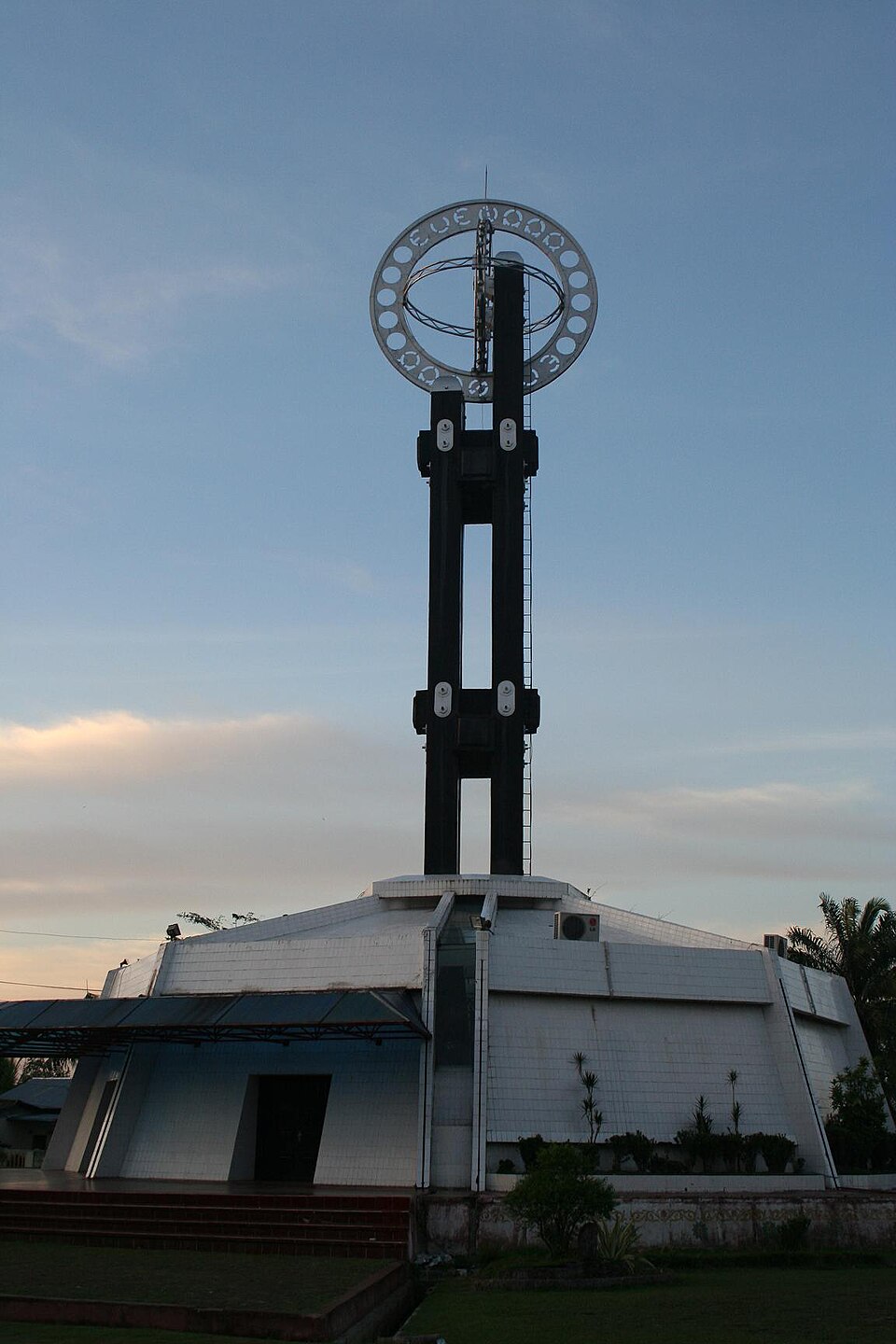
The equator is the circle of latitude that divides Earth into the Northern and Southern Hemispheres. It is an imaginary line located at 0 degrees latitude, about 21,639 nautical miles (40,075 kilometres; 24,902 miles) in circumference, located halfway between the North and South Poles. The term can also be used for any other celestial body that is roughly spherical.
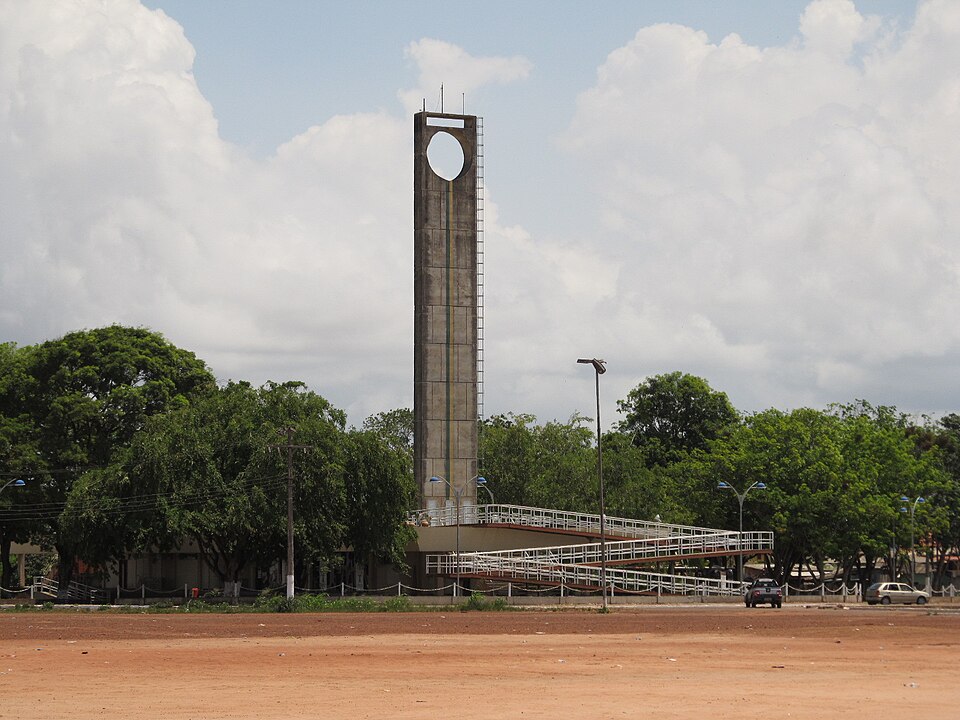
In spatial (3D) geometry, as applied in astronomy, the equator of a rotating spheroid (such as a planet) is the parallel (circle of latitude) at which latitude is defined to be 0°. It is an imaginary line on the spheroid, equidistant from its poles, dividing it into northern and southern hemispheres. In other words, it is the intersection of the spheroid with the plane perpendicular to its axis of rotation and midway between its geographical poles.
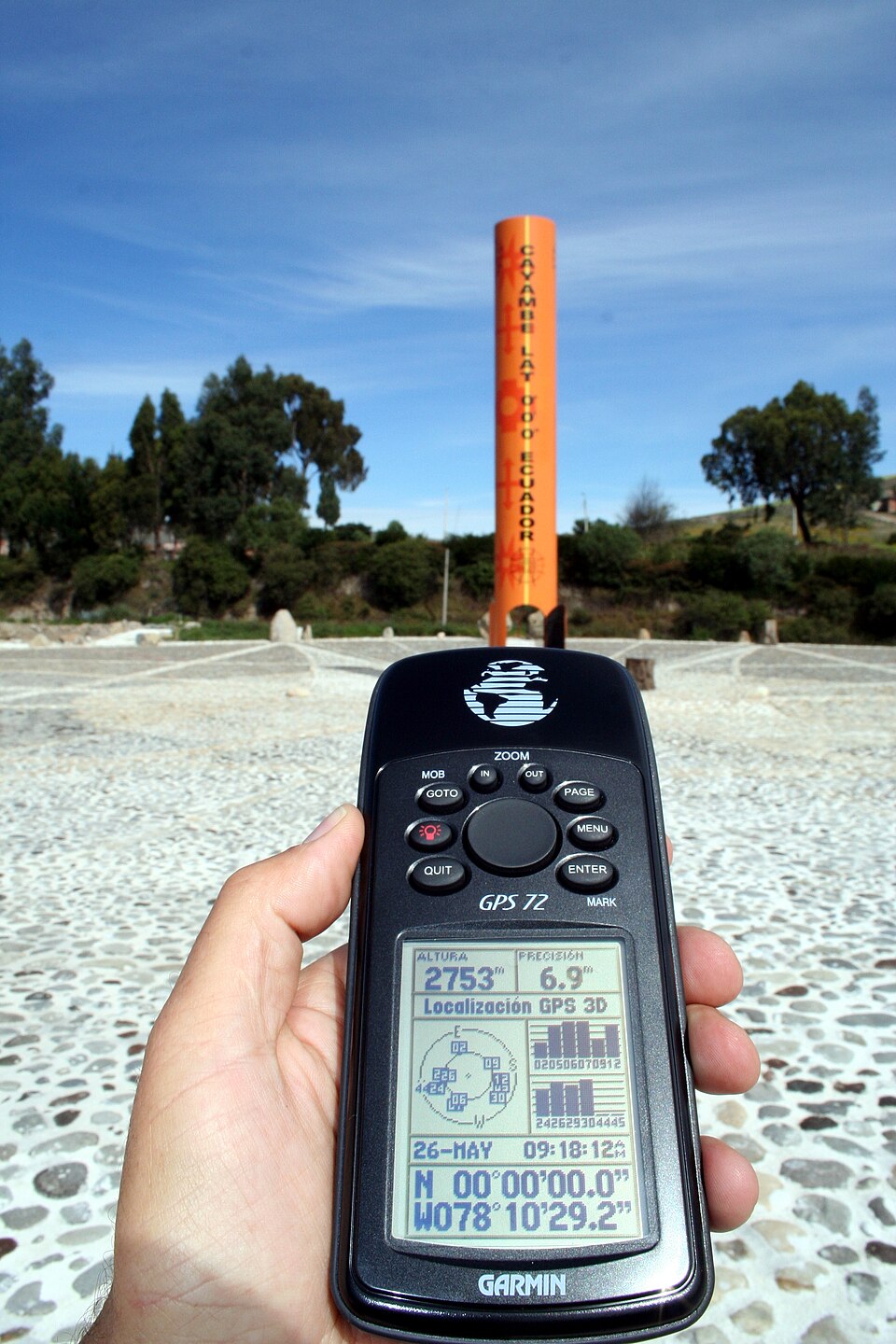
On and near the equator (on Earth), noontime sunlight appears almost directly overhead (no more than about 23° from the zenith) every day, year-round. Consequently, the equator has a rather stable daytime temperature throughout the year. On the equinoxes (approximately 20 March and 23 September) the subsolar point crosses Earth's equator at a shallow angle, sunlight shines perpendicular to Earth's axis of rotation, and all latitudes have nearly a 12-hour day and 12-hour night.
Further reading
- Measure of the Earth · Larrie D. Ferreiro (2011)A history of the scientific expeditions and geodesy used to measure the shape of the Earth.Find a copy: AbeBooks · Amazon · WorldCat
- Measuring the New World · Neil Safier (2008)Covers the French geodesic mission and its scientific exploration and communication of science in the New World.Find a copy: AbeBooks · Amazon · WorldCat
Mitad del Mundo is one of the 3D puzzles in World Artifacts: turn a cloud of broken pieces until it lines up. For iPhone, iPad, Apple Vision Pro and Android.

