World Artifacts › Atlas › Estonia
Kama Bowl
A bowl of kama with sour milk.
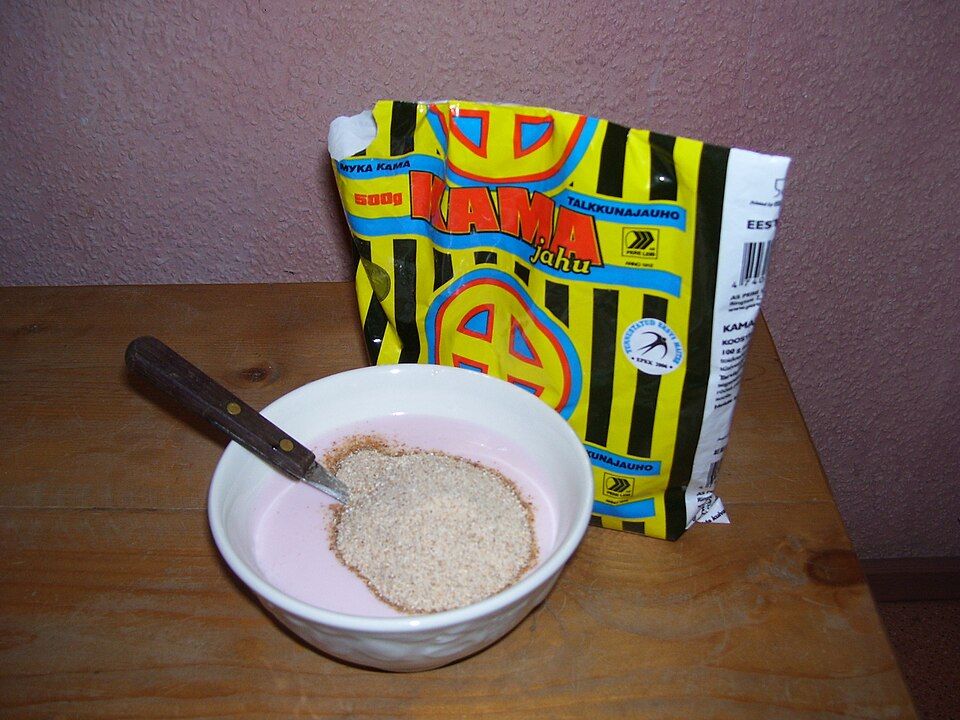
Kama (from Estonian) is a dish from the Baltic region, most commonly eaten in Estonia and Finland (where it is called talkkuna), based on milled cereals and legumes, traditionally prepared and eaten uncooked as fast food by combining the fine flour mixture with just cow milk or buttermilk. The main ingredient of kama is the "kama flour" (kamajahu) which nowadays typically contains a mixture of roasted barley, rye, oat and pea flour.
Historically, kama was a farmer dish; it originated from southern Estonia, and it was made slightly differently in each geographic area; it could consist of oats, peas, beans or wheat, which were mixed together depending on the region. The oat flour may be completely replaced by wheat flour, or kibbled black beans may be added to the mixture. In Finland, talkkunajauho is made by first steaming grains, then grinding them up and finally roasting them.
The kamajahu flour mixture was a non-perishable, easy-to-carry "food that could be quickly fashioned into a stomach-filling snack by rolling it into butter or lard"; it did not require baking, as it was already roasted.
Nowadays, Estonians kama remains popular and many Estonians consider it a distinctive "national food".
Kama Bowl is one of the 3D puzzles in World Artifacts: turn a cloud of broken pieces until it lines up. For iPhone, iPad, Apple Vision Pro and Android.

