World Artifacts › Atlas › Egypt
Alexandria Lighthouse
The lighthouse stood for over a thousand years and fell in earthquakes. Divers have found its blocks on the harbour floor, and some of them were built into the fort that now stands on the site.
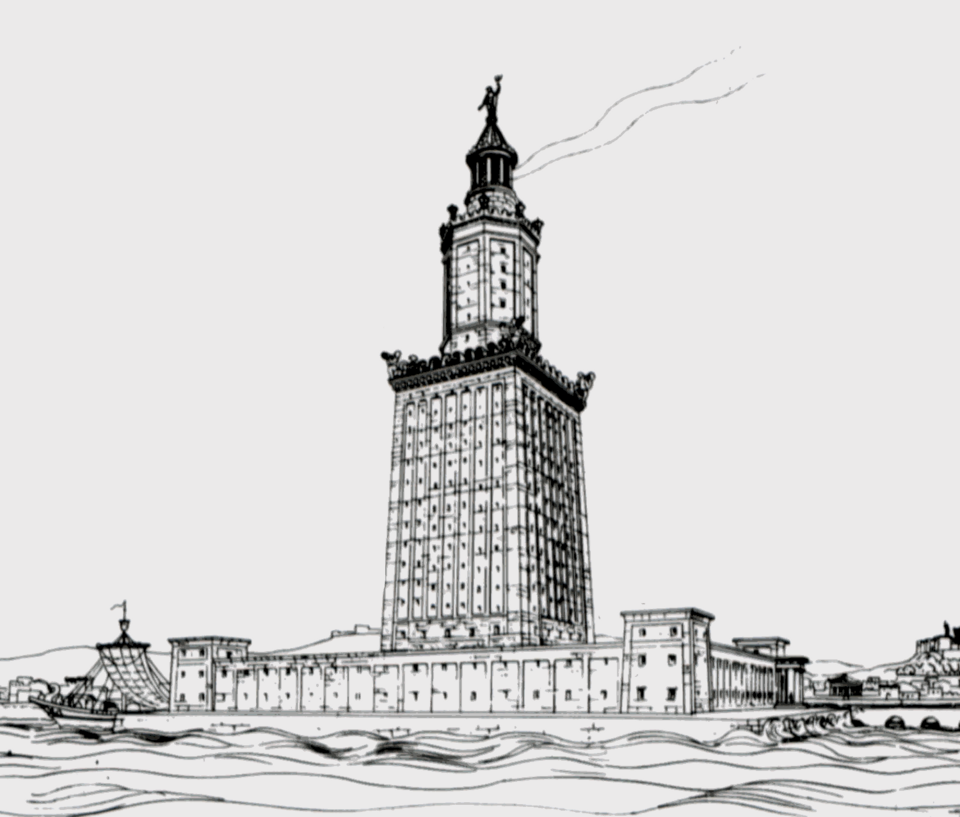
The Pharos of Alexandria was a lighthouse built by the Ptolemaic Kingdom of Ancient Egypt, during the reign of Ptolemy II Philadelphus (280-247 BC). It has been estimated to have been at least 100 metres (330 ft) in overall height. One of the Seven Wonders of the Ancient World, for many centuries it was one of the world's tallest man-made structures.
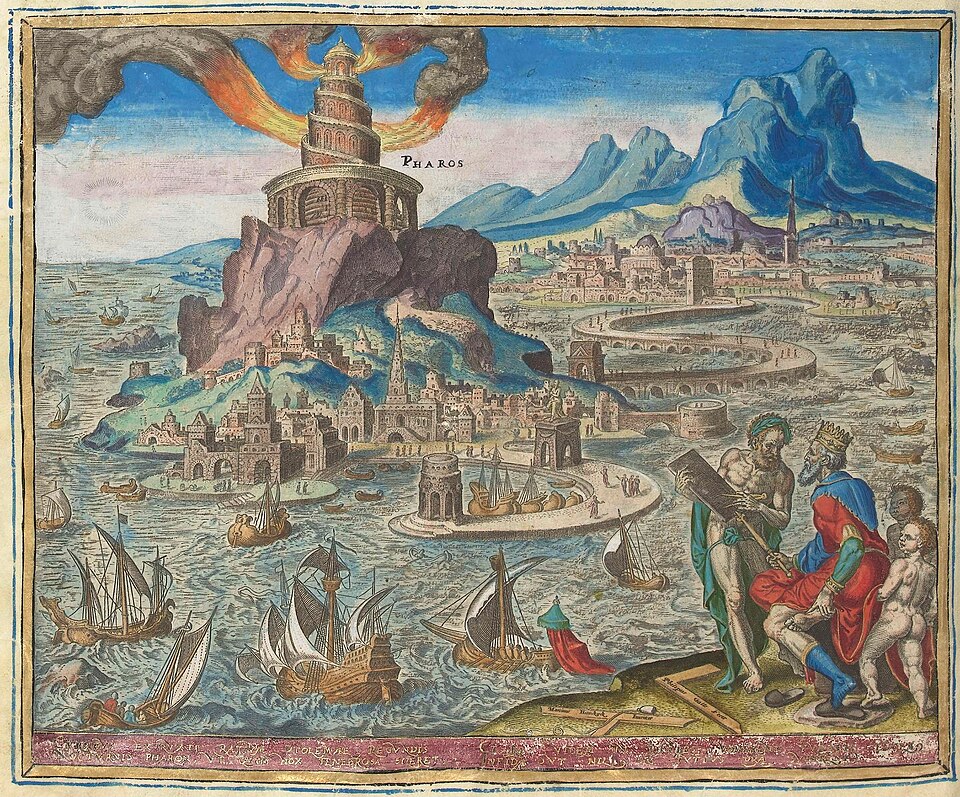
The lighthouse was severely damaged by three earthquakes between AD 956 and 1303 and became an abandoned ruin. It was the third longest-surviving ancient wonder, after the Mausoleum at Halicarnassus and the extant Great Pyramid of Giza, surviving in part until 1480, when the last of its stones was used to build the Citadel of Qaitbay on the site.
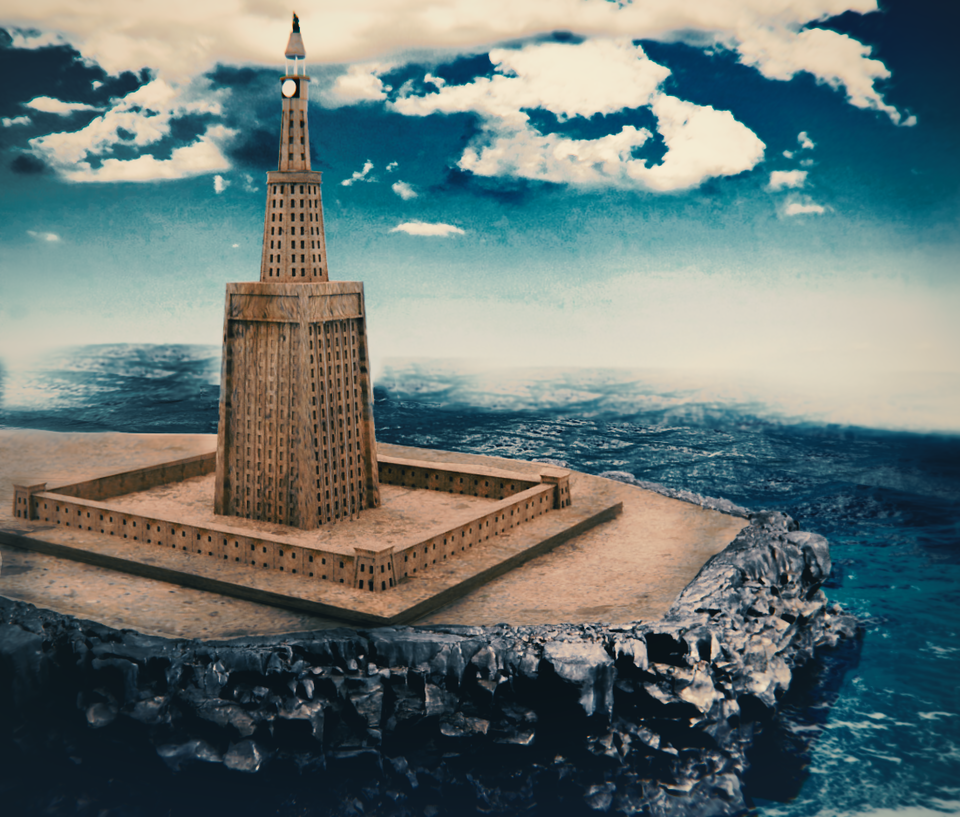
In 1994, a team of French archaeologists dived in the water of Alexandria's Eastern Harbour and discovered some remains of the lighthouse on the sea floor. In 2016, the Ministry of State of Antiquities in Egypt had plans to turn submerged ruins of ancient Alexandria, including those of the Pharos, into an underwater museum.
In 2025, parts of the lighthouse's entrance, threshold stones, and foundation paving stones were resurfaced to aid in a digital reconstruction effort intended to help scholars with architectural reconstructions.
Further reading
Alexandria Lighthouse is one of the 3D puzzles in World Artifacts: turn a cloud of broken pieces until it lines up. For iPhone, iPad, Apple Vision Pro and Android.

