World Artifacts › Atlas › Egypt
Egyptian Vulture
The Egyptian vulture picks up stones and throws them at ostrich eggs to break them, one of the few birds known to use a tool. Its outline is the hieroglyph Egyptologists read as a long A.
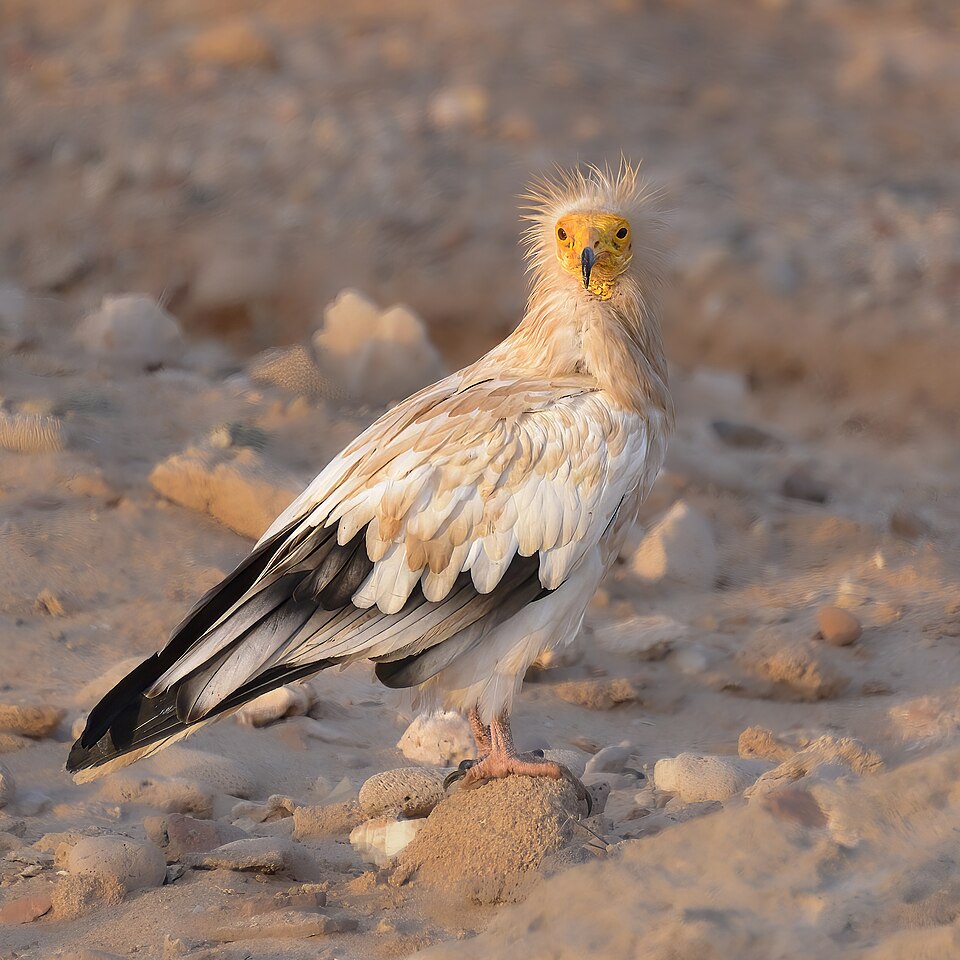
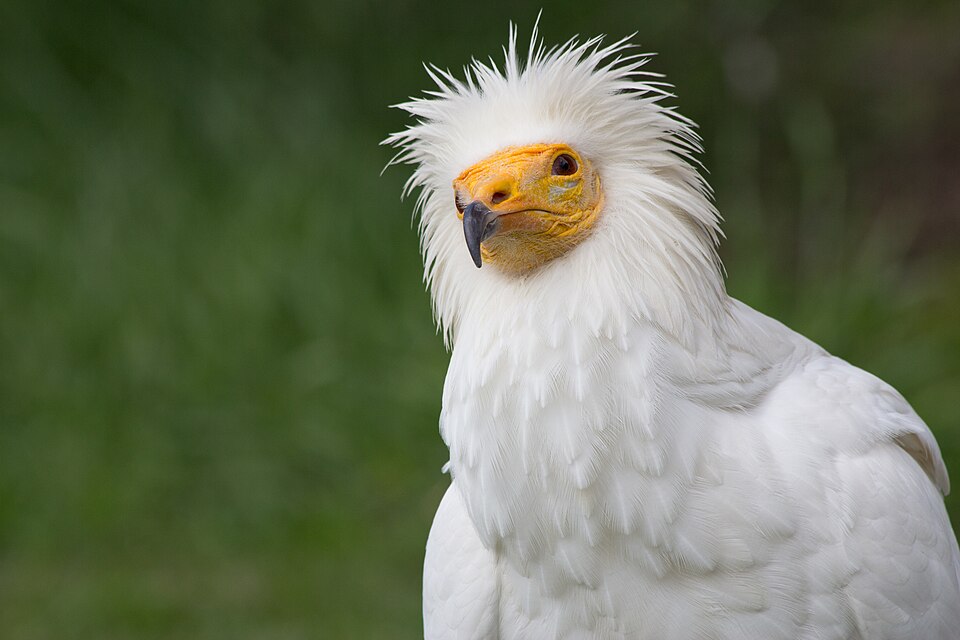
The Egyptian vulture (Neophron percnopterus), also called the white scavenger vulture or pharaoh's chicken, is a small, Old World vulture in the monotypic genus Neophron. It is widely distributed from the Iberian Peninsula and North Africa to West Asia and India. The contrasting underwing pattern and wedge-shaped tail make it distinctive in flight, as it soars in thermals during the warmer parts of the day. Egyptian vultures feed mainly on carrion, but are opportunistic and also prey on small mammals, birds, and reptiles. They also feed on the eggs of other birds, breaking larger ones by tossing a large pebble onto them.
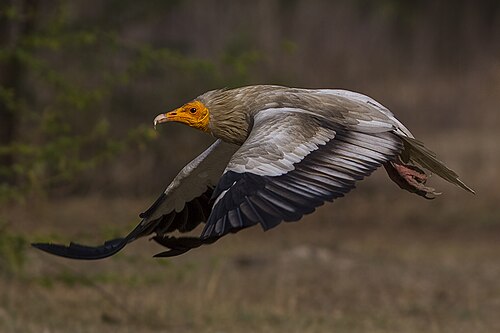
The use of tools is rare in birds and apart from the use of a pebble as a hammer, Egyptian vultures also use twigs to roll up wool for use in their nest. Egyptian vultures that breed in the temperate regions migrate south in winter, while tropical populations are relatively sedentary. Populations of this species declined in the 20th century, and some island populations are endangered by hunting, accidental poisoning, and collision with power lines.
Further reading
Egyptian Vulture is one of the 3D puzzles in World Artifacts: turn a cloud of broken pieces until it lines up. For iPhone, iPad, Apple Vision Pro and Android.

