World Artifacts › Atlas › Egypt
Great Pyramid
The pyramid was cased in polished white limestone, which was stripped in the Middle Ages to build Cairo, leaving the rough core we see. The men who built it were not slaves: they lived in a town beside the site and were paid in bread and beer.
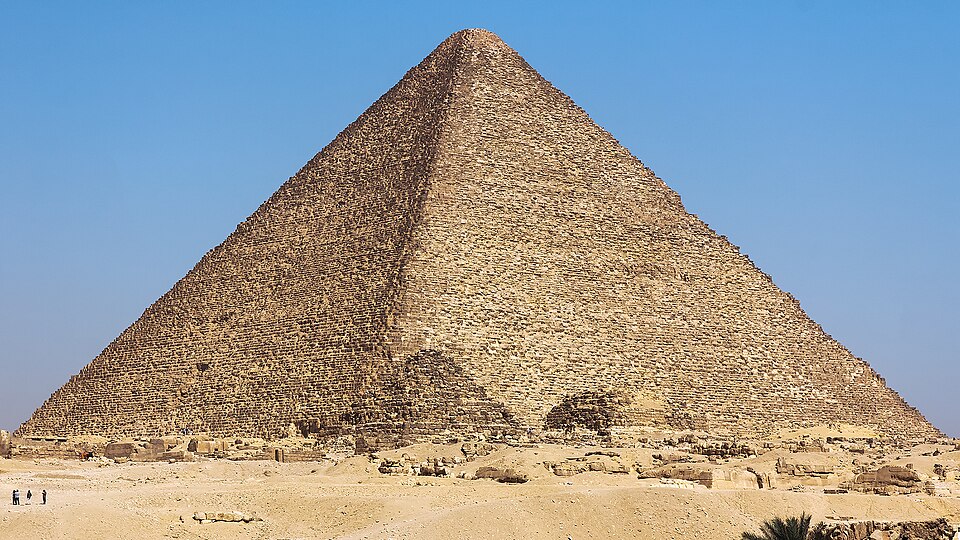
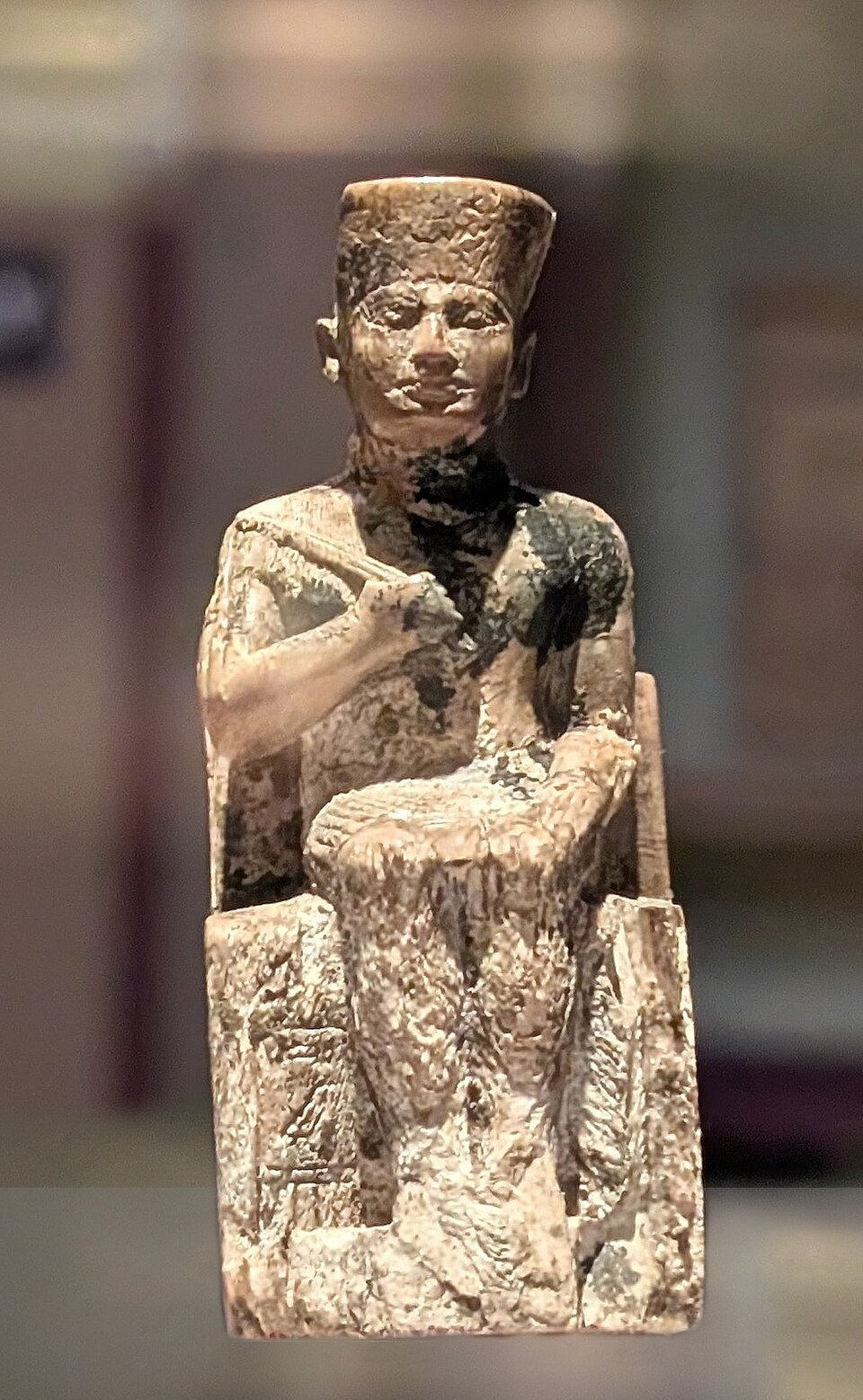
The Great Pyramid of Giza is the largest of the Egyptian pyramids and the most famous landmark of the Giza pyramid complex in Giza, Egypt. It is the oldest of the Seven Wonders of the Ancient World, and the only wonder that has remained largely intact. The Great Pyramid served as the tomb of Egyptian Pharaoh Khufu ("Cheops"), who ruled during the Fourth Dynasty of the Old Kingdom. It was built c. 2600 BC over a period of about 26 years.
Initially standing at 146.6 metres (481 feet), the Great Pyramid was the world's tallest human-made structure for more than 3,700 years. Over time, most of the smooth white limestone casing was removed, which lowered the pyramid's height to the current 138.5 metres (454.4 ft); what is seen today is the underlying core structure. Each side of the base was measured to be about 230.3 metres (755.6 ft) in length, giving a volume of roughly 2.6 million cubic metres (92 million cubic feet), which includes an internal hillock. The dimensions of the pyramid were 280 royal cubits (146.7 m; 481.4 ft) high, a base length of 440 cubits (230.6 m; 756.4 ft), with a seked of 5+1/2 palms (a slope of 51°50'40").
Further reading
- The Complete Pyramids · Mark Lehner (1997)A survey of Egypt's pyramids covering their history, design and construction.Find a copy: AbeBooks · Amazon · WorldCat
- The pyramids and temples of Gizeh · W. M. Flinders Petrie (1883)Petrie's survey of the pyramids and temples of Giza.Find a copy: AbeBooks · Amazon · WorldCat
Great Pyramid is one of the 3D puzzles in World Artifacts: turn a cloud of broken pieces until it lines up. For iPhone, iPad, Apple Vision Pro and Android.

