World Artifacts › Atlas › Egypt
Shisha Pipe
The water does not filter anything; it cools the smoke, which is why more of it can be drawn in. The tobacco is kept away from the coal by foil so it is heated rather than burnt.
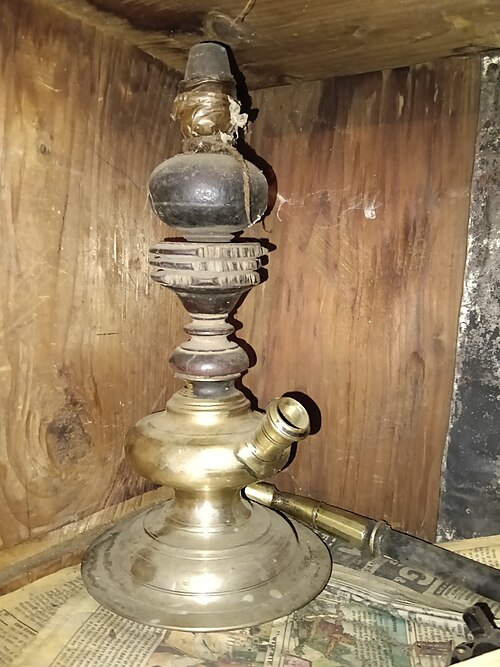
A hookah (also see other names), shisha, or waterpipe is a single- or multi-stemmed instrument for heating or vaporizing and then smoking either tobacco, flavored tobacco (often muʽassel), or sometimes cannabis, hashish and opium. The smoke is passed through a water basin - often glass-based - before inhalation.
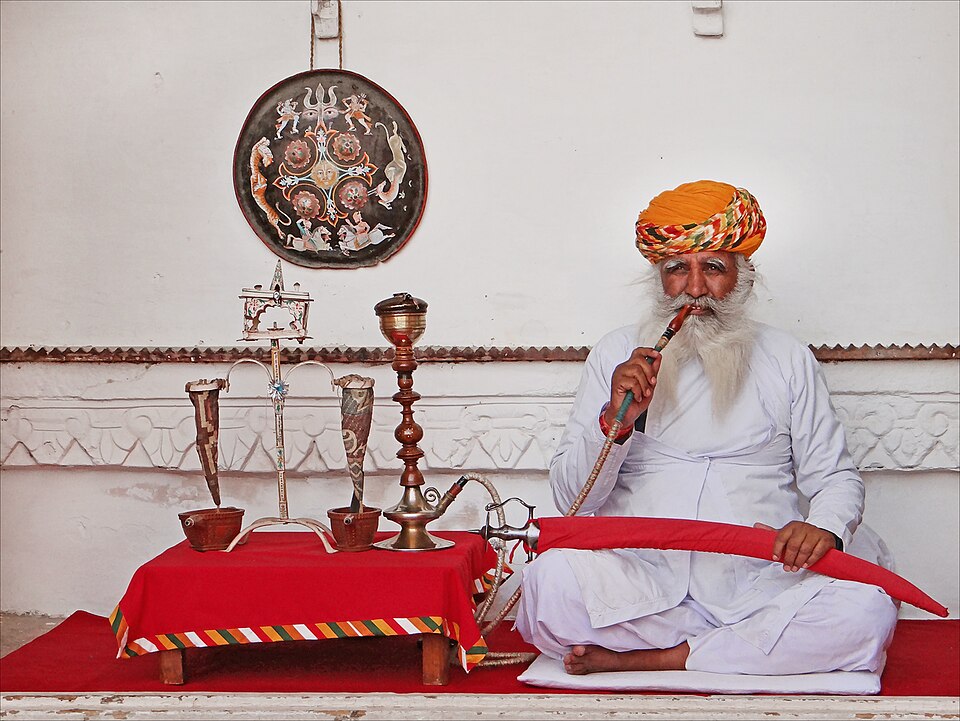
The major health risks of smoking tobacco, cannabis, opium and other drugs through a hookah include exposure to toxic chemicals, carcinogens and heavy metals that are not filtered out by the water, alongside those related to the transmission of infectious diseases when hookahs are shared or not properly cleaned. Hookah and waterpipe use is a global public health concern, with high rates of use in the populations of the Middle East and North Africa as well as in young people in the United States, Europe, Central Asia, and South Asia.
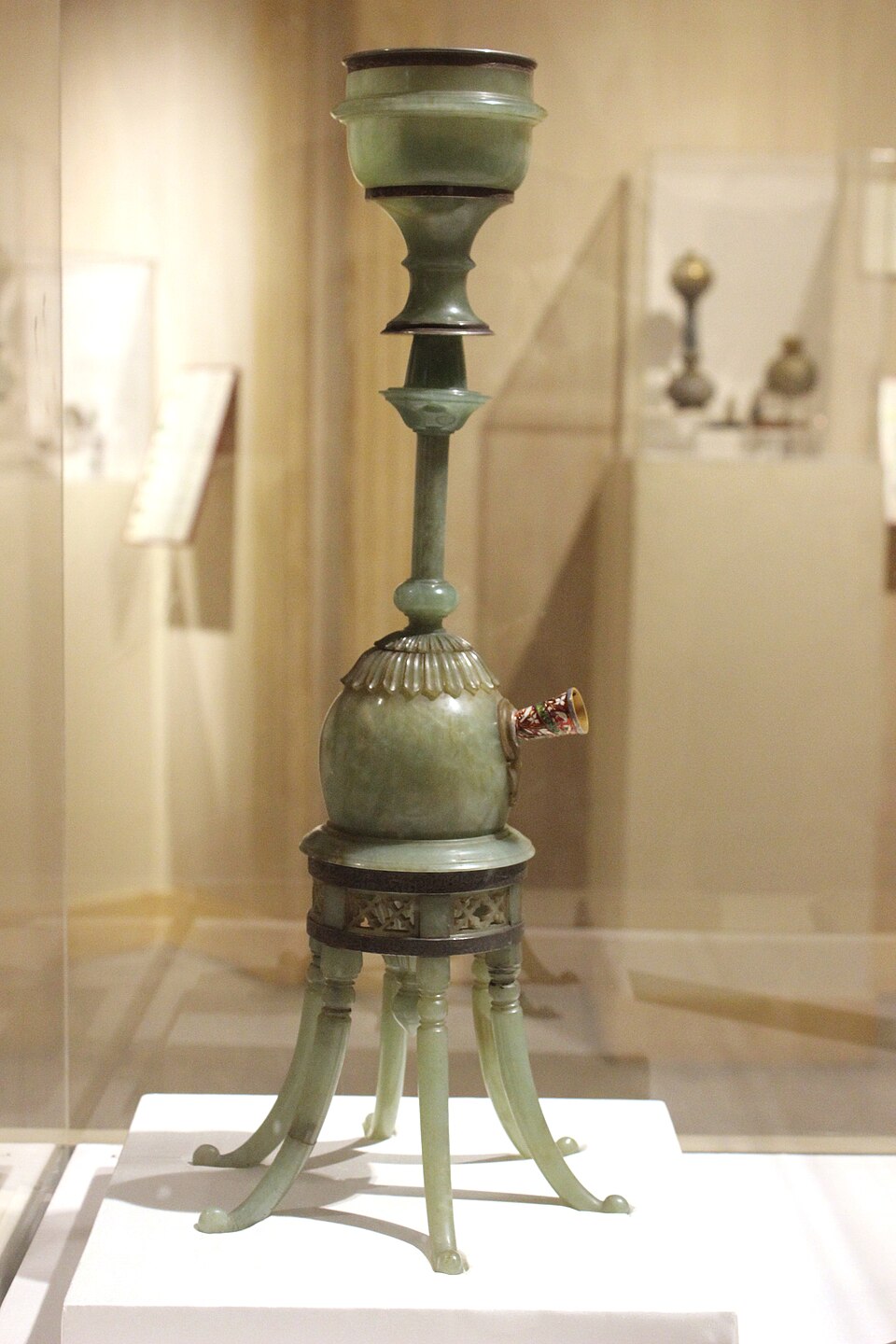
The hookah or waterpipe was invented by Abul-Fath Gilani, an Iranian physician of Akbar, in the Indian city of Fatehpur Sikri during Mughal India. The hookah spread from the Indian subcontinent to Persia first, where the mechanism was modified to its current shape, and then to the Ottoman empire. Alternatively, it could have originated in the Safavid dynasty of Persia, from where it eventually spread to the Indian subcontinent.
Shisha Pipe is one of the 3D puzzles in World Artifacts: turn a cloud of broken pieces until it lines up. For iPhone, iPad, Apple Vision Pro and Android.

