World Artifacts › Atlas › Egypt
Suez Canal Ship
The canal has no locks, because the two seas sit at much the same level; it is a trench. When one ship wedged across it in 2021, roughly a tenth of world trade stopped moving for six days.
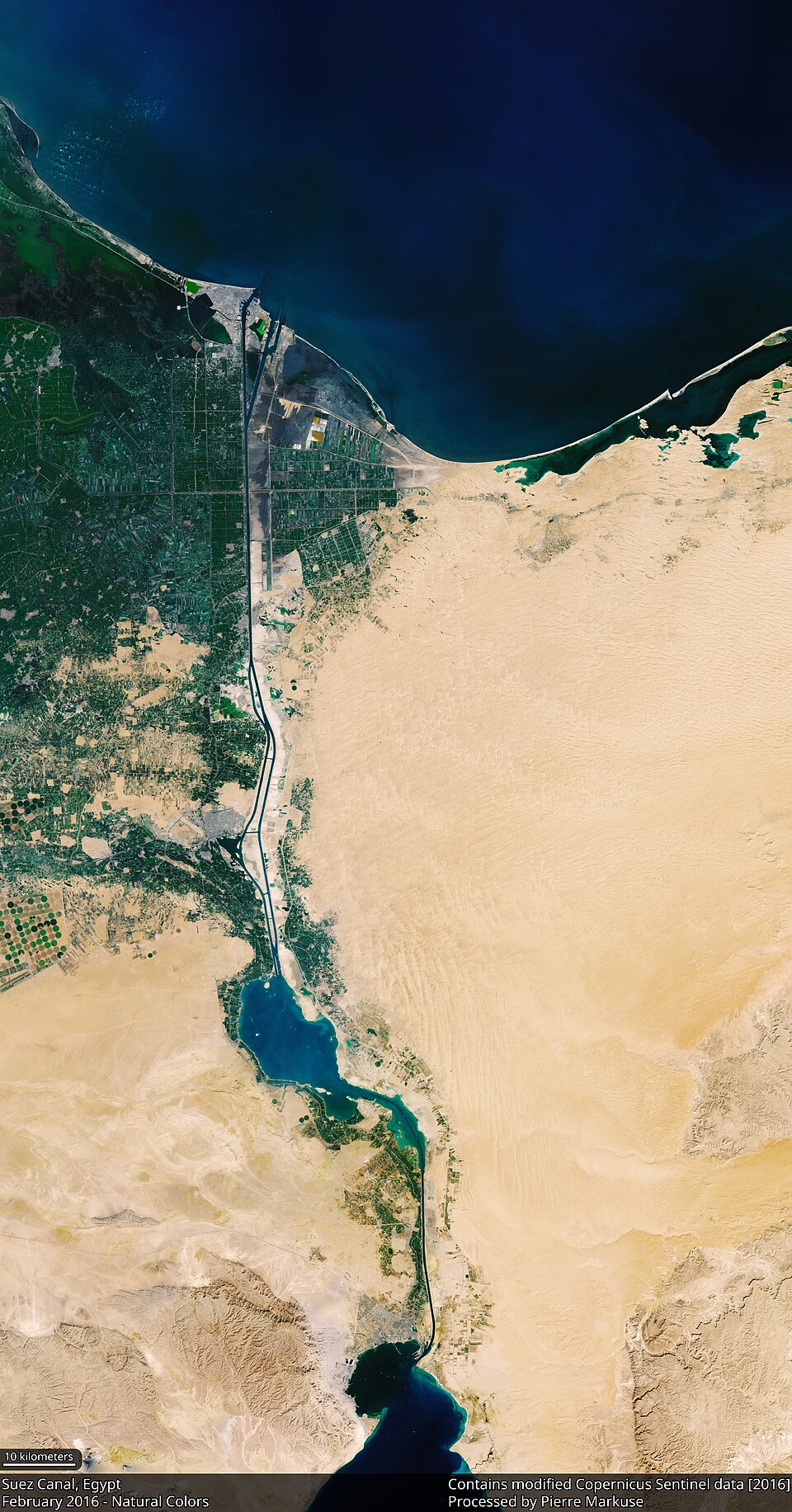
The Suez Canal (; Egyptian Arabic: قناة السويس, Qanāt as-Suwais) is an artificial sea-level waterway in Egypt, connecting the Mediterranean Sea to the Red Sea through the Isthmus of Suez and dividing Africa and Asia (and by extension, the Sinai Peninsula from the rest of Egypt). The 193.3-kilometre-long (120.1-mile) canal is a key trade route between Europe and Asia.
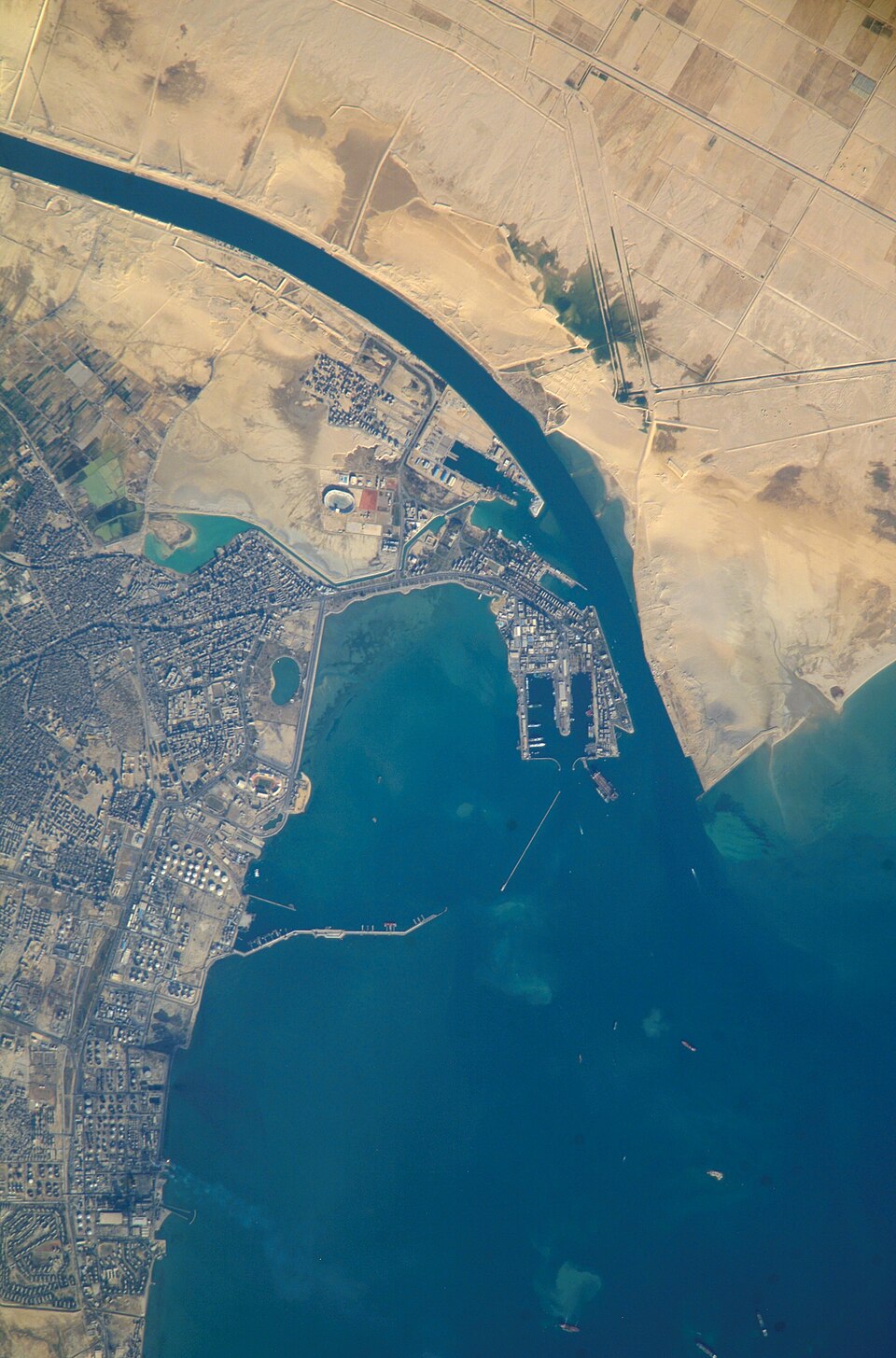
In 1858, French diplomat Ferdinand de Lesseps formed the Compagnie de Suez for the express purpose of building the canal. Construction of the canal lasted from 1859 to 1869 and it officially opened on 17 November 1869. It offers vessels a direct route between the North Atlantic and northern Indian oceans via the Mediterranean Sea and the Red Sea, avoiding the South Atlantic and southern Indian oceans and reducing the journey distance from the Arabian Sea to London by approximately 8,900 km (5,500 mi), to 10 days at 20 knots (37 km/h; 23 mph) or 8 days at 24 knots (44 km/h; 28 mph). The canal extends from the northern terminus of Port Said to the southern terminus of Port Tewfik at the city of Suez. In 2021, more than 20,600 vessels traversed the canal (an average of 56 per day).
Further reading
Suez Canal Ship is one of the 3D puzzles in World Artifacts: turn a cloud of broken pieces until it lines up. For iPhone, iPad, Apple Vision Pro and Android.

