World Artifacts › Atlas › Egypt
Whirling Tanoura Dancer
The spinning skirt comes from Sufi practice, where turning is a form of remembrance, but the Egyptian version has become a stage act with weighted skirts and coloured lights. The dancer spins one way for as long as an hour without stopping.
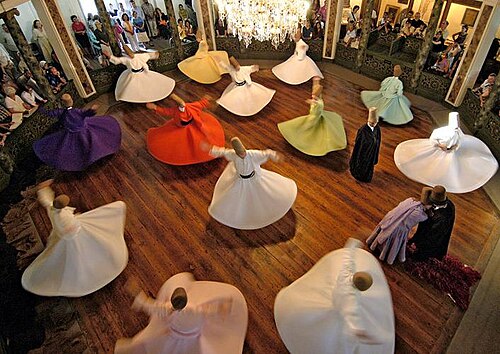
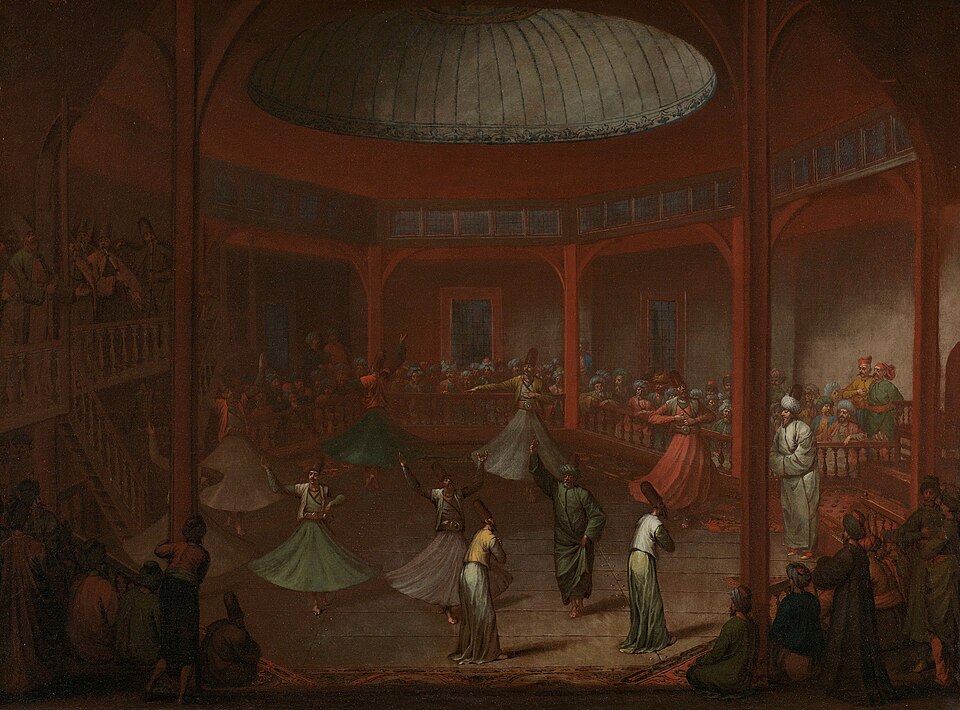
Sufi whirling (or Sufi turning) (Turkish: Semazen borrowed from Persian Sama-zan, Sama, meaning listening, from Arabic, and zan, meaning doer, from Persian) is a form of physically active meditation which originated among certain Sufi groups, and which is still practiced by the Sufi dervishes of the Mevlevi order and other orders such as the Rifa'i-Marufi. It is a customary meditation practice performed within the sema, or worship ceremony, through which dervishes (from the Persian darvish درویش, also called semazens, from Persian سماعزن) aim to reach greater connection with Allah. This is sought through abandoning one's nafs, ego or personal desires, by listening to the music, focusing on God, and spinning one's body in repetitive circles, which has been seen as a symbolic imitation of planets in the Solar System orbiting the Sun.
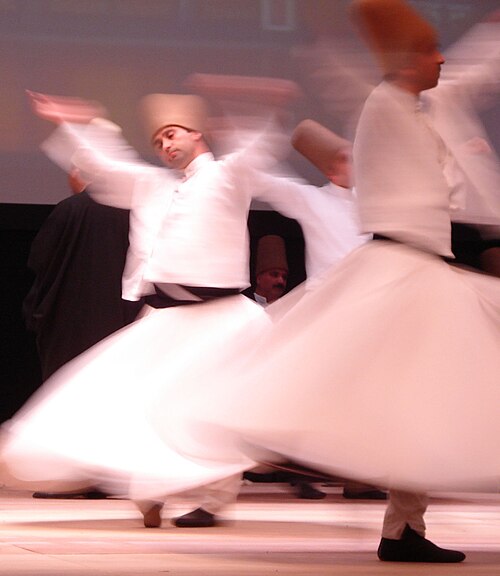
The Mevlevi practice gave rise to an Egyptian form, tanoura, distinguished by the use of a multicolored skirt. This has also developed into a performance dance by non-Sufis, including dancers outside the Islamic world.
Further reading
Whirling Tanoura Dancer is one of the 3D puzzles in World Artifacts: turn a cloud of broken pieces until it lines up. For iPhone, iPad, Apple Vision Pro and Android.

