World Artifacts › Atlas › Spain
Guernica Bull
Picasso painted it in a month for the 1937 Paris exhibition, after German aircraft bombed a Basque town for the Spanish rebels. He refused to let it go to Spain while Franco lived, and it arrived in Madrid in 1981.
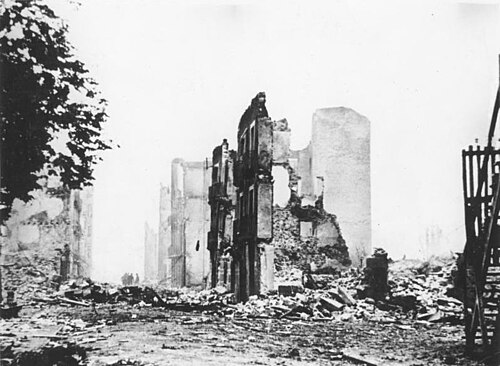
Guernica is a large 1937 oil painting by Spanish artist Pablo Picasso. It is one of his best-known works, regarded by many art critics as the most moving and powerful anti-war painting in history. It is exhibited in the Museo Reina Sofía in Madrid.
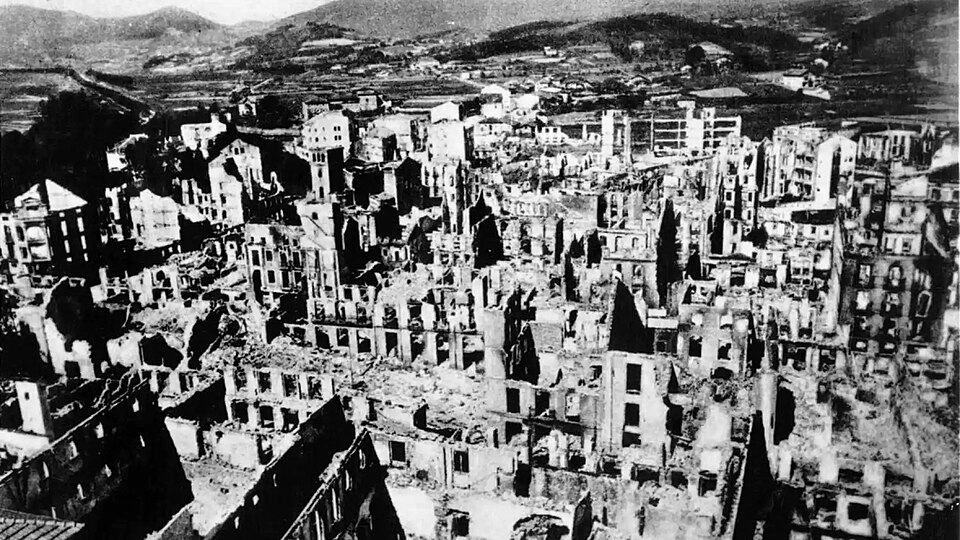
The grey, black, and white painting, done on a canvas 3.49 meters (11 ft 5 in) tall and 7.76 meters (25 ft 6 in) across, portrays the suffering wrought by violence and chaos. Prominently featured in the composition are grieving and screaming women, a gored screaming horse, a wide-eyed bull, a dead dove, a dead baby, a dismembered soldier, and flames.
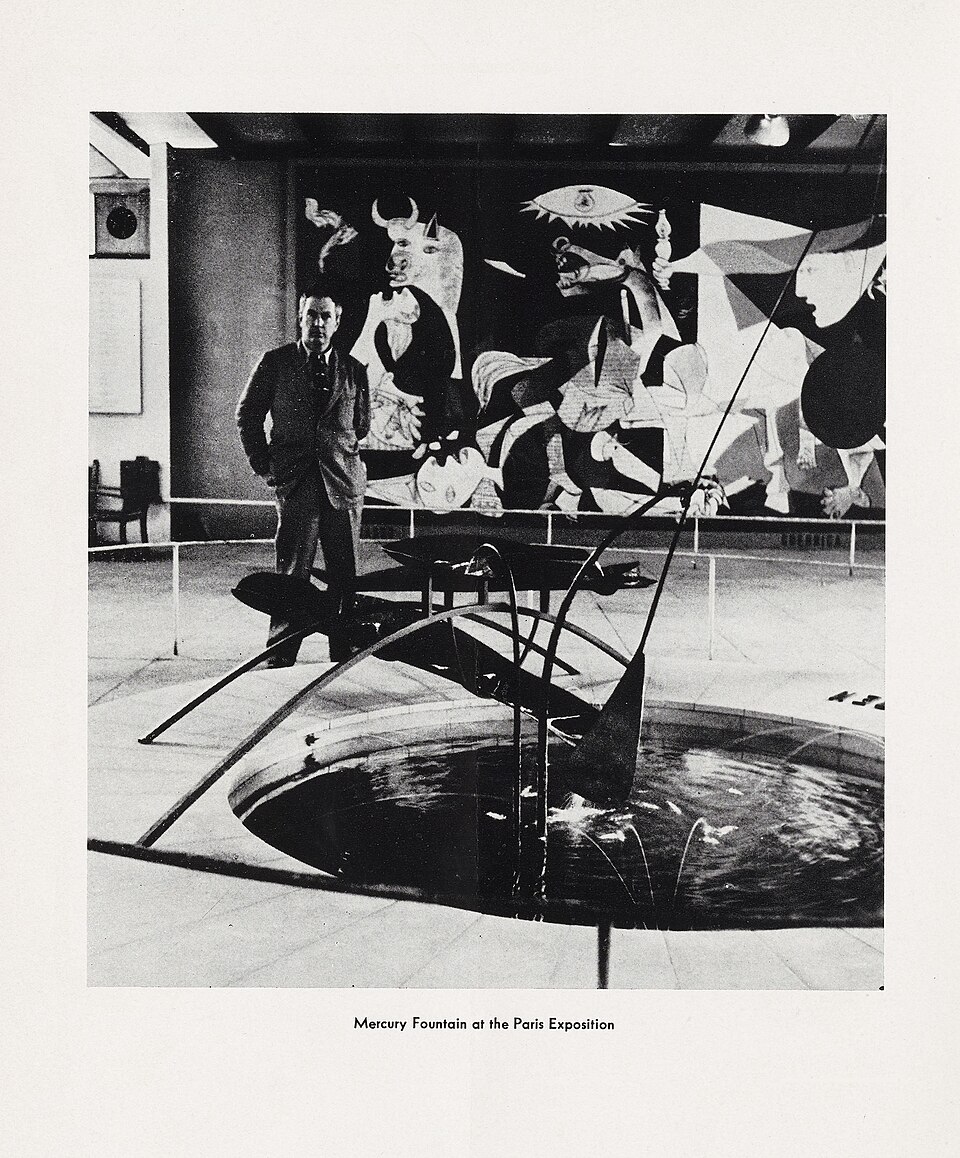
Picasso painted Guernica at his home in Paris in response to the 26 April 1937 bombing of Guernica, a town in the Basque Country in northern Spain, by Nazi Germany's Condor Legion and the fascist government of Italy. Upon completion, Guernica was exhibited at the Spanish pavilion at the 1937 Paris International Exposition and then at other venues around the world. The touring exhibition was used to raise funds for Spanish war relief. The painting soon became widely acclaimed, helping to bring worldwide attention to the Spanish Civil War that took place from 1936 to 1939.
Further reading
- Picasso's Guernica · Herschel Browning Chipp (1989)A study of Picasso's Guernica, listed under Spanish painting and Picasso.Find a copy: AbeBooks · Amazon · WorldCat
- Picasso's War · Russell Martin (2002)Covers Picasso's Guernica, the Spanish Civil War and art and war, including how the huge canvas was painted for the Paris exhibition.Find a copy: AbeBooks · Amazon · WorldCat
Guernica Bull is one of the 3D puzzles in World Artifacts: turn a cloud of broken pieces until it lines up. For iPhone, iPad, Apple Vision Pro and Android.

