World Artifacts › Atlas › Spain
Santa María
The Santa María ran aground off Haiti on Christmas Day 1492 and was broken up to build a fort. She was a slow cargo ship that Columbus disliked, and no trace of her has ever been found.
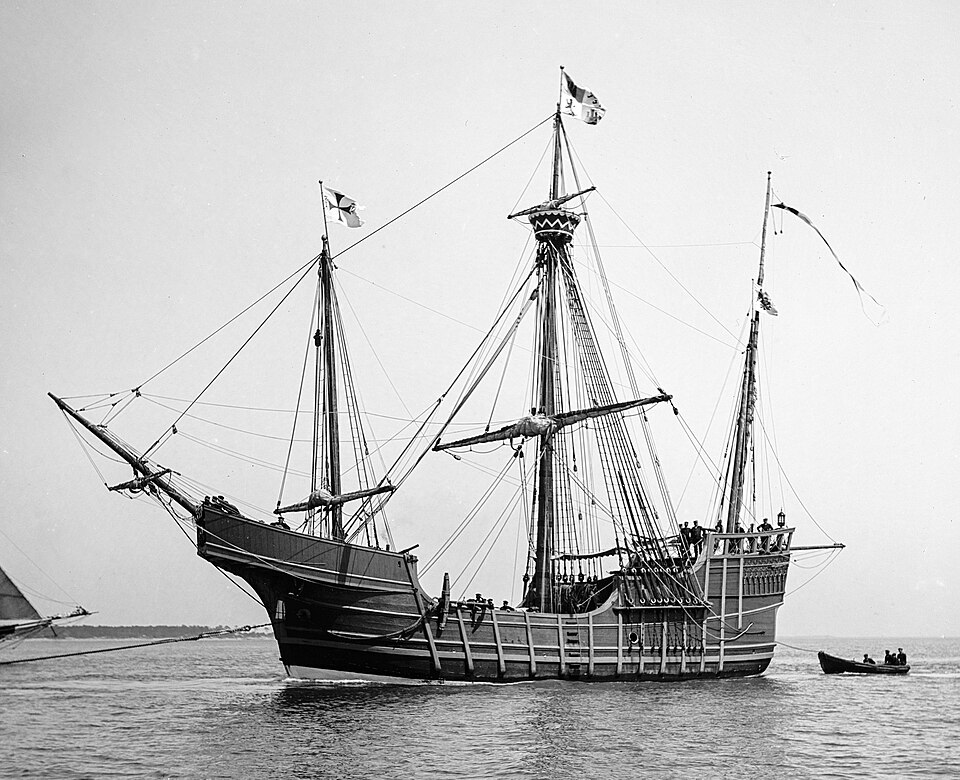
La Santa María de la Inmaculada Concepción (Spanish: [la ˈsãn̪.t̪a maˈɾi.a ð̞e̞ la ĩm.ma.kuˈla.ð̞a kõn̟.θeβ̞ˈθjõn] lit. 'The Holy Mary of the Immaculate Conception'), or La Santa María (Spanish: [la ˈsãn̪.t̪a maˈɾi.a]), originally La Gallega (Spanish: [la ɡaˈʝe.ɣ̞a]), The Galician, was the largest of the three small ships sailed by Christopher Columbus in his first expedition across the Atlantic Ocean in 1492, with the backing of the Catholic Monarchs of Spain. Her master and owner was Juan de la Cosa.
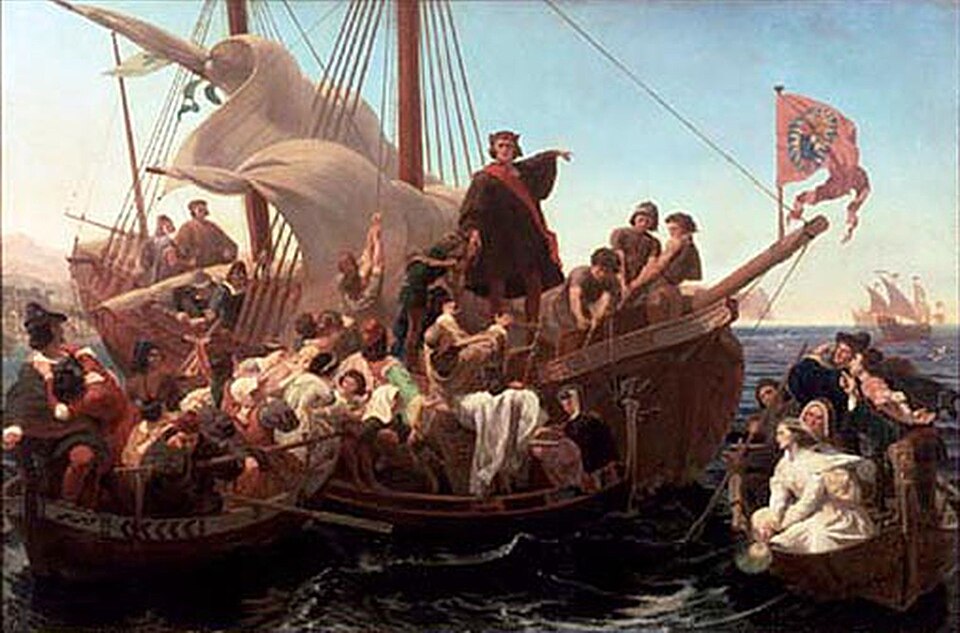
In 1492, the ship ran aground on a sand bar near modern-day Cap-Haïtien of the island of Hispaniola. The ship's wood was stripped and then utilized in the construction of a wooden fort at Limonade. One of her anchors survives to the present day in a museum in Haiti. In the 19th and 20th century, several replicas were created with varying attributes and dimensions, as the size and details of the original ship are unknown.
Further reading
- The ships of Christopher Columbus · Xavier Pastor (1992)Covers the ships of Columbus, including the Santa María, the Niña and the Pinta.Find a copy: AbeBooks · Amazon · WorldCat
- Admiral of the ocean sea · Samuel Eliot Morison (1942)Morison's biography of Columbus covers his voyages of discovery across the ocean sea.Find a copy: AbeBooks · Amazon · WorldCat
Santa María is one of the 3D puzzles in World Artifacts: turn a cloud of broken pieces until it lines up. For iPhone, iPad, Apple Vision Pro and Android.

