World Artifacts › Atlas › Spain
Segovia Aqueduct
The aqueduct is held together by nothing but gravity: twenty thousand granite blocks, no mortar, balanced for two thousand years. It was still supplying water to the city in the twentieth century.
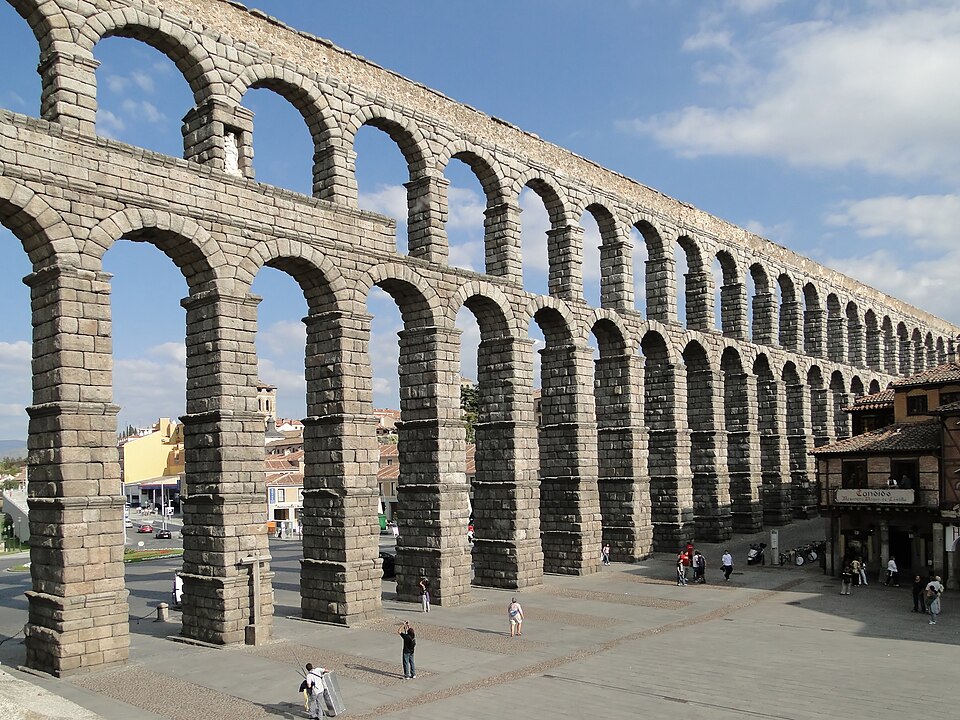
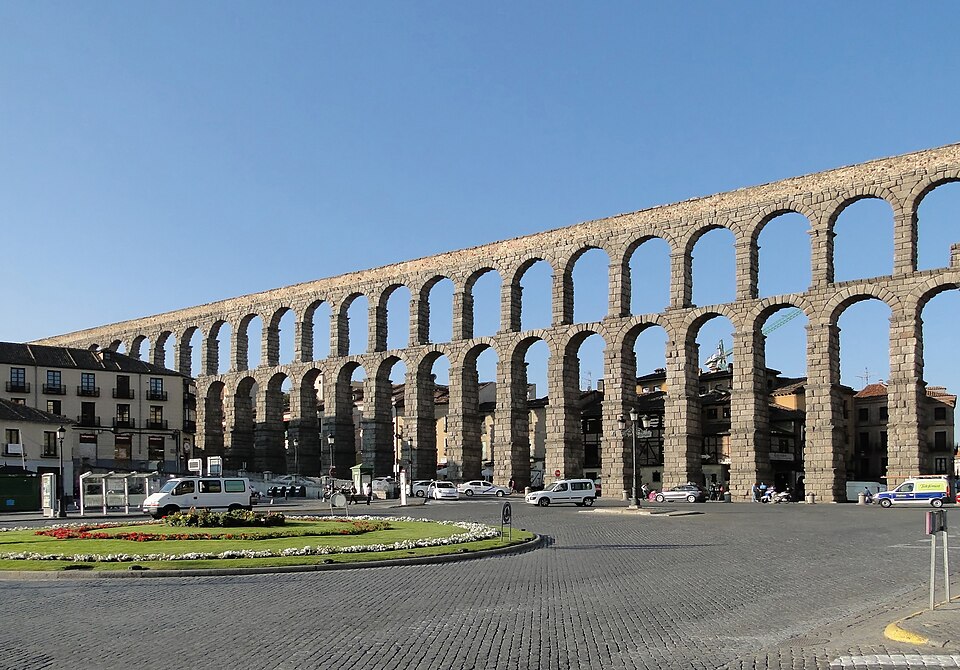
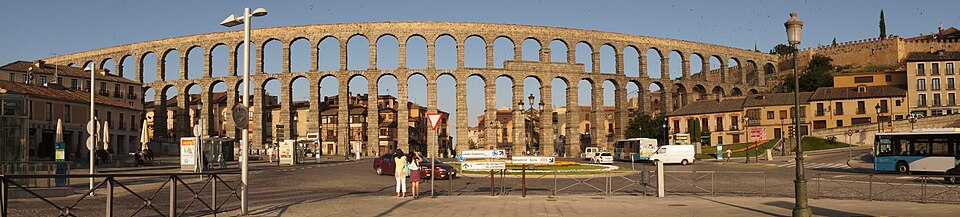
The Aqueduct of Segovia (Spanish: Acueducto de Segovia) is a Roman aqueduct in Spain, built around the first century AD to channel water from springs in the mountains 17 kilometres (11 mi) to Segovia's fountains, public baths and private houses, in use until 1973. Its elevated section, with its complete arcade of 167 arches, is one of the best-preserved Roman aqueduct bridges and the foremost symbol of Segovia, as evidenced by its presence on the city's coat of arms. The Old Town of Segovia and the aqueduct were declared a UNESCO World Heritage Site in 1985.
Further reading
Segovia Aqueduct is one of the 3D puzzles in World Artifacts: turn a cloud of broken pieces until it lines up. For iPhone, iPad, Apple Vision Pro and Android.

