World Artifacts › Atlas › Spain
Spanish Guitar
The guitar as it is now was settled by one maker in the 1850s, who enlarged the body and fanned the bracing inside. Every classical guitar since is essentially his design.
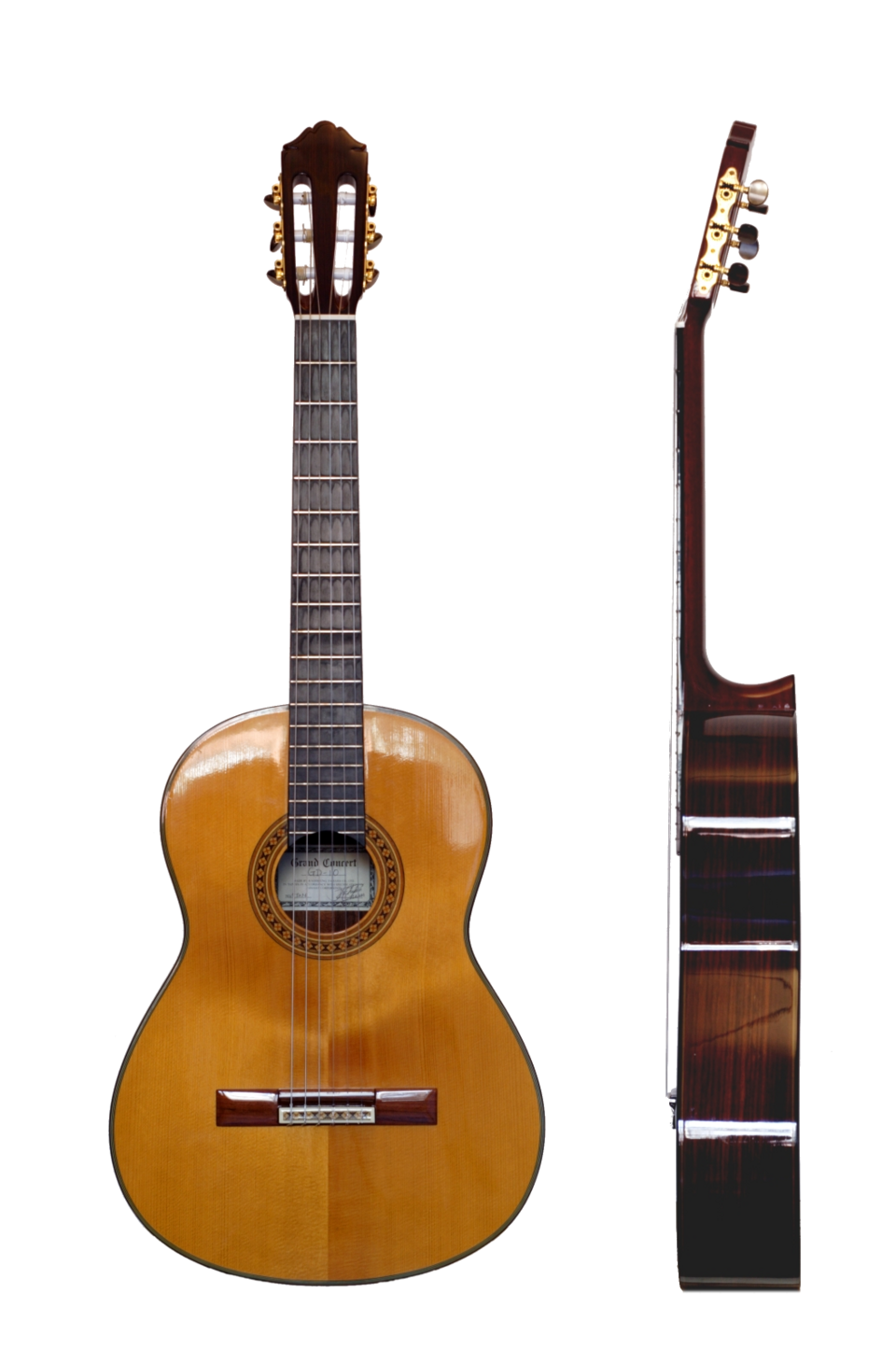
The classical guitar, also known as a Spanish guitar, is a member of the guitar family used in classical music and other styles. As an acoustic wooden string instrument with strings made of gut or nylon, it is a precursor of the modern steel-string acoustic and electric guitars, both of which use metal strings. Classical guitars derive from instruments such as the lute, the vihuela, the gittern (the name being a derivative of the Greek "kithara"), which evolved into the Renaissance guitar and into the 17th and 18th-century baroque guitar. Today's modern classical guitar was established by the late designs of a 19th-century Spanish luthier, Antonio de Torres Jurado.

For a right-handed player, the traditional classical guitar has 12 frets that are clear of the body and is properly held up by the left leg, so that the hand that plucks or strums the strings does so near the back of the sound hole. This is called the classical, or sul ponticello, position. However, the right hand may move to the sul tasto position, closer to the fretboard, to achieve a different tonal quality (warmer), or closer to the saddle (more metallic). To position the classical guitar correctly, the player's left leg is typically raised on a foot rest or a support is used. The modern steel string guitar, on the other hand, usually has at least 14 frets clear of the body (see Dreadnought) and is commonly held with a strap around the neck and shoulder.

Further reading
Spanish Guitar is one of the 3D puzzles in World Artifacts: turn a cloud of broken pieces until it lines up. For iPhone, iPad, Apple Vision Pro and Android.

