World Artifacts › Atlas › Ethiopia
Axum Obelisk
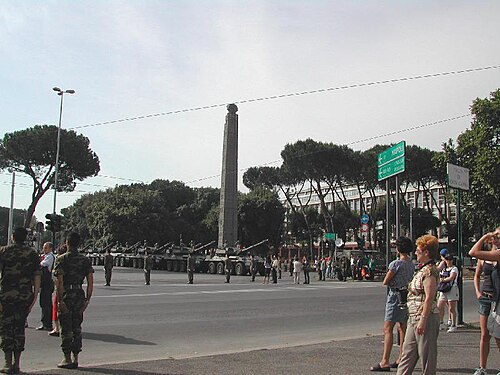
The Axum stelae are single pieces of granite, carved to look like storeyed buildings with false doors and windows. The largest ever raised is thirty-three metres and it fell, probably while being put up; another was taken to Rome by Mussolini in 1937 and returned in 2005 in three pieces.
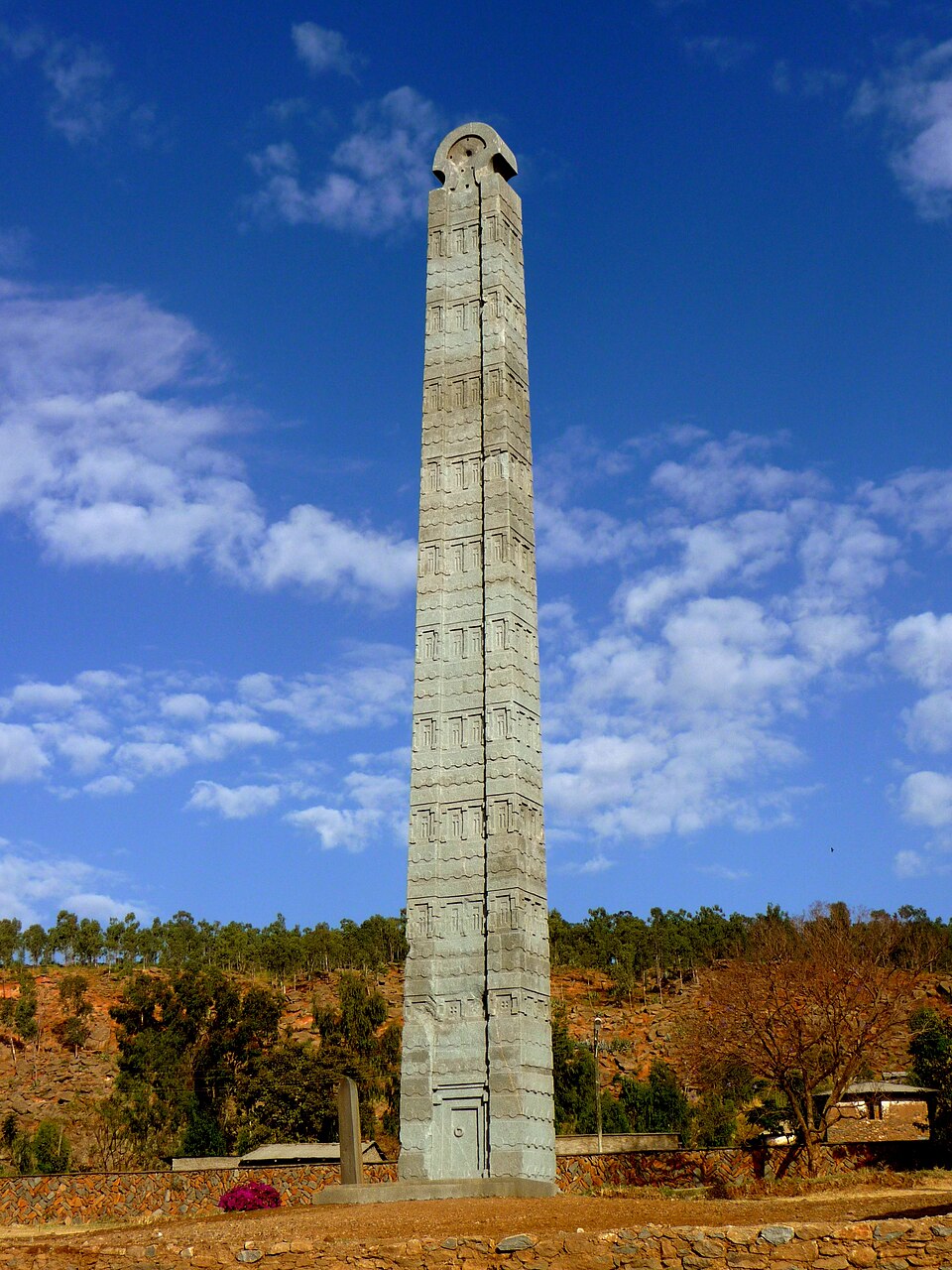
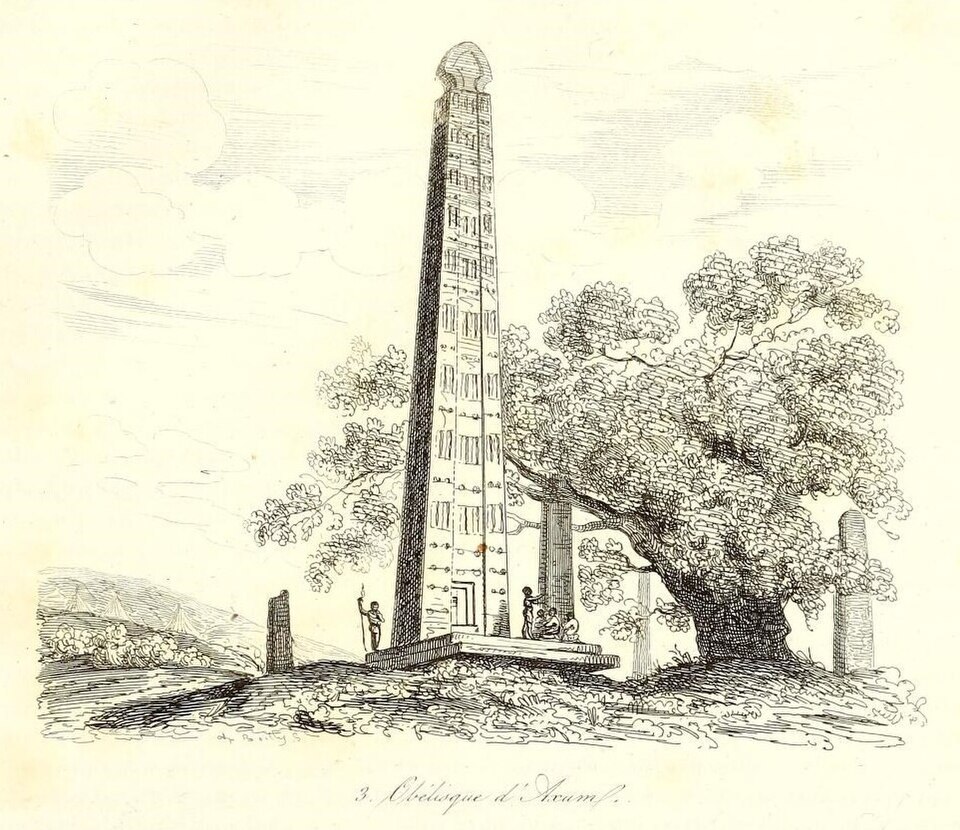
The Obelisk of Axum (Tigrinya: ሓወልቲ ኣኽሱም, romanized: ḥawelti Akhsum; Amharic: የአክሱም ሐውልት, romanized: Ye’Åksum ḥāwelt) is a 4th-century CE, 24-metre (79 ft) tall phonolite stele, weighing 160 tonnes (160 long tons; 180 short tons), in the city of Axum in Ethiopia. It is ornamented with two false doors at the base and features decorations resembling windows on all sides. The obelisk ends in a semi-circular top, which used to be enclosed by metal frames.
Further reading
Axum Obelisk is one of the 3D puzzles in World Artifacts: turn a cloud of broken pieces until it lines up. For iPhone, iPad, Apple Vision Pro and Android.

