World Artifacts › Atlas › Ethiopia
Ge'ez Manuscript
Ge'ez is no longer spoken and is still the language of the liturgy, written in its own script. Manuscripts are made on parchment prepared by hand and are still produced by monastery scribes today.
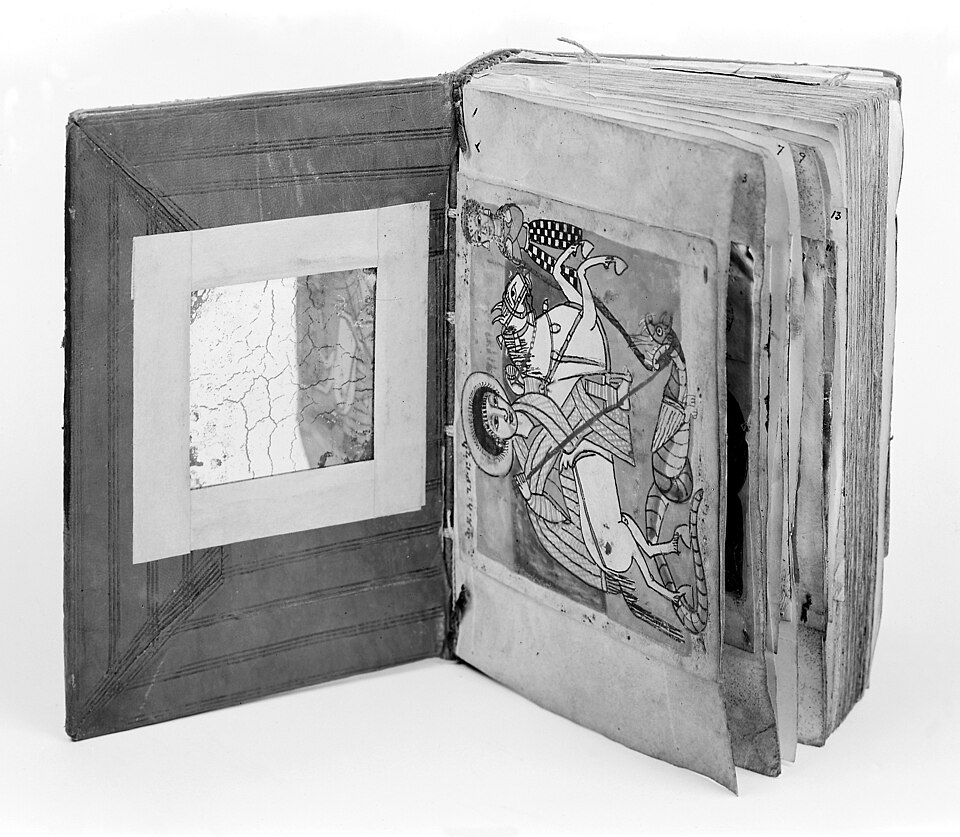
Ethiopian manuscript collections are found in many parts of the world, the monasteries and modern institutions in Ethiopia maintaining extensive collections with some monasteries still centres of manuscript production.
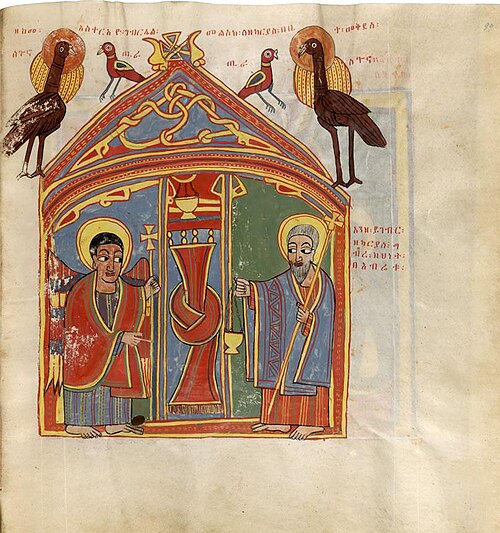
Parchment (berānnā) was used for Ethiopian manuscripts from the time of the Four Gospel books of Abbā Garimā, generally known as the Garima Gospels, preserved in the Abba Garima Monastery. These gospels are thought to be the oldest surviving Christian illuminated manuscripts, with their dating established by C-14 analysis. Apart from Islamic manuscripts, paper only came into general use in the twentieth century.
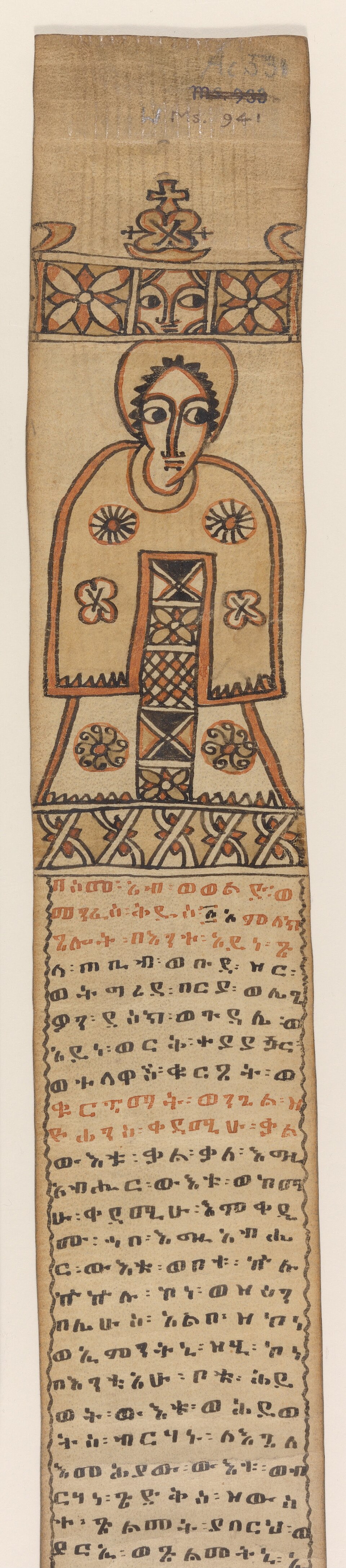
There are 88 languages in Ethiopia according to Ethnologue, but not all support manuscript cultures. The majority of manuscripts are in Ge'ez, the ancient liturgical language of Ethiopia.
Further reading
- Bookmaking in Ethiopia · Sergew Hable-Selassie (1981)Covers Ethiopian bookmaking: Ethiopic manuscripts, parchment, scriptoria, and writing materials and instruments.Find a copy: AbeBooks · Amazon · WorldCat
- Major themes in Ethiopian painting · Stanisław Chojnacki (1983)Covers themes in Ethiopian painting, including Christian art and saints in art.Find a copy: AbeBooks · Amazon · WorldCat
Ge'ez Manuscript is one of the 3D puzzles in World Artifacts: turn a cloud of broken pieces until it lines up. For iPhone, iPad, Apple Vision Pro and Android.

