World Artifacts › Atlas › Ethiopia
Habesha Kemis
The habesha kemis is hand-woven cotton with a coloured woven border called tibeb, and the width of that border and its pattern say where the wearer is from. A full dress is several metres of cloth woven on a pit loom.
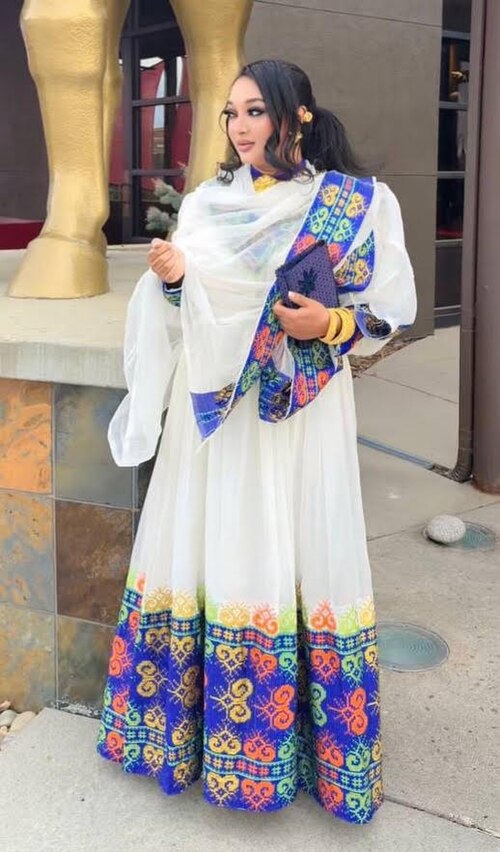
Habesha kemis (Amharic: ቀሚስ, meaning "Dress" in Amharic) is an Amharic term used by Amhara people to refer to their traditional women's attire.
The term Habesha kemis is a relatively recent expression that gained currency in Addis Ababa. Historically, the garment was referred to simply as kemis, a general word for "dress" in Amharic, as Amhara communities' daily wear is made from shemma fabric prior to the introduction of European textiles in the mid-20th century. Following the spread of European clothing styles, the garment became widely described as bahelawi kemis (cultural dress) to set it apart from the modern, European styles. Over time, the term Habesha kemis came to be used persistently within the urban context of Addis Ababa and eventually became the dominant label for the style mainly originating from Addis Ababa. The label "Habesha Kemis" is not inherently Tigrayan or Eritrean, it is an Amhara-based nomenclature.
Further reading
Habesha Kemis is one of the 3D puzzles in World Artifacts: turn a cloud of broken pieces until it lines up. For iPhone, iPad, Apple Vision Pro and Android.

