World Artifacts › Atlas › Ethiopia
Meskel Bonfire
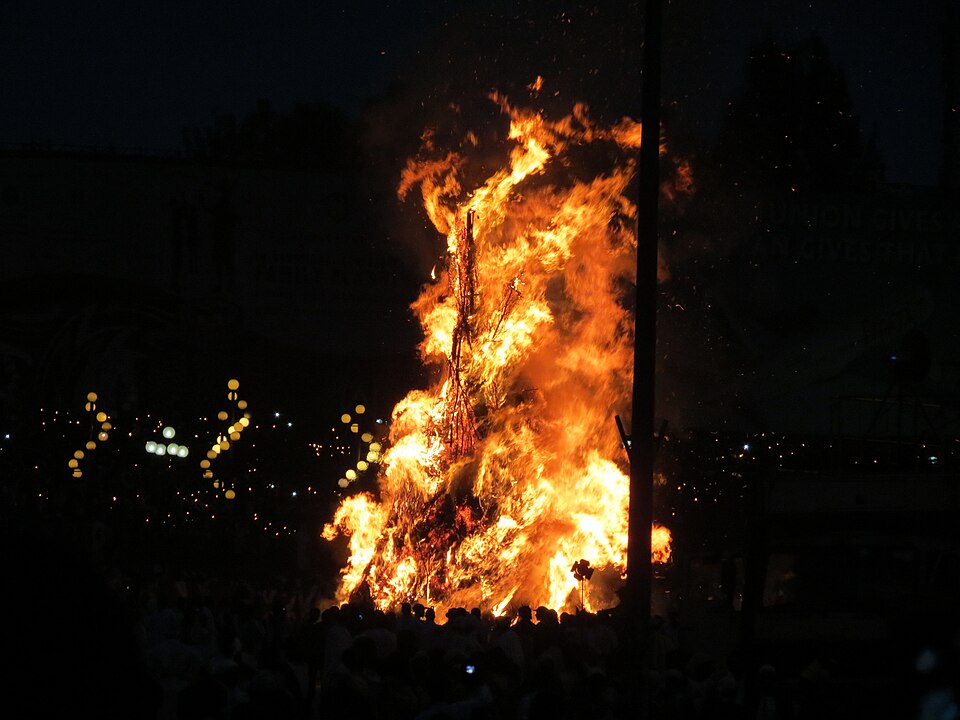
Meskel marks the finding of the True Cross, and the centre of it is a great conical bonfire of branches topped with daisies. Which way it falls when it burns through is read as a sign for the year, and the festival is on the UNESCO list.
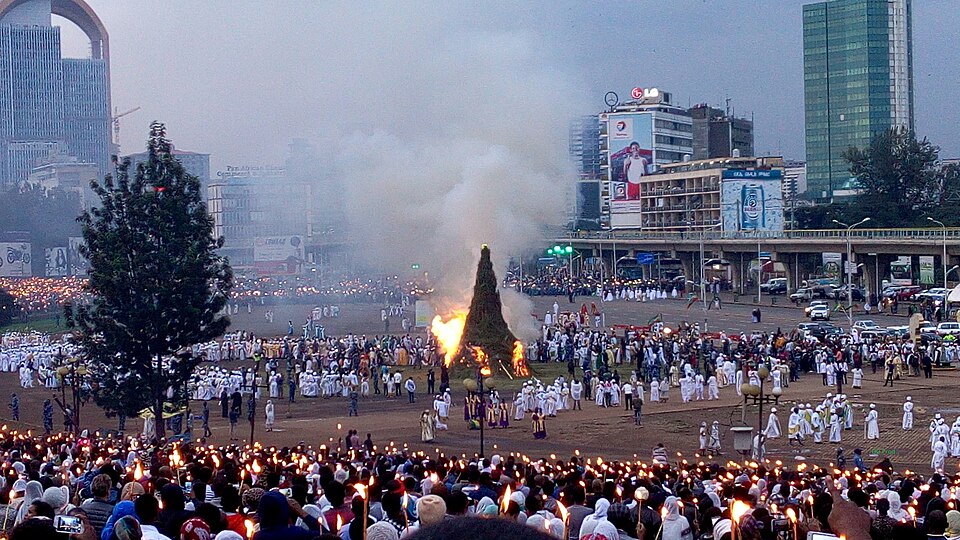
Meskel (Ge'ez: መስቀል, romanized: Mesk'el) is an Ethiopian and Eritrean Orthodox Tewahedo Church holiday that commemorates the discovery of the True Cross by the Roman Empress Saint Helena of Constantinople in the fourth century. Meskel is celebrated by Oriental Orthodox members of the Ethiopian Orthodox Tewahedo Church, the Eritrean Orthodox Tewahedo Church, and to a lesser extent Roman Catholic members of the Ethiopian Catholic Church, the Eritrean Catholic Church, and among Protestant members of P'ent'ay - Ethiopian-Eritrean Evangelicalism (including Pentecostal, Lutheran, Baptist, Mennonite, and other Evangelical churches). It is a localized version of the Feast of the Cross and occurs on the 17 Meskerem in the Ethiopian calendar (27 September, Gregorian calendar, or on 28 September in leap years). "Meskel" (or "Meskal" or "Mesqel", there are various ways to transliterate from Ge'ez to Latin script) is Amharic for "cross".
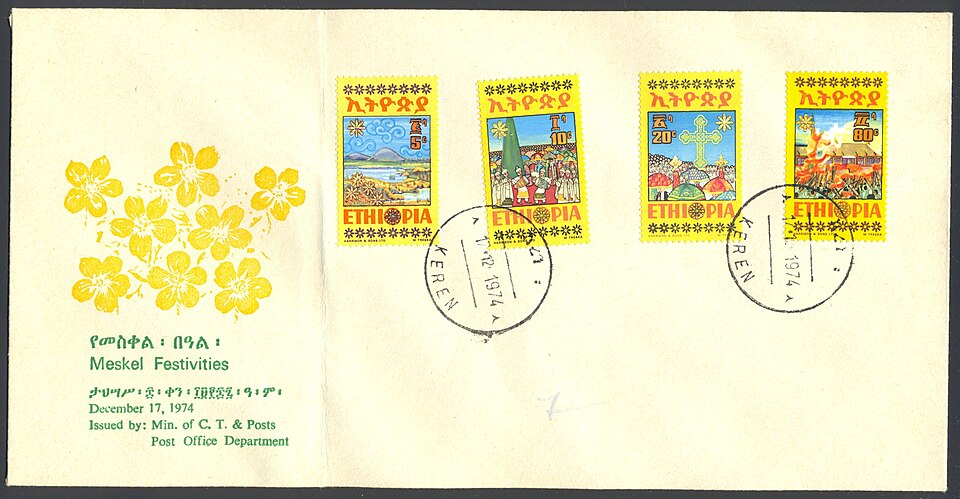
The feast is held in Meskel Square, named after the festival, in the capital city of Addis Ababa. Religious and civil leaders preside over the celebration, and public figures give speeches and reference biblical themes and stories. Many Ethiopians who live in cities return to their home villages to celebrate the national event. When darkness falls, the Demera is burned. UNESCO inscribed Meskel in 2013 on the Representative List of the Intangible Cultural Heritage of Humanity.
Further reading
Meskel Bonfire is one of the 3D puzzles in World Artifacts: turn a cloud of broken pieces until it lines up. For iPhone, iPad, Apple Vision Pro and Android.

