World Artifacts › Atlas › Finland
Finnish Flag
The blue and white were chosen for lakes and snow, and the flag was adopted in 1918 after the civil war, when a red flag was not an option. The design was argued over for months, including a version with a lion on it.

The national flag of Finland, also known in Finnish as the siniristilippu ('Blue Cross Flag'), dates from the beginning of the 20th century. The flag was adopted after independence from the Russian Empire, but its design has roots in the 19th century.
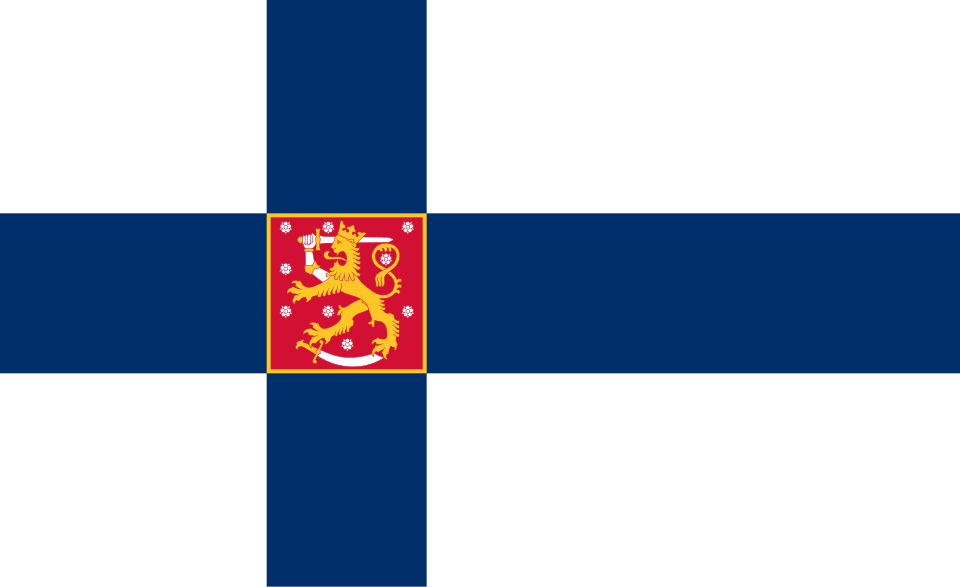
Symbolically, blue is said to represent the country's thousands of lakes and the sky, and white the snow that covers the land in winter. The colour combination has also been used historically in various Finnish provincial, military and town flags. The Nordic cross pattern connects to the shared tradition with other Nordic countries. While the cross itself is a Christian symbol and holds this meaning for some Finns, for many, the flag's primary association is with the nation's identity.
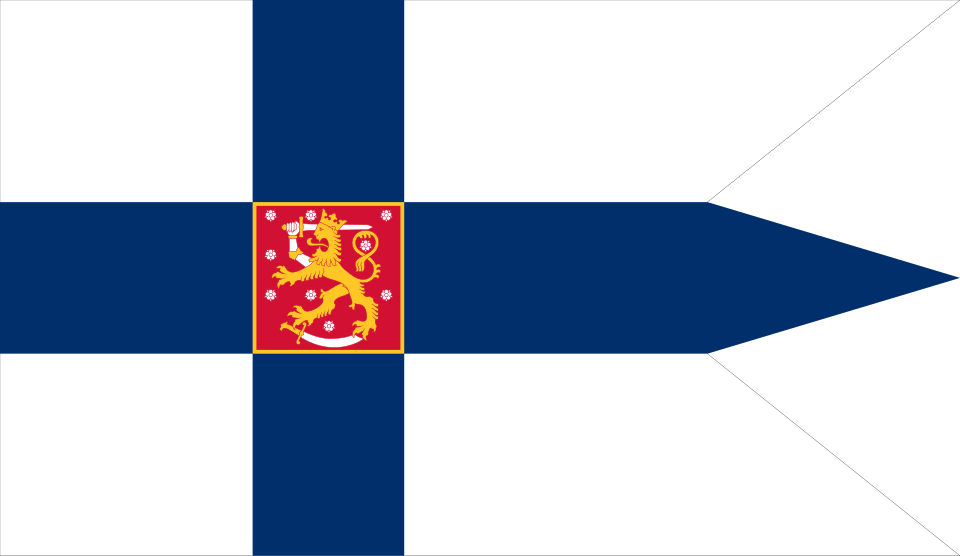
The flag has two main variations: the civil flag and the state flag. The state flag has the Finnish coat of arms in the centre, but is otherwise identical to the civil flag. Other variations are the swallow-tailed state flag used by the military, and the presidential standard, which is identical to the swallow-tailed state flag but also has in its upper-left corner the Cross of Liberty.
Finnish Flag is one of the 3D puzzles in World Artifacts: turn a cloud of broken pieces until it lines up. For iPhone, iPad, Apple Vision Pro and Android.

