World Artifacts › Atlas › Fiji
Cannibal Fork
The four-pronged wooden fork.
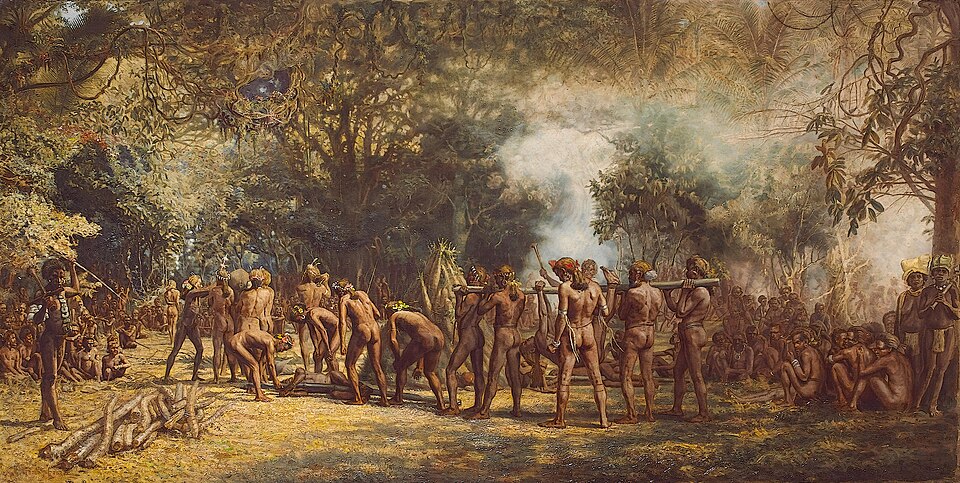
Cannibalism in Oceania is well documented for many parts of this region, with reports ranging from the early modern period to, in a few cases, the 21st century. Some archaeological evidence has also been found. Human cannibalism in Melanesia and Polynesia was primarily associated with war, with victors eating the vanquished, while in Australia it was confined to a minority of Aboriginal groups and was mostly associated with mortuary rites or as a contingency for hardship to avoid starvation.
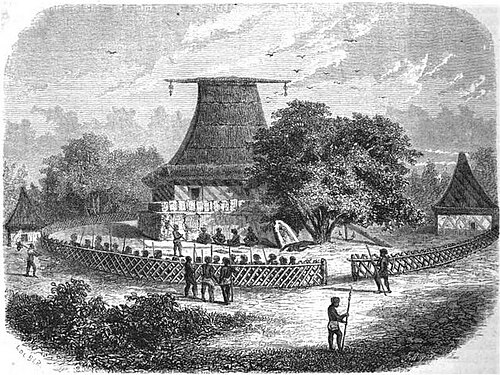
Cannibalism used to be widespread in parts of Fiji (once nicknamed the "Cannibal Isles"), among the Māori people of New Zealand, and in the Marquesas Islands. It was also practised in New Guinea and in parts of the Solomon Islands. According to some reports, cannibalism was still practised in Papua New Guinea around 2012, for cultural reasons.
Further reading
- Fiji and the Fijians · Thomas Williams (1858)Nineteenth-century account of Fiji and its people, covering missions, description and travel, and ethnology.Find a copy: AbeBooks · Amazon · WorldCat
- Cannibal Talk · Gananath Obeyesekere (2004)Examines cannibalism discourse and practices in encounters between Polynesian natives and Europeans after Cook's voyages.Find a copy: AbeBooks · Amazon · WorldCat
Cannibal Fork is one of the 3D puzzles in World Artifacts: turn a cloud of broken pieces until it lines up. For iPhone, iPad, Apple Vision Pro and Android.

