World Artifacts › Atlas › France
Bûche de Noël
The cake replaced an actual log, chosen to burn slowly through the twelve days of Christmas and sometimes sprinkled with wine. When houses got smaller fireplaces, the pastry version took over.
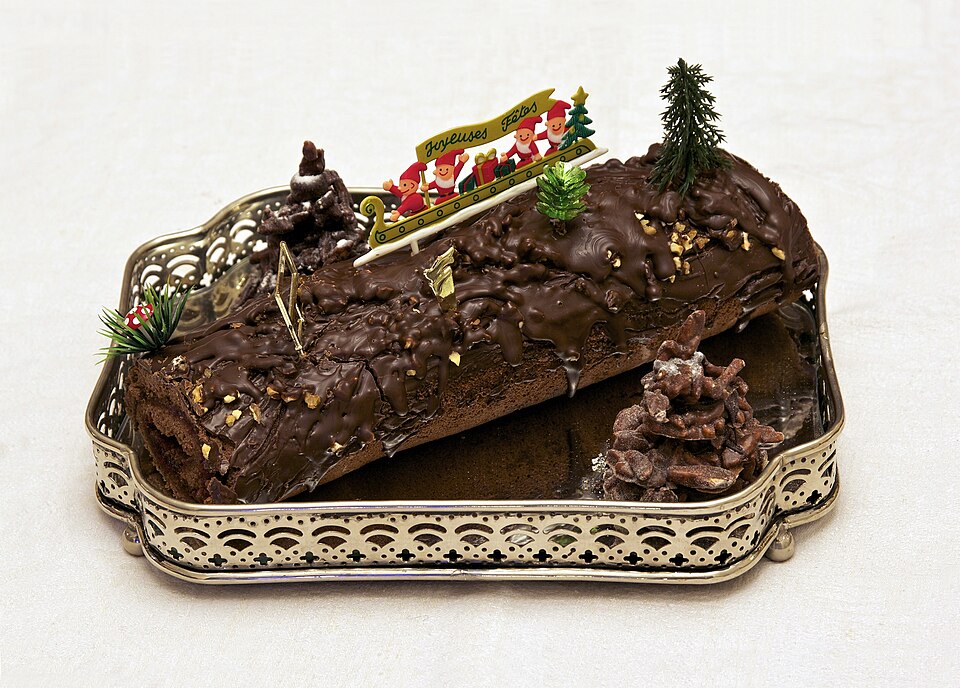
A Yule log or bûche de Noël (French pronunciation: [byʃ də nɔɛl] ) is a traditional Christmas cake, often served as a dessert, especially in France, Belgium, Luxembourg, Switzerland, Lebanon, Vietnam, and Quebec, Canada. Variants are also served in the United States, United Kingdom, Cambodia, Scandinavia, Portugal, Spain, and Japan.
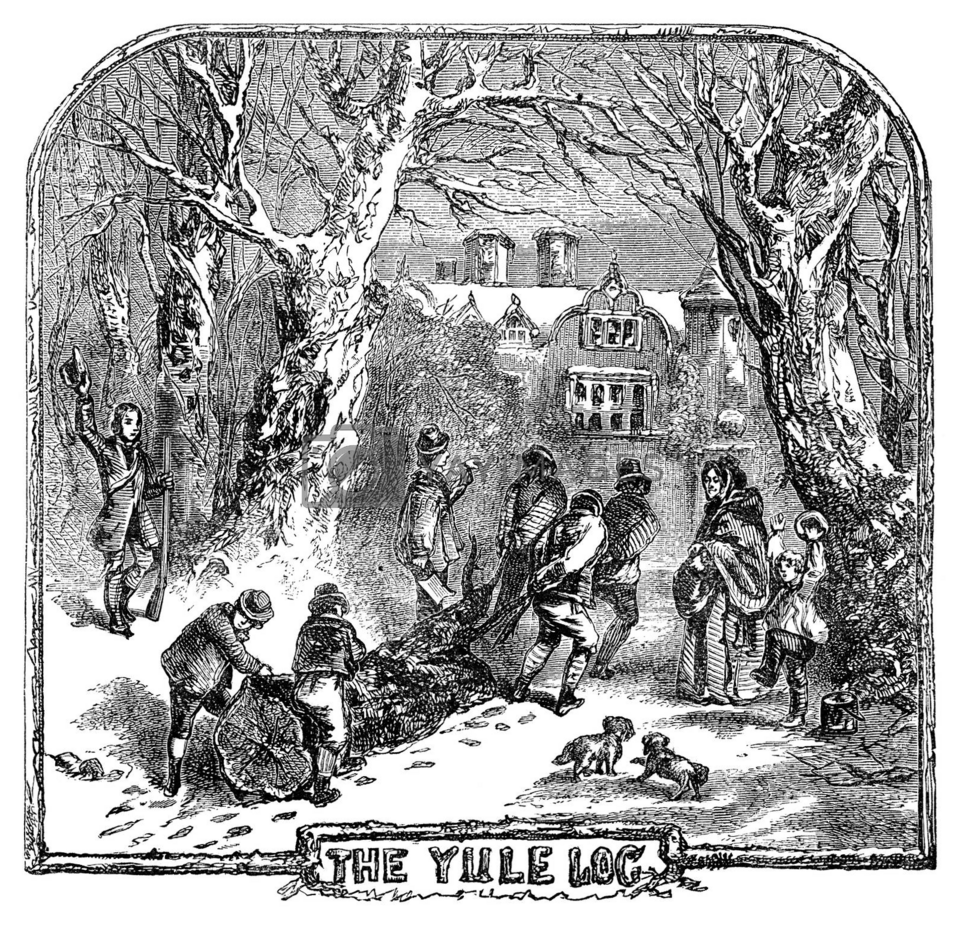
Made of sponge cake, to resemble a miniature actual Yule log, it is a form of sweet roulade. The cake emerged in the 19th century, probably in France, before spreading to other countries. It is traditionally made from a genoise, generally baked in a large, shallow Swiss roll pan, iced, rolled to form a cylinder, and iced again on the outside. The most common combination is basic yellow sponge cake and chocolate buttercream, though many variations that include chocolate cake, ganache, and icings flavored with espresso or liqueurs exist.
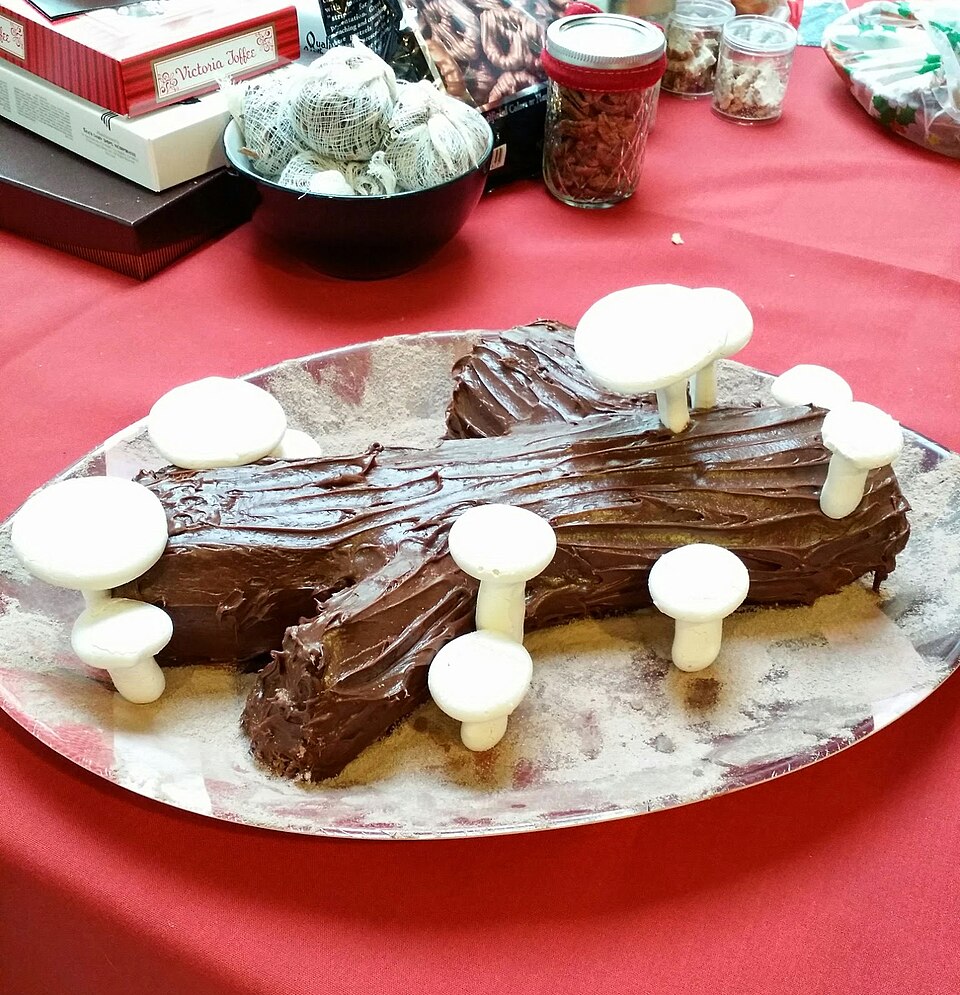
Yule logs are often served with one end cut off and set atop the cake, or protruding from its side to resemble a chopped off branch. A bark-like texture is often produced by dragging a fork through the icing, and powdered sugar sprinkled to resemble snow. Other cake decorations may include actual tree branches, fresh berries, and mushrooms made of meringue or marzipan.
Further reading
- The Stations of the Sun · Ronald Hutton (1996)Covers the festivals, folklore and customs of the ritual year, including holidays.Find a copy: AbeBooks · Amazon · WorldCat
- Yule and Christmas · Alexander Tille (1899)A study of Yule and Christmas and their Germanic calendar origins.Find a copy: AbeBooks · Amazon · WorldCat
Bûche de Noël is one of the 3D puzzles in World Artifacts: turn a cloud of broken pieces until it lines up. For iPhone, iPad, Apple Vision Pro and Android.

