World Artifacts › Atlas › France
Château de Chambord
Chambord has more than four hundred rooms and a roofline built to look like a town, and the king who ordered it spent only a few weeks there in his life. The double staircase in the middle is two spirals that wind around each other without ever meeting.
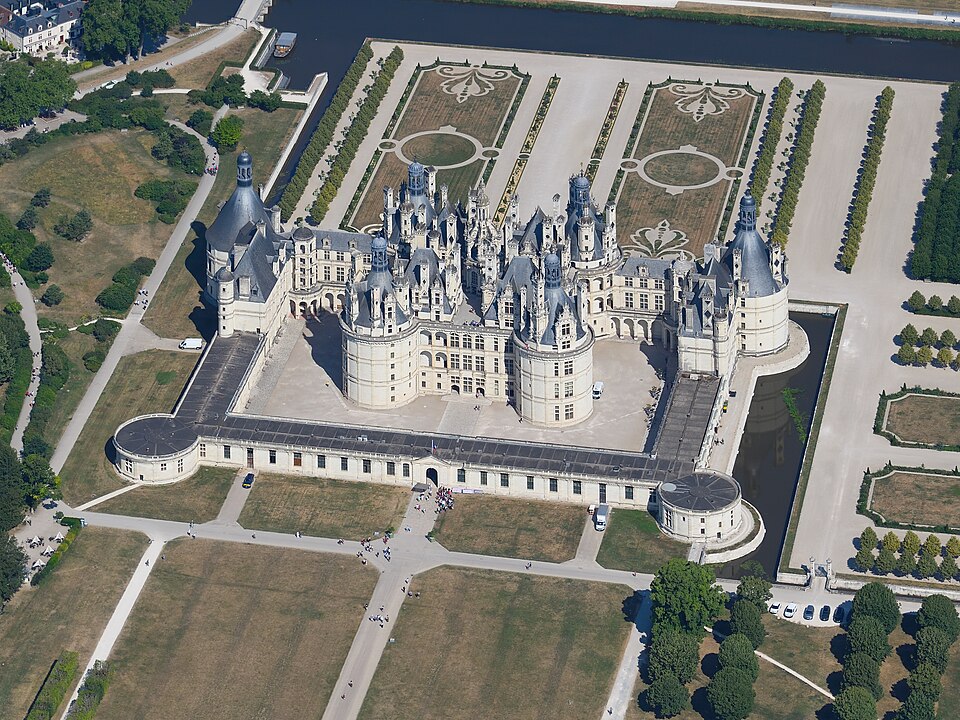
The Château de Chambord (French pronunciation: [ʃɑto d(ə) ʃɑ̃bɔʁ]) in Chambord, Centre-Val de Loire, France, is one of the most recognisable châteaux in the world because of its very distinctive French Renaissance architecture, which blends traditional French medieval forms with classical Renaissance structures. The building was commissioned by Francis I of France and built between 1519 and 1547.
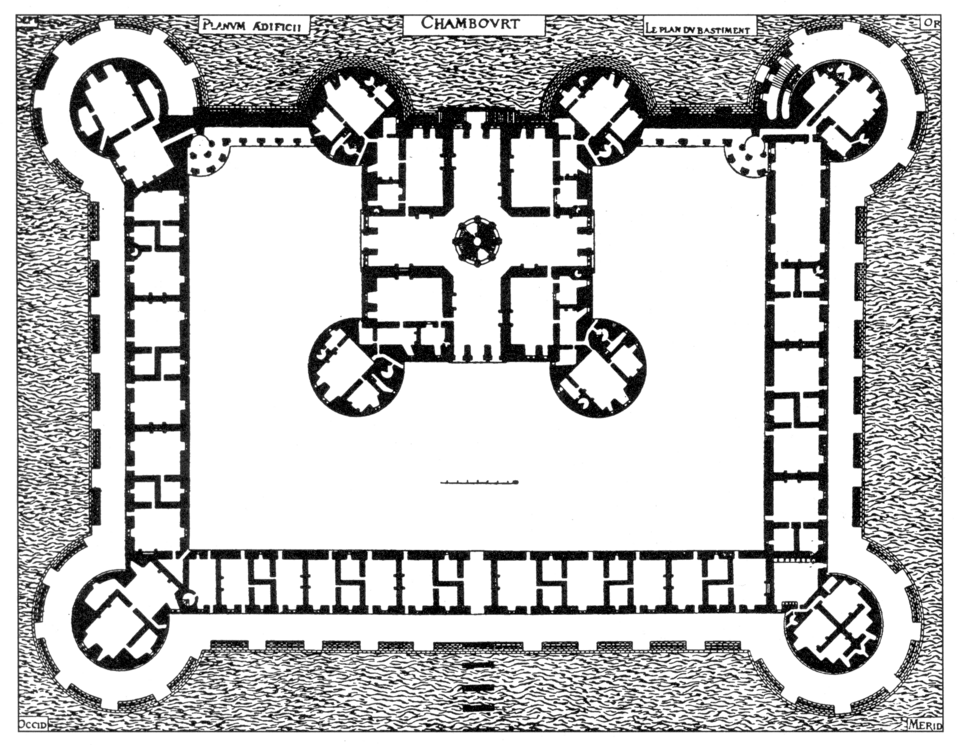
Chambord is the largest château in the Loire Valley; it was built to serve as a hunting lodge for Francis I, who maintained his royal residences at the Château de Blois and Amboise. The original design of the château is attributed to the Tuscan architect Domenico da Cortona; Leonardo da Vinci may have also influenced the design.
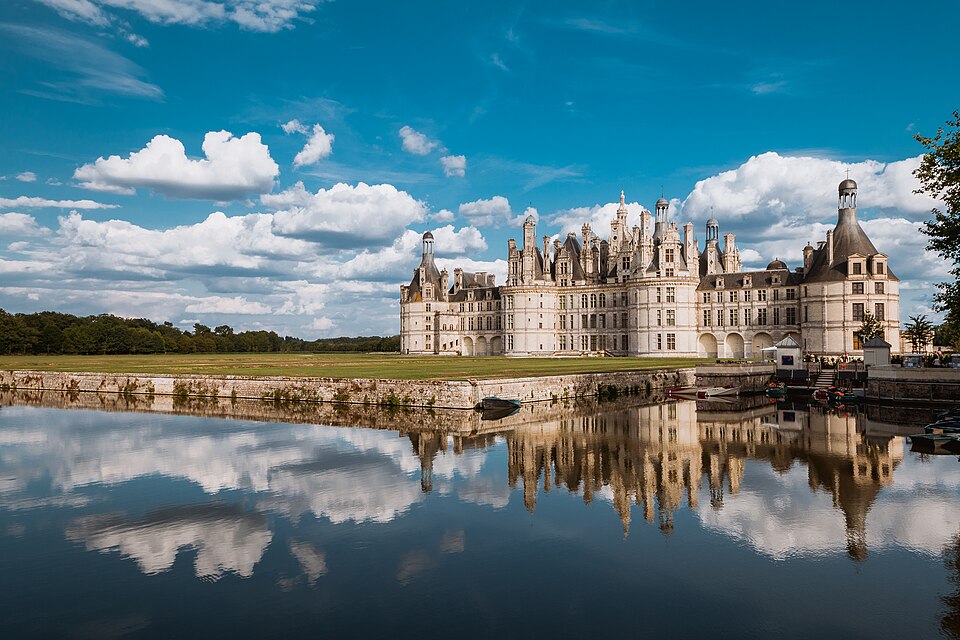
Chambord was altered considerably during the 28 years of its construction, during which it was overseen on-site by Pierre Neveu. With the château nearing completion, Francis showed off his enormous symbol of wealth and power by hosting his old arch-rival, Charles V, Holy Roman Emperor, at Chambord.
Further reading
- Chateaux of the Val de Loire · Serge Chirol (1992)A pictorial architectural survey of the castles of the Loire valley.Find a copy: AbeBooks · Amazon · WorldCat
- Renaissance warrior and patron · Knecht, R. J. (1994)A biography of Francis I, the king of France who ordered Chambord.Find a copy: AbeBooks · Amazon · WorldCat
Château de Chambord is one of the 3D puzzles in World Artifacts: turn a cloud of broken pieces until it lines up. For iPhone, iPad, Apple Vision Pro and Android.

