World Artifacts › Atlas › France
Concorde
Concorde's nose hinged down for landing because the pilots could not otherwise see the runway over it. In flight the airframe grew about twenty centimetres from the heat, and a gap opened on the flight deck that the crew liked to wedge a cap into.
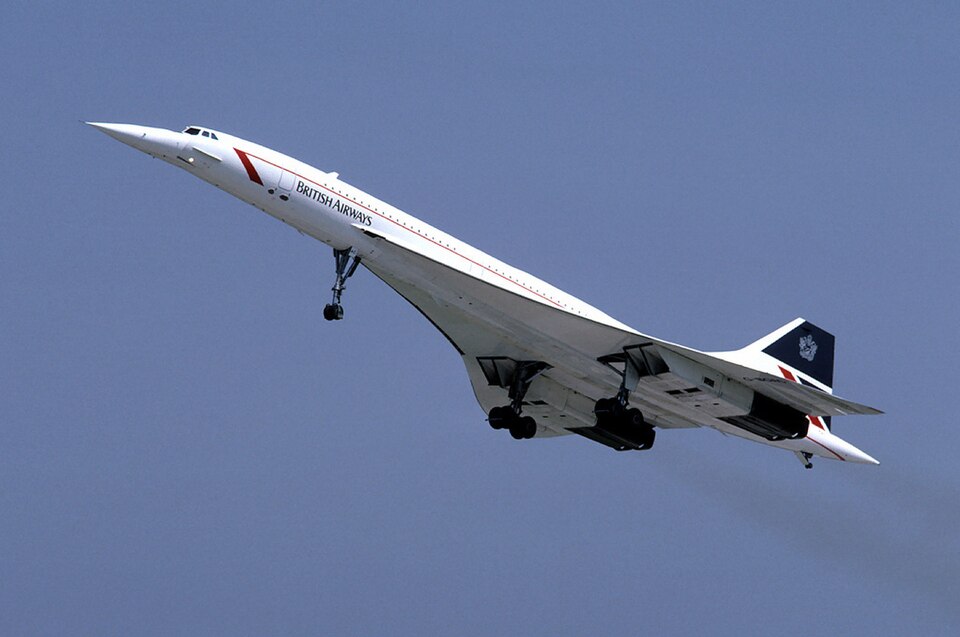
Concorde ( KONG-kord, French: [kɔ̃kɔʁd] ) is a retired Anglo-French supersonic airliner jointly developed and manufactured by Sud Aviation and the British Aircraft Corporation (BAC).
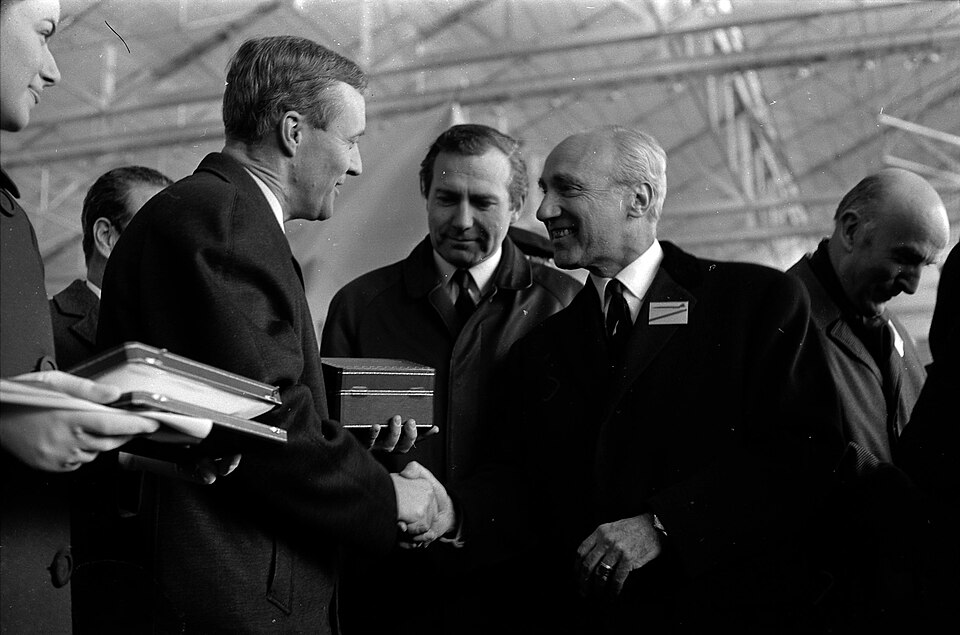
Studies began in 1954 and a UK-France treaty followed in 1962, as the programme cost was estimated at £70 million (£1.77 billion in 2025).
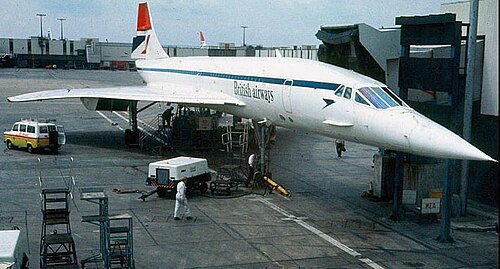
Construction of six prototypes began in February 1965, with the first flight from Toulouse on 2 March 1969.
The market forecast was 350 aircraft, with manufacturers receiving up to 100 options from major airlines.
On 9 October 1975, it received its French certificate of airworthiness, and was certified by the UK CAA on 5 December.
Concorde is an aircraft design with a narrow fuselage permitting four-abreast seating for 92 to 128 passengers, an ogival delta wing, and a droop nose for landing visibility.
It is powered by four Rolls-Royce/Snecma Olympus 593 turbojets with variable engine intake ramps, and reheat for take-off and acceleration to supersonic speed.
Constructed from aluminium, it was the first airliner to have analogue fly-by-wire flight controls.
The airliner had transatlantic range while supercruising at twice the speed of sound for 75% of the distance.
Delays and cost overruns pushed costs to £1.5-2.1 billion in 1976 (£12-16.7 billion in 2025).
Concorde entered service on 21 January 1976 with Air France from Paris-Roissy and British Airways from London Heathrow.
Further reading
Concorde is one of the 3D puzzles in World Artifacts: turn a cloud of broken pieces until it lines up. For iPhone, iPad, Apple Vision Pro and Android.

