World Artifacts › Atlas › France
Eiffel Tower
The tower was built for the 1889 exhibition with a permit for twenty years, and artists petitioned against it while it went up. It survived because the army found the top useful for radio, and it grows about fifteen centimetres taller on a hot day.
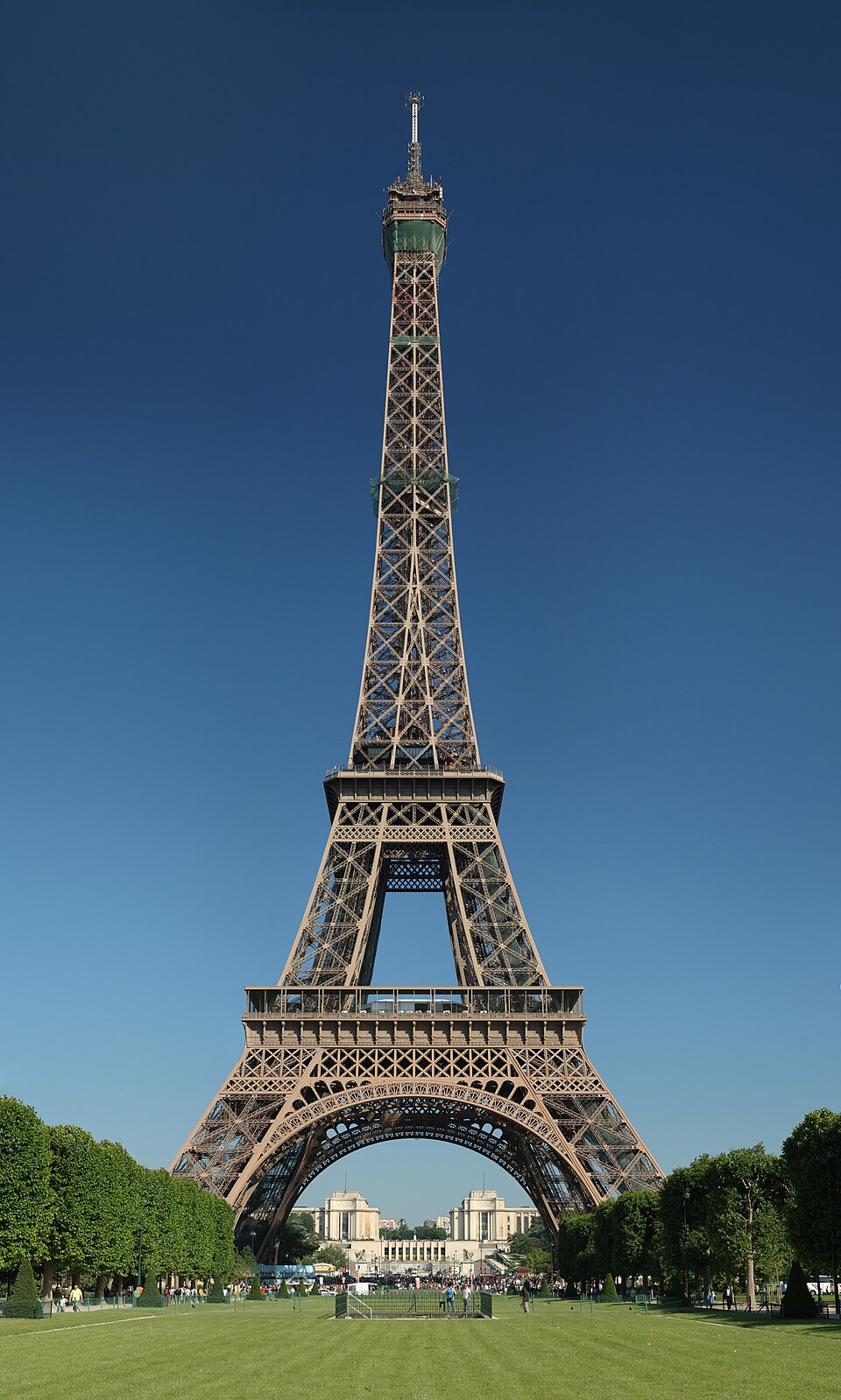
The Eiffel Tower ( EYE-fəl; French: Tour Eiffel [tuʁ ɛfɛl] ) is a lattice tower on the Champ de Mars in Paris, France. It is named after the engineer Gustave Eiffel, whose company designed and built the tower from 1887 to 1889.
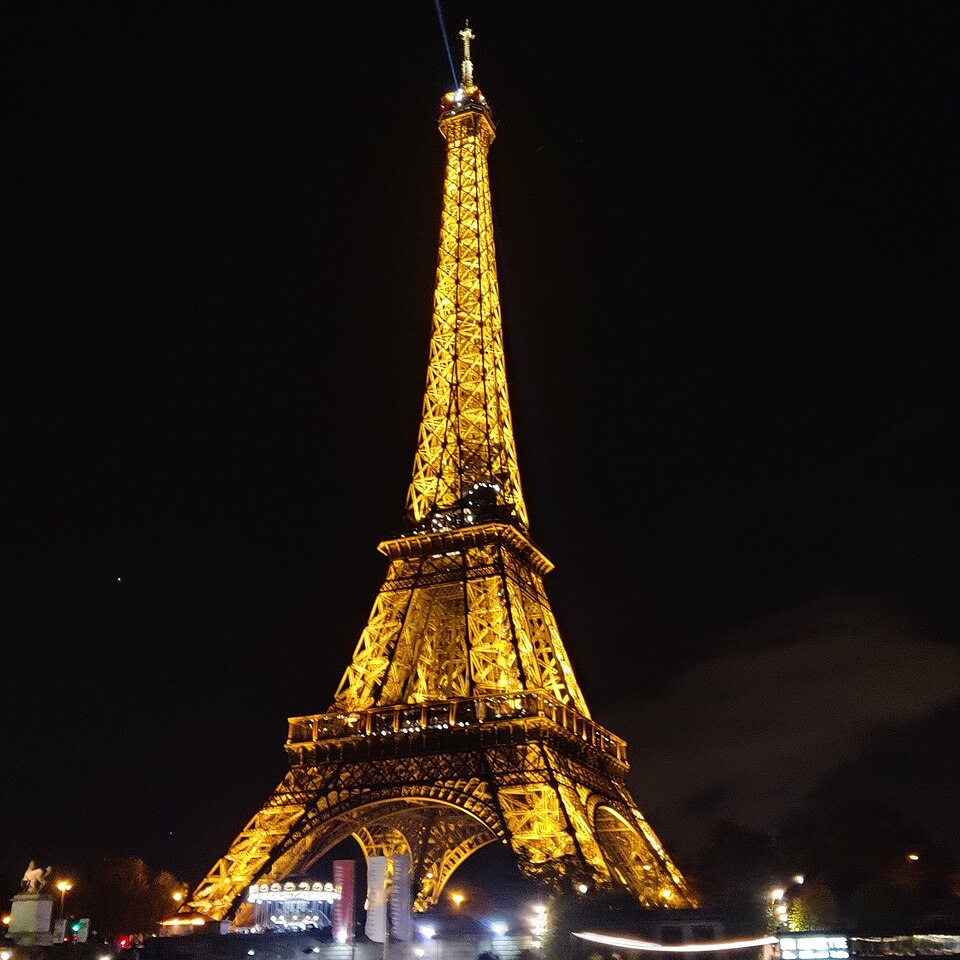
Locally nicknamed "La dame de fer" (French for "Iron Lady") for its use of wrought iron, it was constructed as the centrepiece of the 1889 World's Fair, and to crown the centennial anniversary of the French Revolution. Although initially criticised by some of France's leading artists and intellectuals for its design, it has since become a global cultural icon of France and one of the most recognisable structures in the world. The tower received 5,889,000 visitors in 2022. The Eiffel Tower is the most visited monument with an entrance fee in the world: 6.91 million people ascended it in 2015. It was designated a monument historique in 1964, and was named part of a UNESCO World Heritage Site ("Paris, Banks of the Seine") in 1991.
Further reading
- Eiffel's tower and the World's Fair where Buffalo Bill beguiled Paris, the artists quarreled, and Thomas Edison became a count · Jill Jonnes (2009)Tells the story of the Eiffel Tower and the 1889 Paris World's Fair where it was built.Find a copy: AbeBooks · Amazon · WorldCat
- The tallest tower · Joseph Harriss (1975)A history of the Eiffel Tower and the Belle Epoque France in which it was built.Find a copy: AbeBooks · Amazon · WorldCat
Eiffel Tower is one of the 3D puzzles in World Artifacts: turn a cloud of broken pieces until it lines up. For iPhone, iPad, Apple Vision Pro and Android.

