World Artifacts › Atlas › France
Lascaux Bull
Four teenagers and a dog found the cave in 1940. It was opened to visitors, and their breath grew mould and algae over paintings that had survived seventeen thousand years, so it was closed in 1963; what tourists see now is an exact copy.
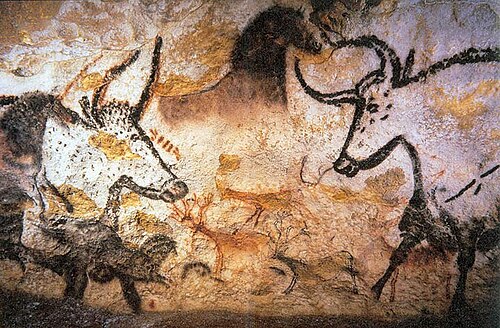
Lascaux (English: la-SKOH, US also lah-SKOH; French: Grotte de Lascaux French pronunciation: [ɡʁɔt də lasko], "Lascaux Cave") is a network of caves near the village of Montignac, in the department of Dordogne in southwestern France. Over 600 parietal wall paintings cover the interior walls and ceilings of the cave. The paintings represent primarily large animals, typical local contemporary fauna that correspond with the fossil record of the Upper Paleolithic in the area. They are the combined effort of many generations.
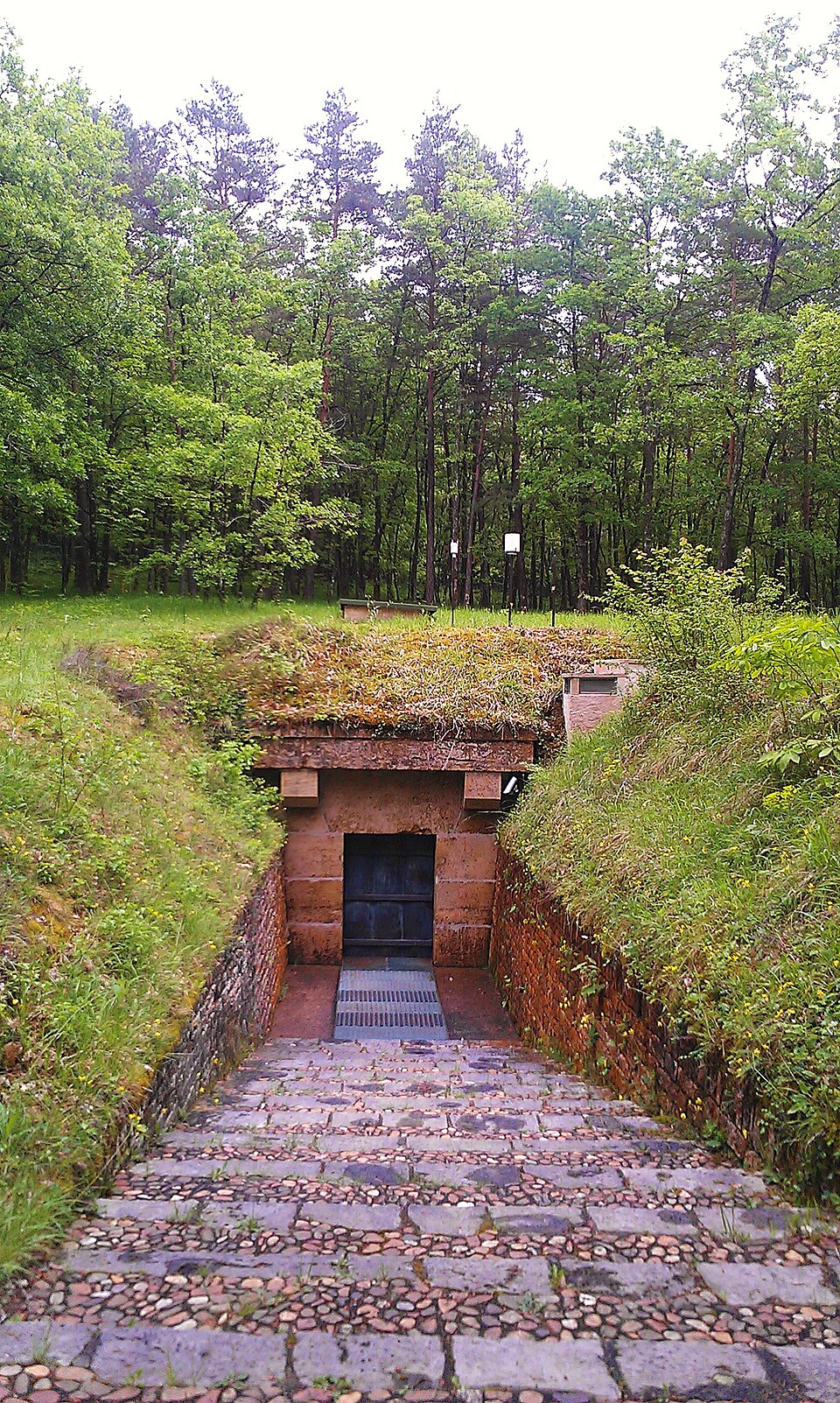
With continued debate, the age of the paintings is now usually estimated at 17,000 to 22,000 years (early Magdalenian). Because of the outstanding prehistoric art in the cave, Lascaux was inducted into the UNESCO World Heritage List in 1979, as an element of the Prehistoric Sites and Decorated Caves of the Vézère Valley.
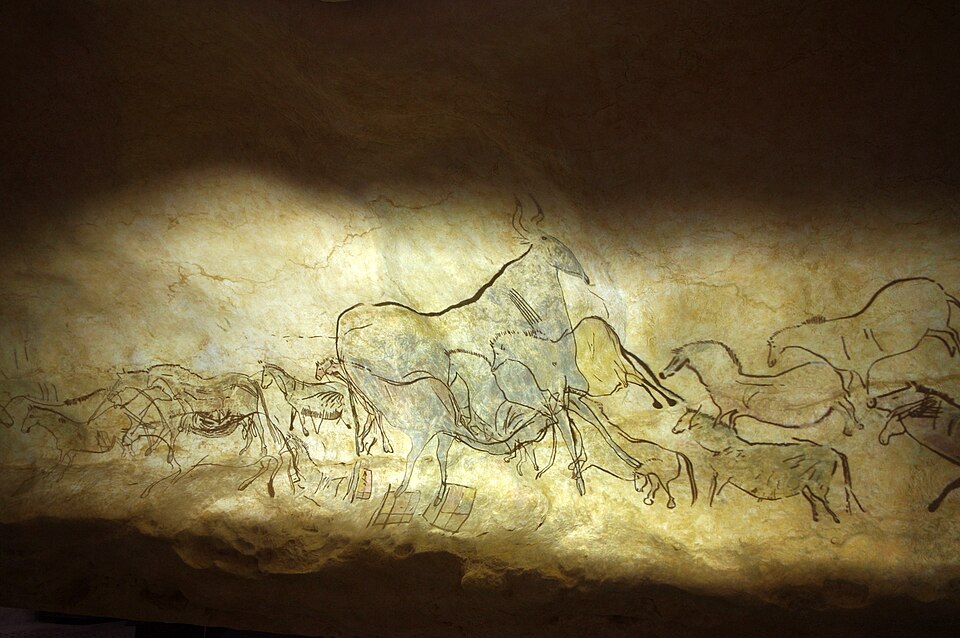
The original caves have been closed to the public since 1963, as their condition was quickly deteriorating, but there are now a number of replicas.
Further reading
Lascaux Bull is one of the 3D puzzles in World Artifacts: turn a cloud of broken pieces until it lines up. For iPhone, iPad, Apple Vision Pro and Android.

