World Artifacts › Atlas › France
Melusine
Melusine is a fairy who takes a serpent's tail one day a week and makes her husband promise never to look. He looks. The lords of Lusignan claimed her as an ancestor, which was a way of claiming the land she was said to have built.
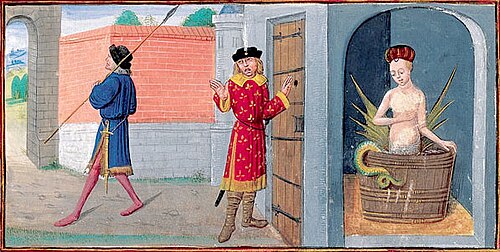
Mélusine (French: [melyzin]) or Melusine or Melusina is a figure of European folklore, a female spirit of fresh water in a holy well or river. She is usually depicted as a woman who is a serpent or fish from the waist down (much like a lamia or a mermaid). She is also sometimes illustrated with wings, two tails, or both. Her legends are especially connected with the northern and western areas of France, Luxembourg, and the Low Countries.
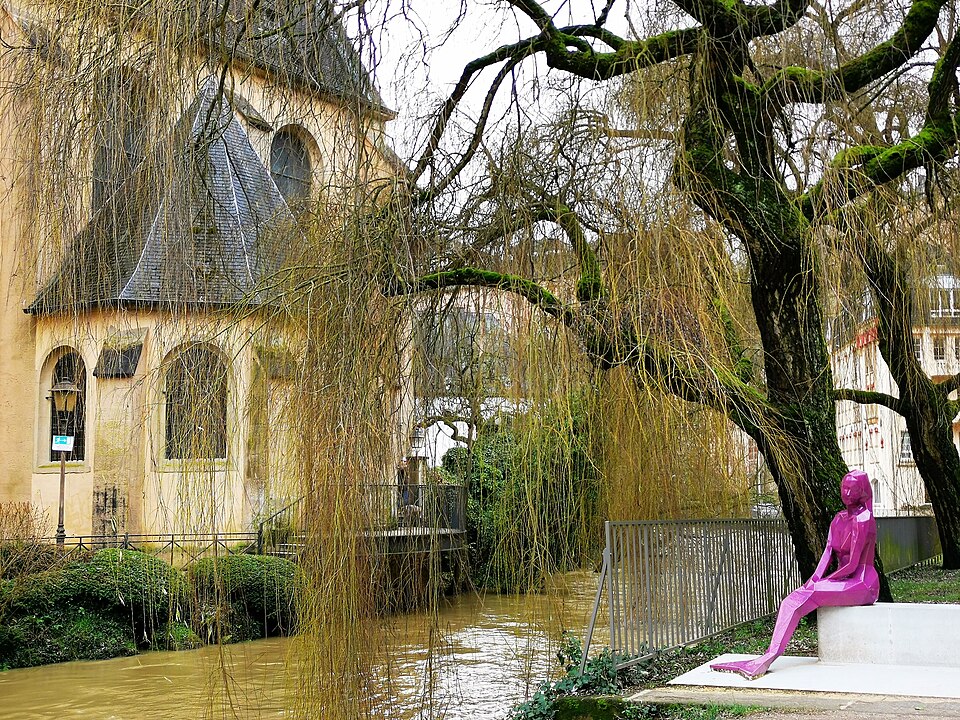
The Limburg-Luxemburg dynasty (which ruled the Holy Roman Empire from 1308 to 1437 as well as Bohemia and Hungary), the House of Anjou and their descendants the House of Plantagenet (kings of England), and the French House of Lusignan (kings of Cyprus from 1205-1472, and for shorter periods over Cilician Armenia and Jerusalem) are said in folk tales and medieval literature to be descended from Melusine. The story combines several major legendary themes, such as the Nereids, Naiad, water nymph or mermaid, the earth being (terroir), the genius loci or guardian spirit of a location, the succubus who comes from the diabolical world to unite carnally with a man, or the banshee or harbinger of death.
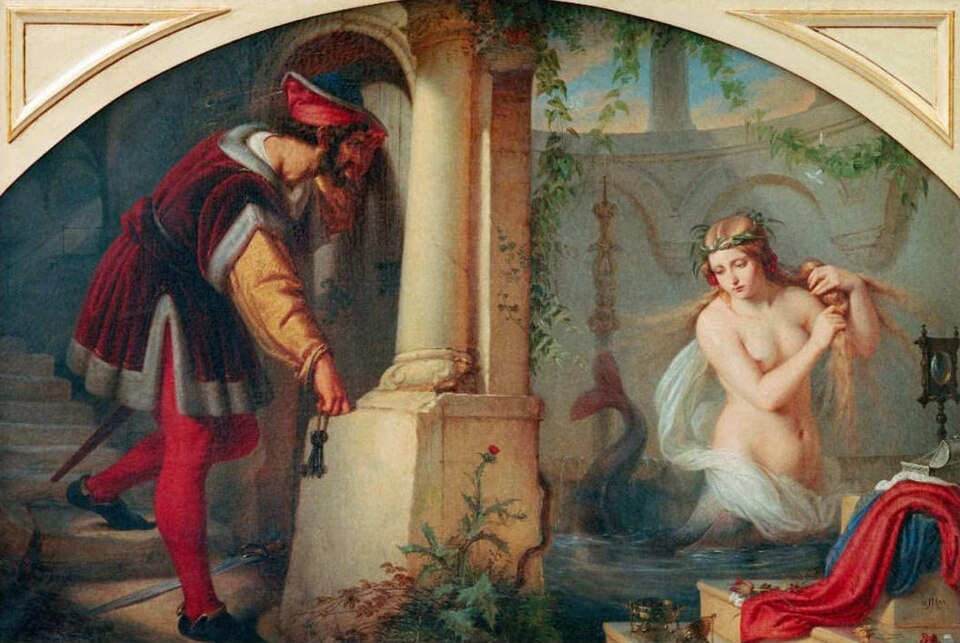
Further reading
- Romans of Partenay or of Lusignen - Otherwise Known As the Tale of Melusine · La Coudrette (2009)An edition of the Romans of Partenay or Lusignen, the tale of Melusine.Find a copy: AbeBooks · Amazon · WorldCat
- Curious myths of the Middle Ages · Sabine Baring-Gould (1867)Studies medieval legends and folklore, with a chapter on the Melusine legend.Find a copy: AbeBooks · Amazon · WorldCat
Melusine is one of the 3D puzzles in World Artifacts: turn a cloud of broken pieces until it lines up. For iPhone, iPad, Apple Vision Pro and Android.

