World Artifacts › Atlas › France
Mont-Saint-Michel
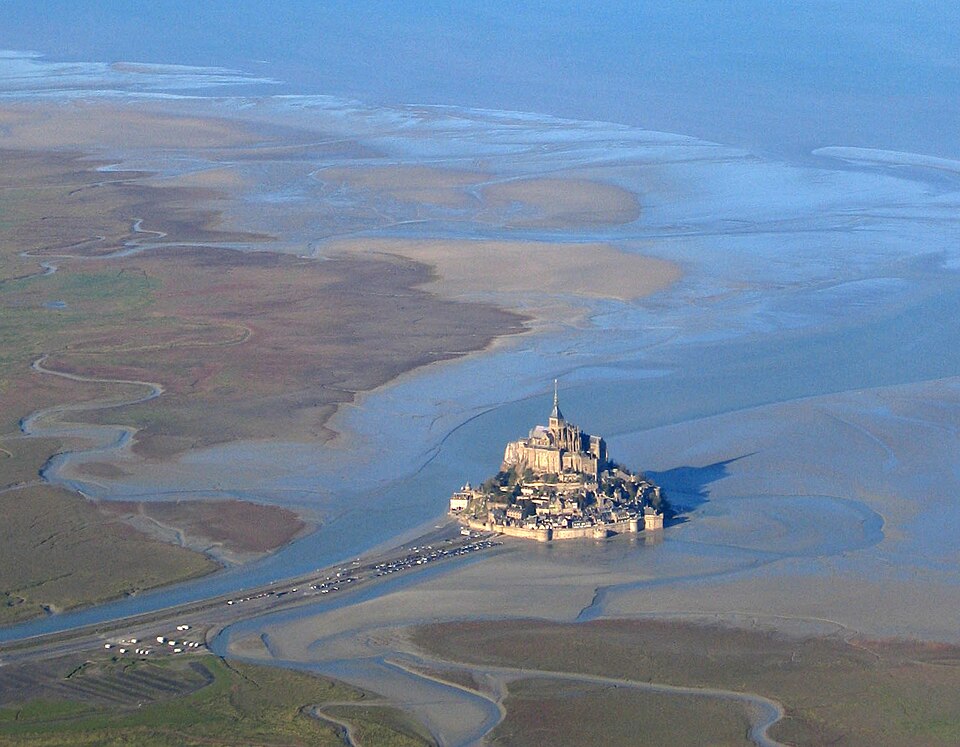
The tide here moves across the flats faster than a person can comfortably walk, and the mount was cut off twice a day for centuries. A causeway made it permanently dry until 2015, when a bridge on stilts was built to let the water run round it again.
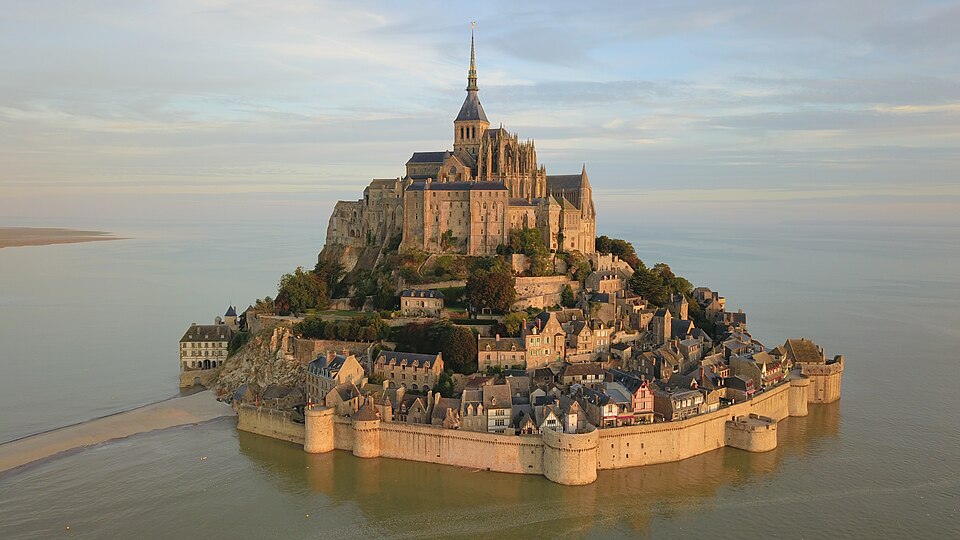
Mont-Saint-Michel (French pronunciation: [lə mɔ̃ sɛ̃ miʃɛl]; Norman: Mont Saint Miché; English: Saint Michael's Mount) is a tidal island and mainland commune in Normandy, France.
The island lies approximately one kilometre (half a nautical mile) off France's north-western coast, at the mouth of the Couesnon River near Avranches and is 7 hectares (17 acres) in area. The mainland part of the commune is 393 hectares (971 acres) in area so that the total surface of the commune is 400 hectares (990 acres). As of 2023, the island has a population of 23.
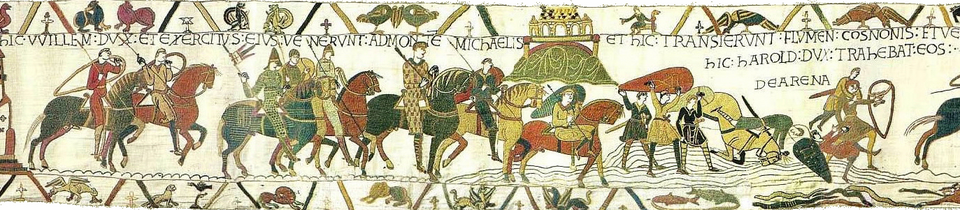
The commune's position - on an island just a few hundred metres from land - made it accessible at low tide to the many pilgrims to its abbey, and defensible as the incoming tide stranded, drove off, or drowned threats on foot. The island remained unconquered during the Hundred Years' War. A small garrison fended off a full attack by the English in 1433. Louis XI recognised the benefits of its natural defence and turned it into a prison. The abbey was used regularly as a prison during the Ancien Régime.
Mont-Saint-Michel and its surrounding bay were inscribed on the UNESCO list of World Heritage Sites in 1979 for its unique aesthetic and importance as a Catholic site. It is visited by more than three million people each year, and is the most-visited tourist attraction in France outside of Paris. Over 60 buildings within the commune are protected as historical monuments.
Further reading
Mont-Saint-Michel is one of the 3D puzzles in World Artifacts: turn a cloud of broken pieces until it lines up. For iPhone, iPad, Apple Vision Pro and Android.

