World Artifacts › Atlas › France
Notre-Dame Gargoyle
The famous brooding chimeras are Viollet-le-Duc's, added in the 1800s. Actual gargoyles are plumbing: the word is the same as gargle, and each one is a spout throwing roof water clear of the walls.
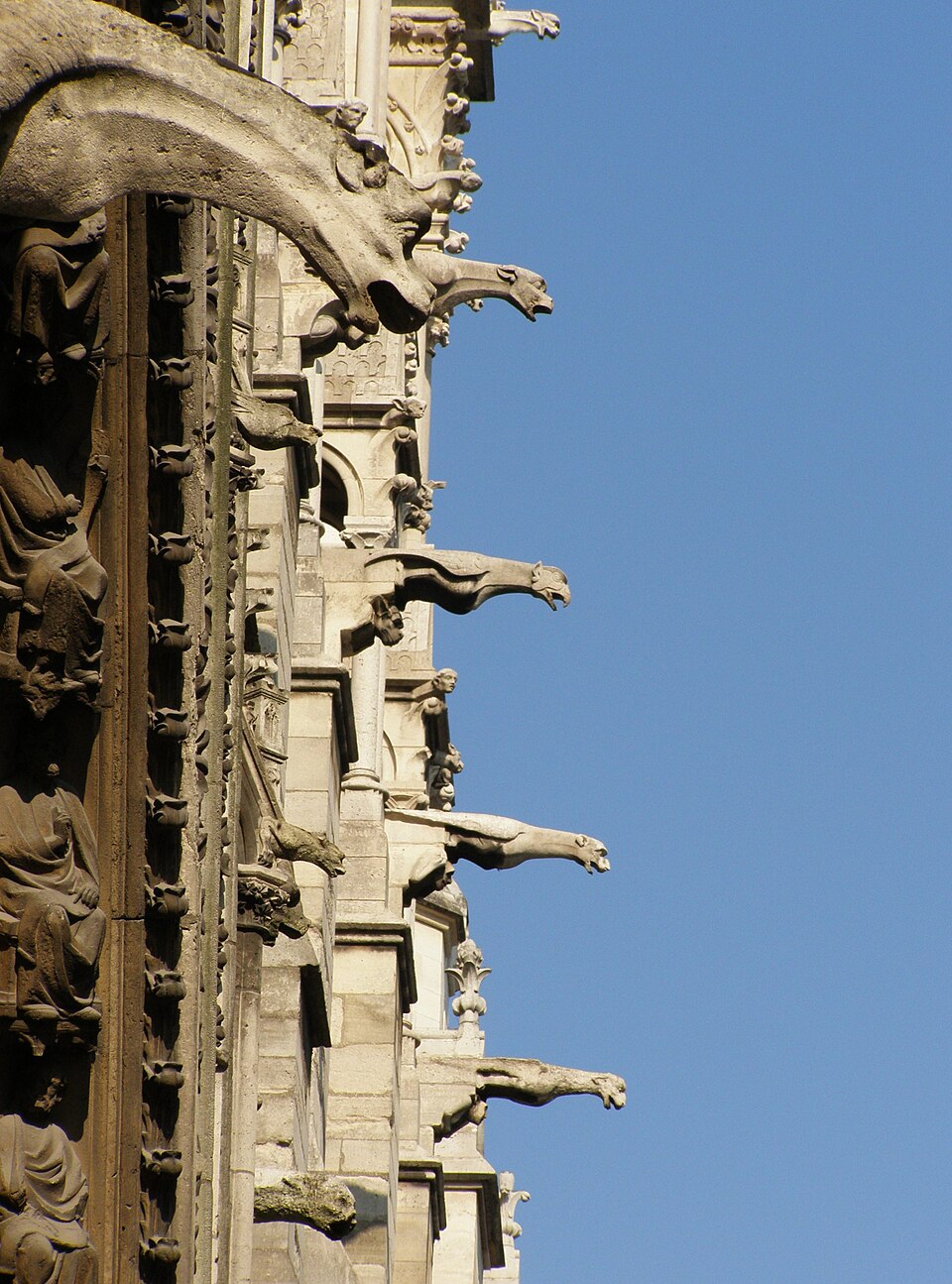
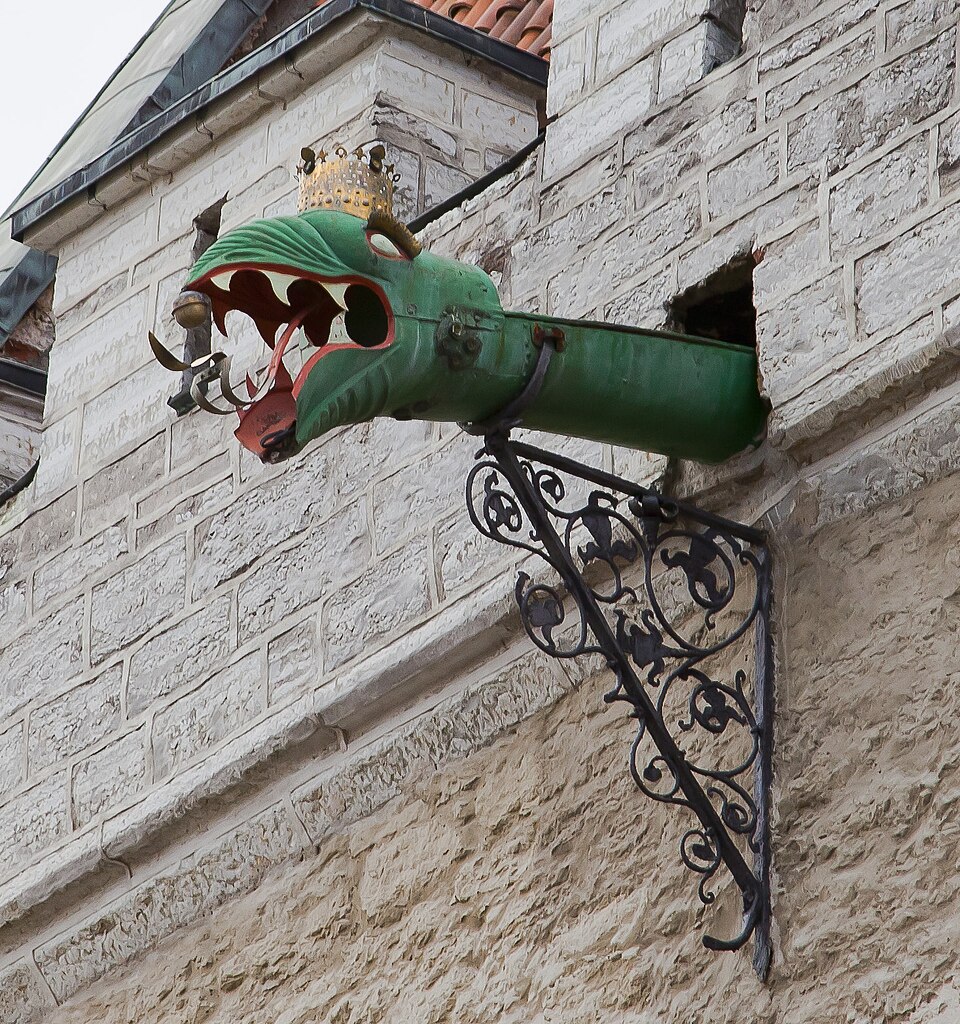
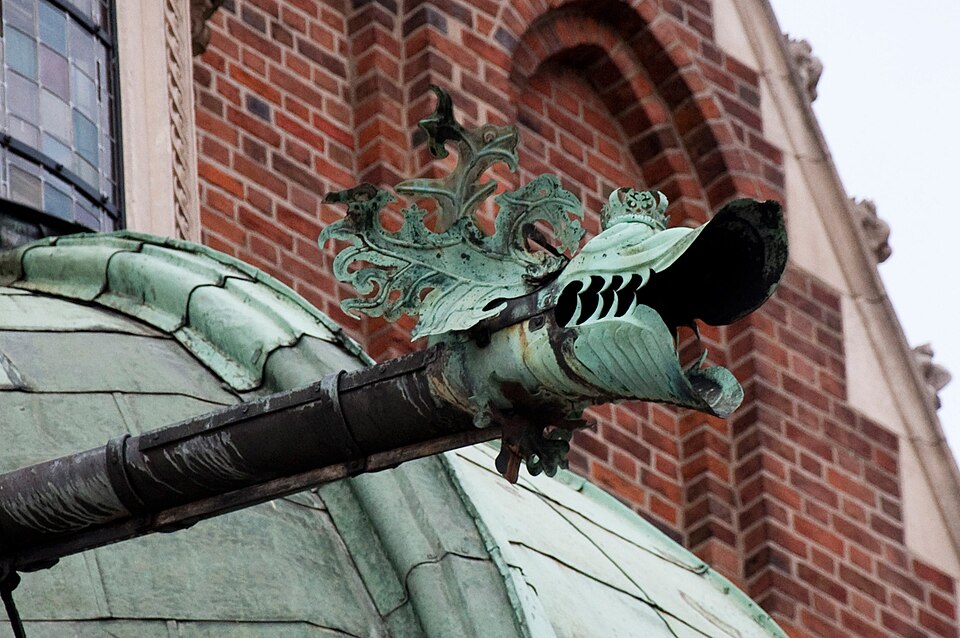
In architecture, and specifically Gothic architecture, a gargoyle () is a carved or formed grotesque with a spout designed to convey water from a roof and away from the side of a building, thereby preventing it from running down masonry walls and eroding the mortar between. Architects often used multiple gargoyles on a building to divide the flow of rainwater off the roof to minimize potential damage from rainstorms. A trough is cut in the back of the gargoyle and rainwater typically exits through the open mouth. Gargoyles are usually elongated fantastical animals because their length determines how far water is directed from the wall. When Gothic flying buttresses were used, aqueducts were sometimes cut into the buttress to divert water over the aisle walls.
Further reading
- The Gargoyles of Notre Dame · Michael Camille (2008)A study of the gargoyles of Notre-Dame de Paris, covering them in art and literature and as church decoration.Find a copy: AbeBooks · Amazon · WorldCat
- Holy terrors · Janetta Rebold Benton (1997)Covers gargoyles in medieval architecture and sculpture.Find a copy: AbeBooks · Amazon · WorldCat
Notre-Dame Gargoyle is one of the 3D puzzles in World Artifacts: turn a cloud of broken pieces until it lines up. For iPhone, iPad, Apple Vision Pro and Android.

