World Artifacts › Atlas › United Kingdom
Mallard Locomotive
Mallard hit 126 miles an hour down a slight incline in 1938 and no steam locomotive has beaten it since. The attempt damaged a bearing, and the engine limped away from its own record.
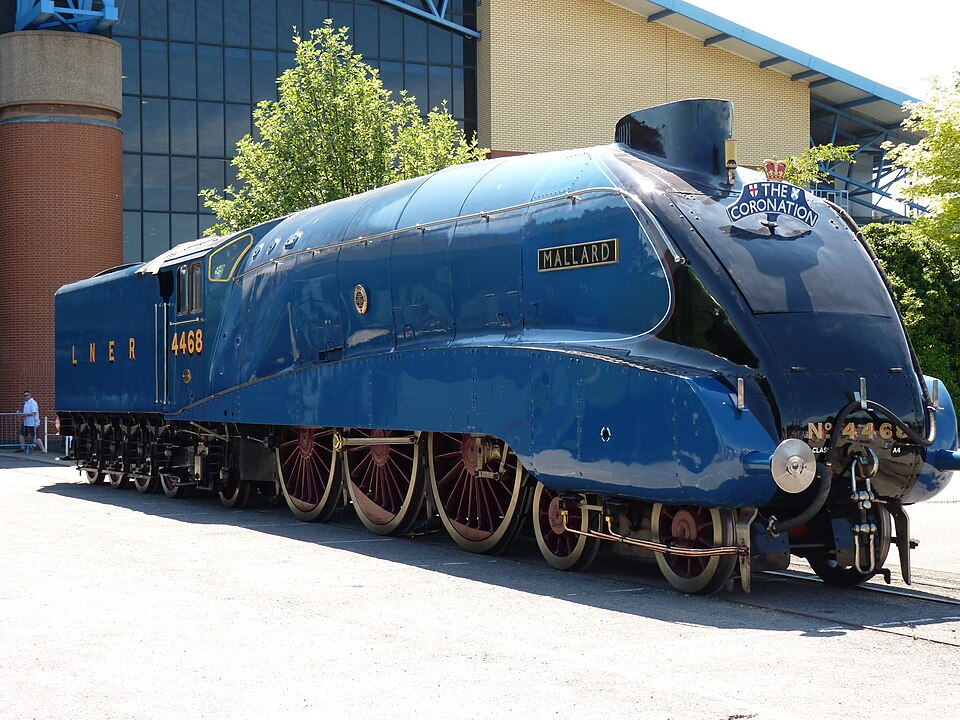
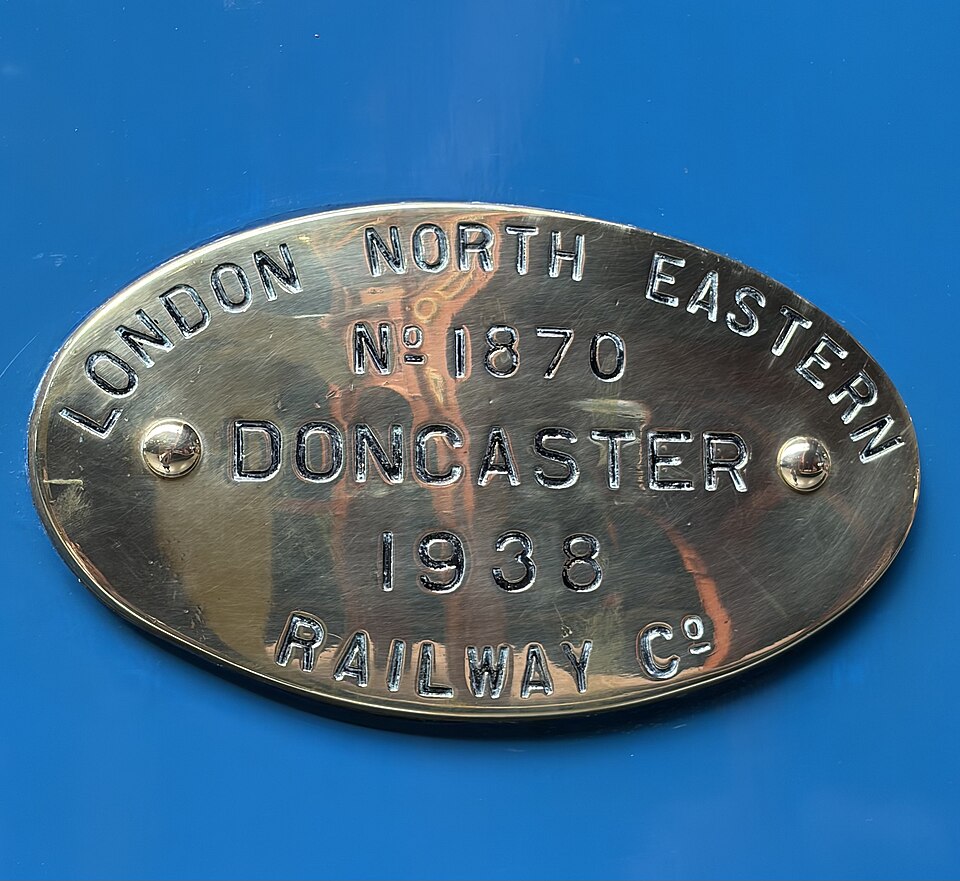
LNER Class A4 4468 Mallard is a 4-6-2 ("Pacific") steam locomotive built in 1938 for operation on the London and North Eastern Railway (LNER) at Doncaster Works to a design of Nigel Gresley. Its streamlined, wind tunnel tested design allowed it to haul long-distance express passenger services at high speeds. On 3 July 1938, Mallard broke the world speed record for steam locomotives at 126 mph (203 km/h), which still stands today.
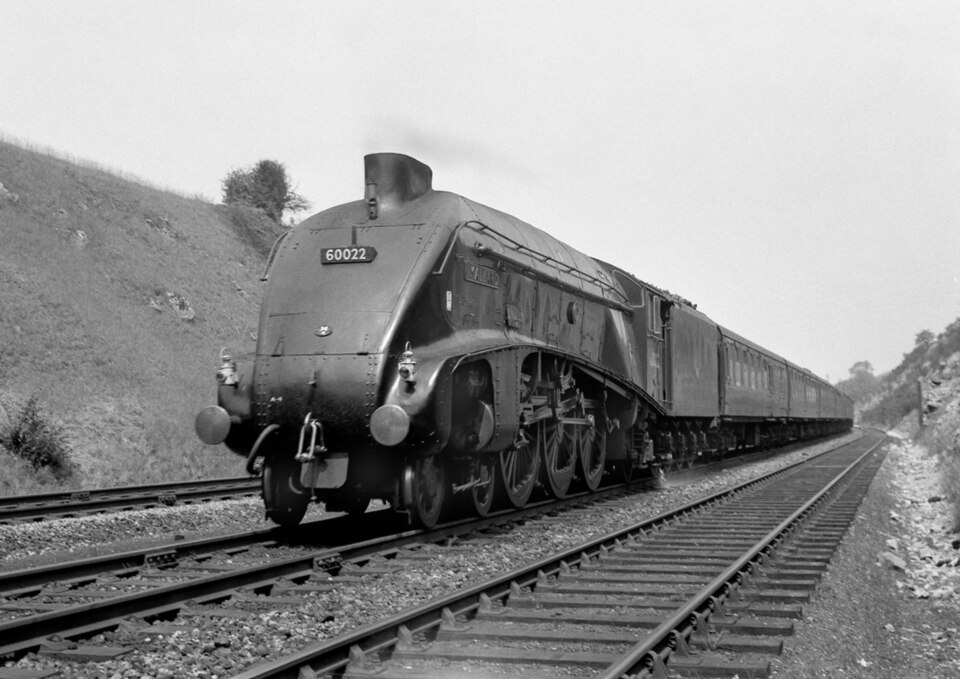
While in British Railways days, regular steam-hauled rail services in the UK were officially limited to a 90 mph (140 km/h) "line speed", before the Second World War, the A4s had to run significantly above 90 mph (140 km/h) just to keep schedule on trains such as the Silver Jubilee and The Coronation, with the engines reaching 100 mph on many occasions. Mallard covered almost one and a half million miles (2.4 million km) before it was retired in 1963.
The locomotive is 70 ft (21 m) long and weighs 165 long tons (168 tonnes, 369,600 lbs), including the tender. It is painted in LNER garter blue with red wheels and steel rims.
Mallard is preserved at the National Railway Museum in York as part of the National Collection.
Further reading
Mallard Locomotive is one of the 3D puzzles in World Artifacts: turn a cloud of broken pieces until it lines up. For iPhone, iPad, Apple Vision Pro and Android.

