World Artifacts › Atlas › United Kingdom
Mini Cooper
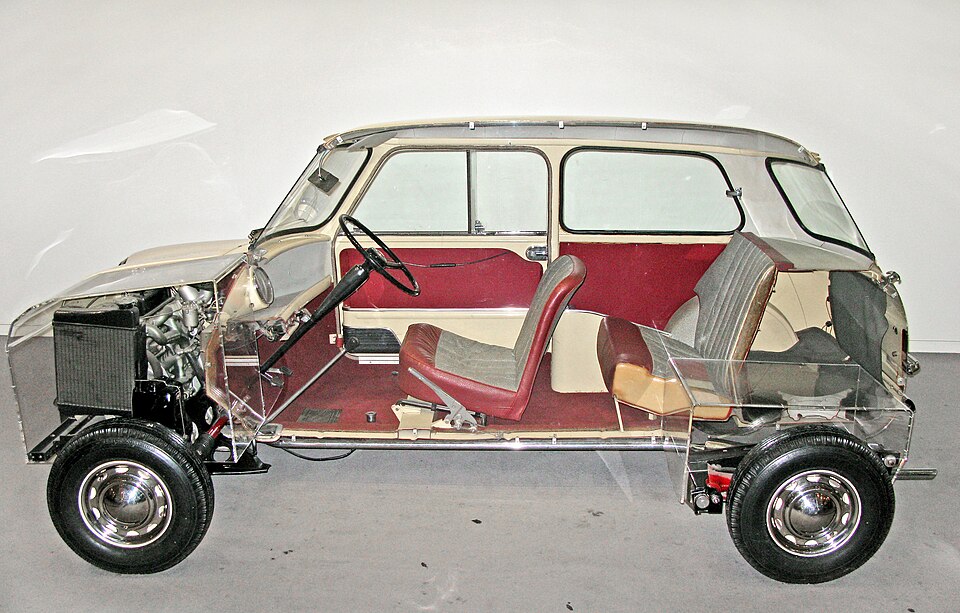
Issigonis turned the engine sideways and put the gearbox underneath it, which left four fifths of the floor for people. The car was drawn in response to fuel rationing after the Suez crisis, as something economical that was not a bubble car.
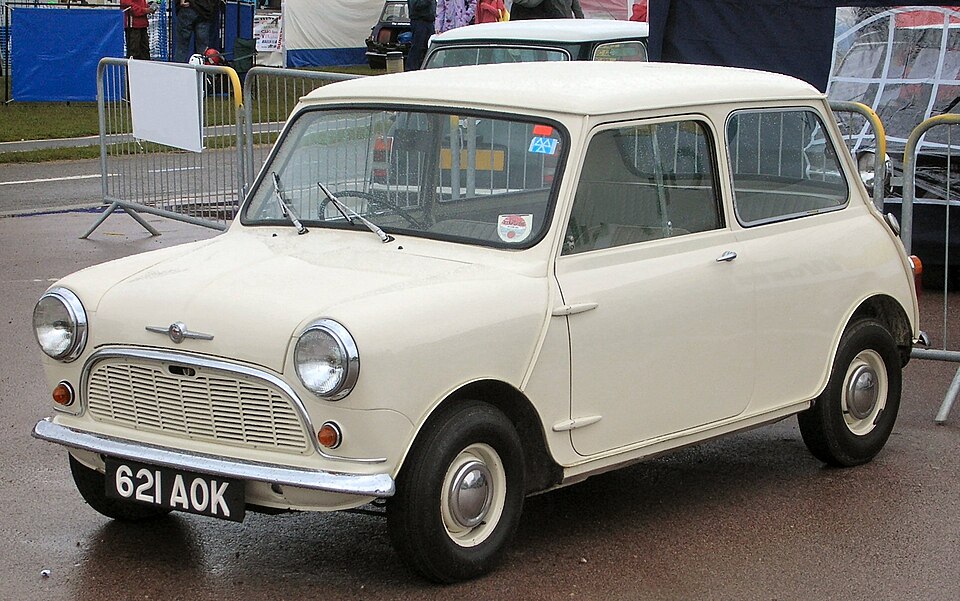
The Mini is a two-door, four-seat small car produced for four decades over a single generation, with many names and variants, by the British Motor Corporation (BMC) and its successors British Leyland and the Rover Group, and finally (briefly) under BMW ownership. Minis were built as saloons, estates, convertibles, and various other body styles. Minus a brief 1990s hiatus, from 1959 into 2000, an estimated 5.38 million of all variations combined were built.
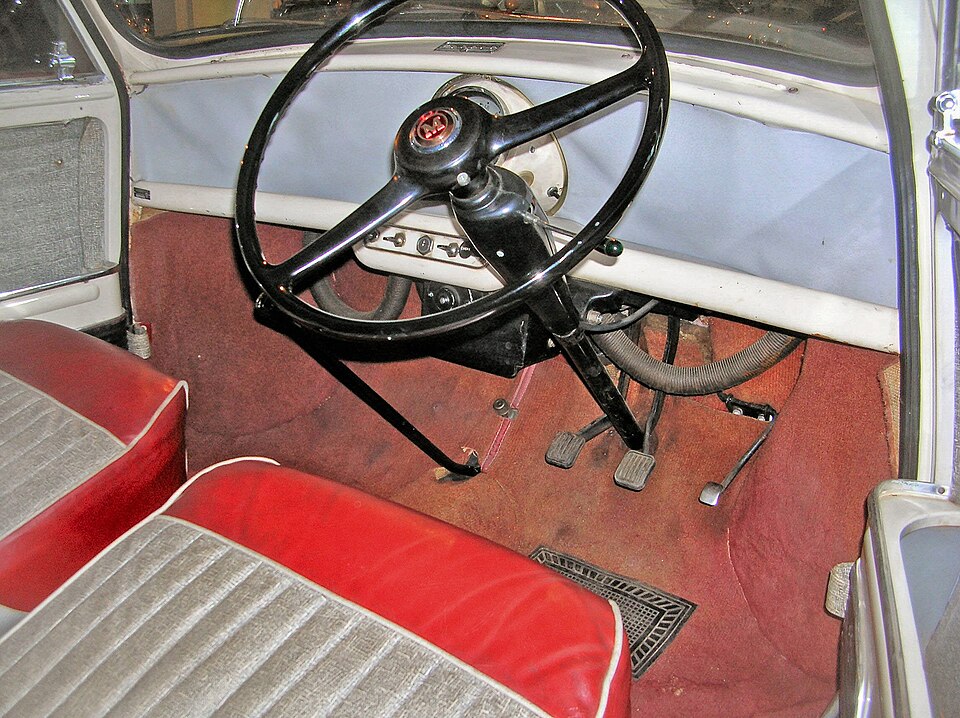
Initially, the Mini was marketed under the Austin and Morris names, as the Austin Seven and Morris Mini-Minor; the Austin Seven was renamed Austin Mini in 1962 and Mini became a marque in its own right in 1969. Retrospectively, the car is known as the "Classic Mini" to distinguish it from the modern MINI family of vehicles produced since 2001 by German carmaker BMW, who took ownership of the Mini name following the sale of Rover Group in 2000.
Further reading
Mini Cooper is one of the 3D puzzles in World Artifacts: turn a cloud of broken pieces until it lines up. For iPhone, iPad, Apple Vision Pro and Android.

