World Artifacts › Atlas › Ghana
Ashanti Sword
The ceremonial sword.
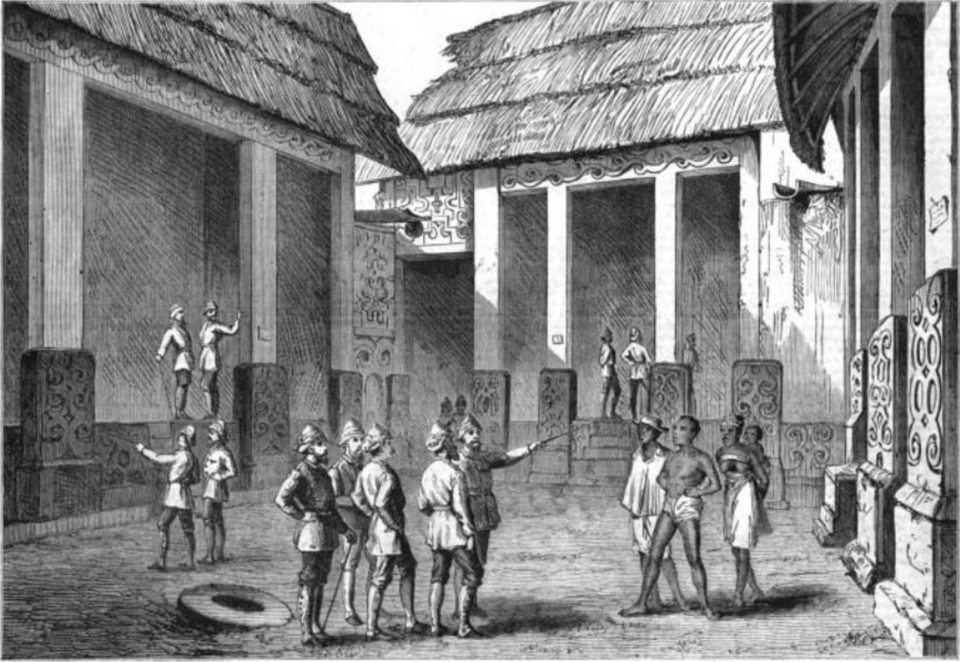
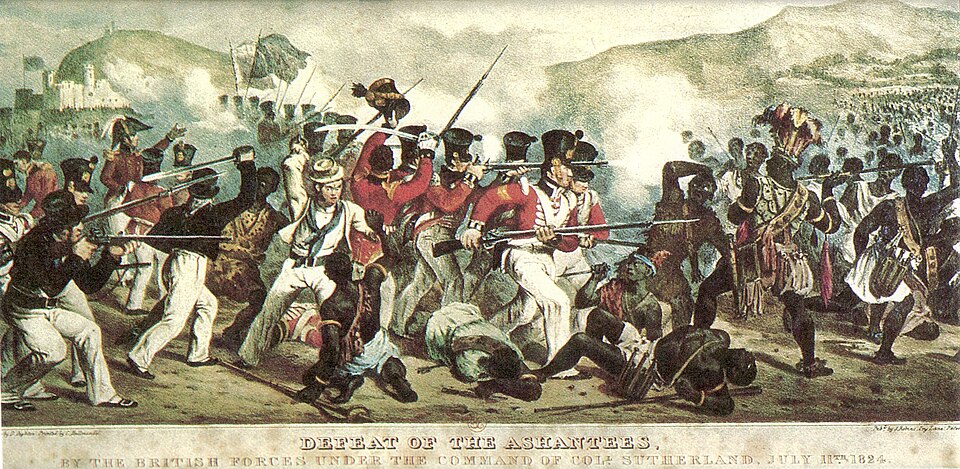
The Asante Empire (Asante Twi: Asanteman), also known as the Ashanti Empire, was an Akan state that lasted from 1701 to 1902, in what is now modern-day Ghana. It expanded from the Ashanti Region to include most of Ghana and also parts of Ivory Coast and Togo. Due to the empire's military prowess, wealth, architecture, sophisticated hierarchy, trade networks and culture, the Asante Empire has been extensively studied and has more historic records written by European, primarily British, authors than any other indigenous culture of sub-Saharan Africa.
Starting in the late 17th century, the Asante king Osei Tutu (c. 1695 - 1717) and his adviser Okomfo Anokye established the Asante Kingdom, with the Golden Stool of Asante as a sole unifying symbol. Osei Tutu oversaw a massive Asante territorial expansion, building up the army by introducing new organisation and turning a disciplined royal and paramilitary army into an effective fighting machine. In 1701, the Asante army conquered Denkyira, giving the Asante access to the Gulf of Guinea and the Atlantic Ocean coastal trade with Europeans, notably the Dutch. The economy of the Asante Empire was mainly based on the trade of gold and agricultural exports as well as slave trading, craft work and trade with markets further north.
Further reading
- Religion & art in Ashanti · Robert Sutherland Rattray (1927)Rattray's study of Ashanti art, religion, and social life and customs.Find a copy: AbeBooks · Amazon · WorldCat
- Asante in the nineteenth century · Ivor Wilks (1975)Covers the politics and government of the Ashanti (Asante) kingdom in the nineteenth century.Find a copy: AbeBooks · Amazon · WorldCat
Ashanti Sword is one of the 3D puzzles in World Artifacts: turn a cloud of broken pieces until it lines up. For iPhone, iPad, Apple Vision Pro and Android.

