World Artifacts › Atlas › Greece
Corinthian Helmet
The helmet was beaten from a single sheet of bronze and covered the whole head, so the man inside could barely hear and could see only forward. That was acceptable because he was expected to look straight ahead and stay in line.
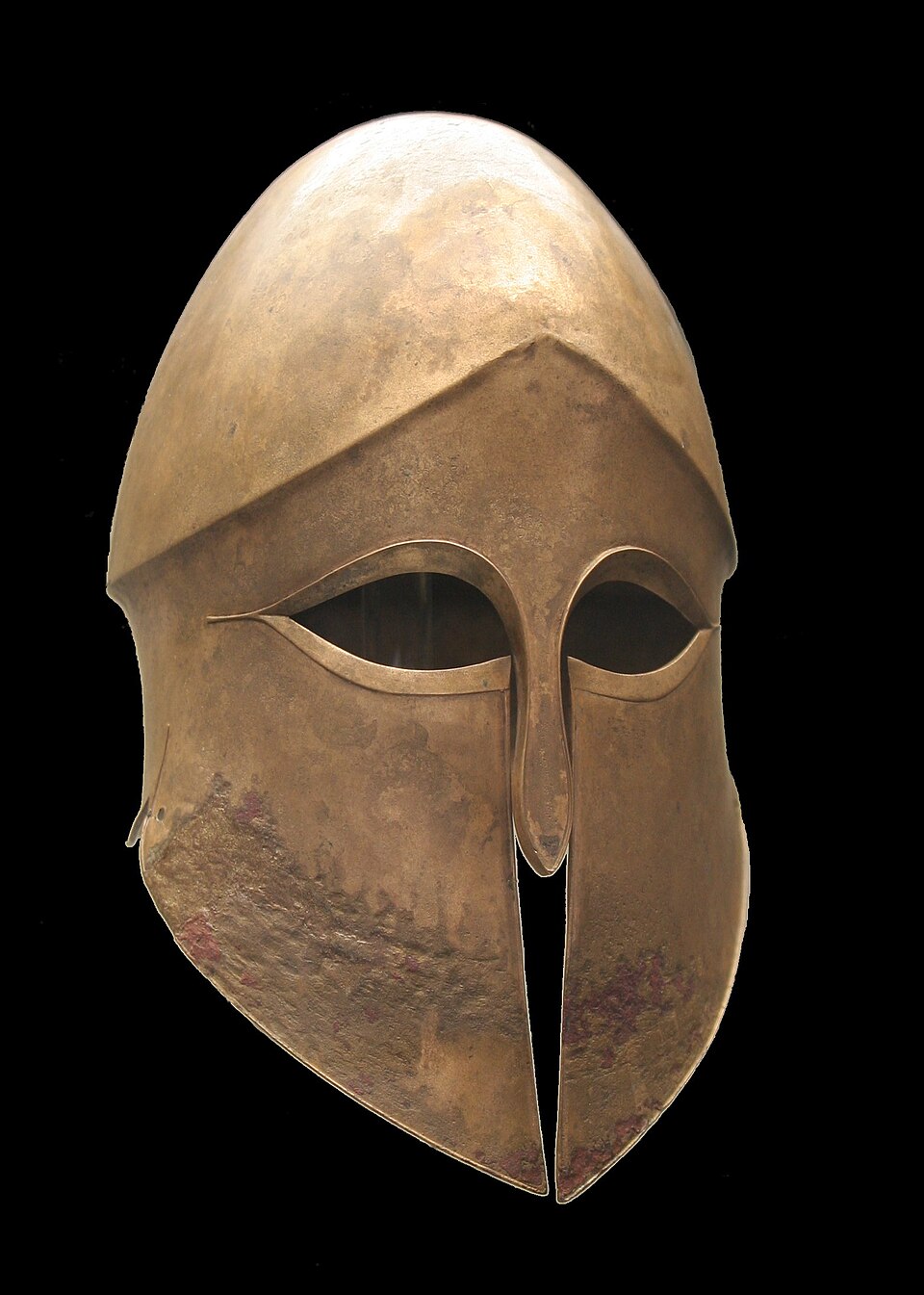
The Corinthian helmet originated in ancient Greece and took its name from the city-state of Corinth. It was a helmet made of bronze which in its later styles covered the entire head and neck, with slits for the eyes and mouth. A large curved projection protected the nape of the neck.
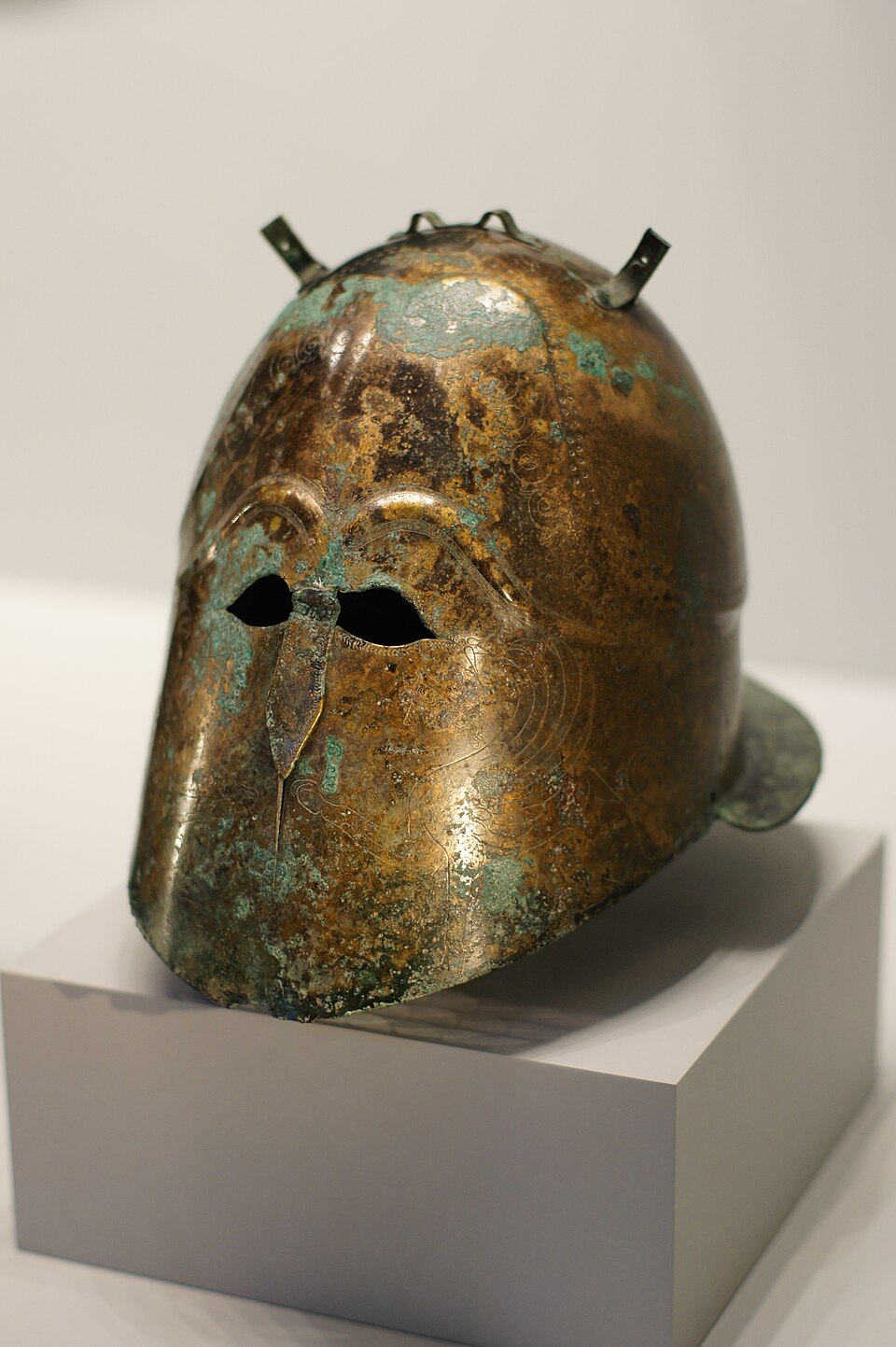
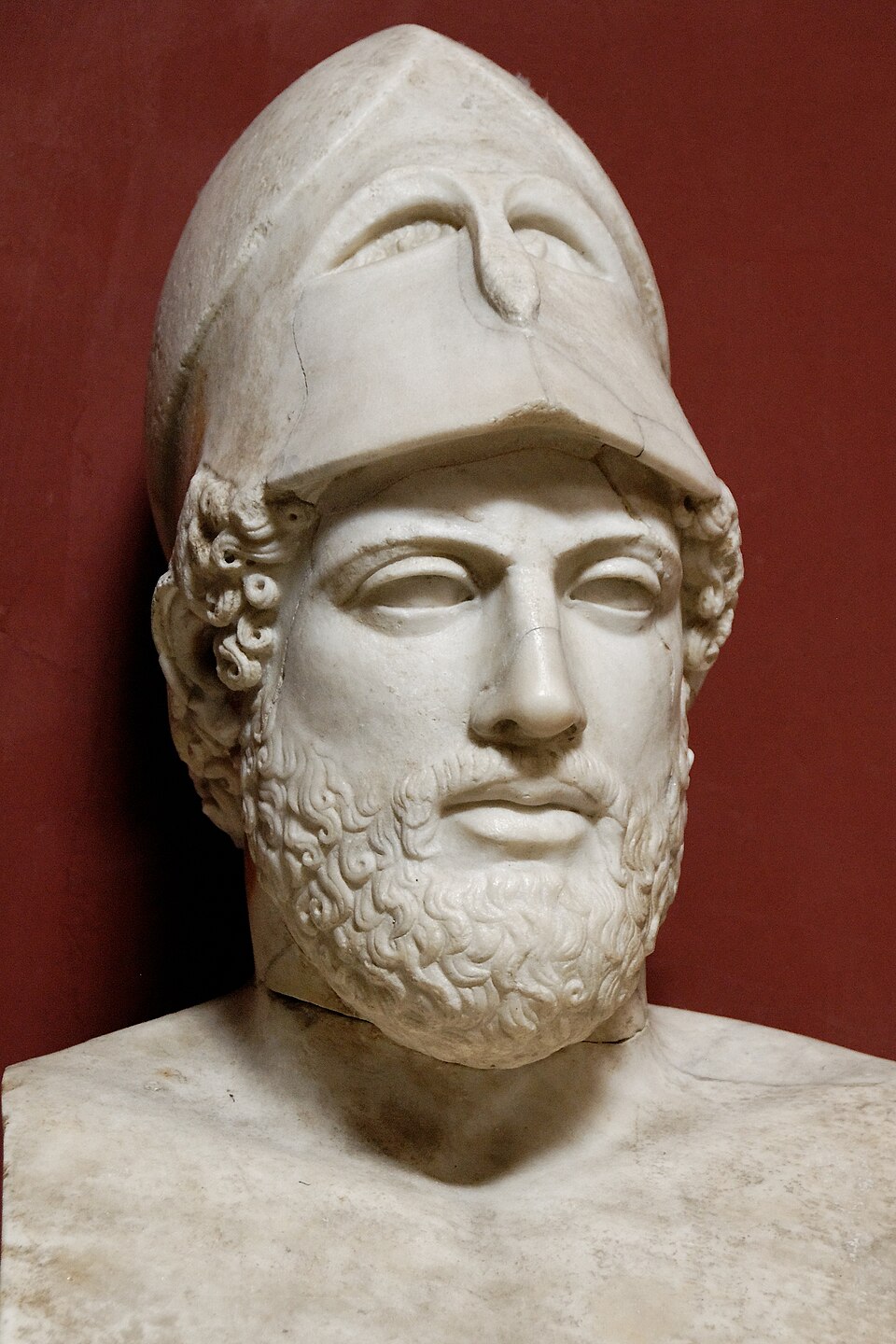
Out of combat, a Greek hoplite would wear the helmet tipped upward for comfort. This practice gave rise to a series of variant forms in Italy, where the slits were almost closed, since the helmet was no longer pulled over the face but worn cap-like. Although the classical Corinthian helmet fell out of use among the Greeks in favour of more open types, the Italo-Corinthian types remained in use until the 1st century AD, being used, among others, by the Roman army.
Further reading
Corinthian Helmet is one of the 3D puzzles in World Artifacts: turn a cloud of broken pieces until it lines up. For iPhone, iPad, Apple Vision Pro and Android.

