World Artifacts › Atlas › Greece
Knossos Columns
Minoan columns are wider at the top than at the bottom, the opposite of everything that came after, because they were made from cypress trunks set upside down. The bright red ones at Knossos are concrete, poured by Arthur Evans a century ago.
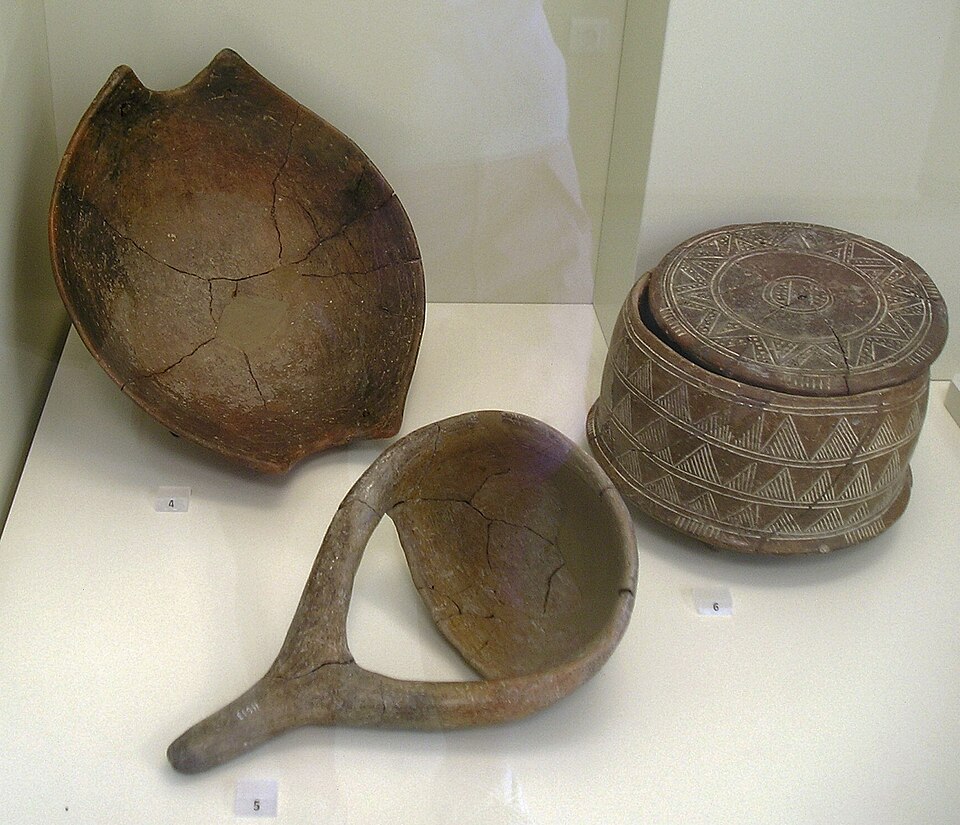
Knossos (; Ancient Greek: Κνωσσός, romanized: Knōssós; Greek: Κνωσός, romanized: Knōsós; Linear B: 𐀒𐀜𐀰 Ko-no-so) is an archaeological site and ancient urban centre in Crete, Greece. It is located within the southern periphery of Heraklion, about 5 km (3.1 mi) south of the city's historic centre. The site was occupied from the Neolithic period into the first millennium AD and became the largest and best-known centre of the Minoan civilisation.
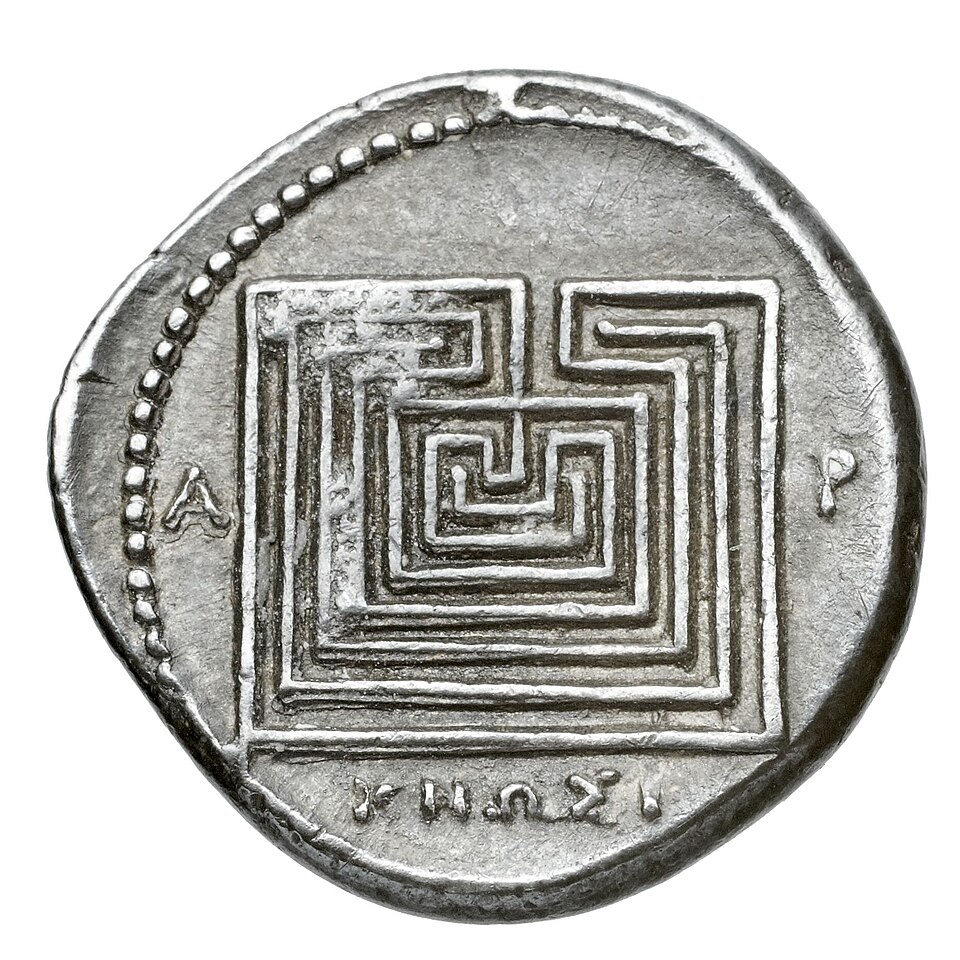
Knossos is widely considered Europe's oldest city.
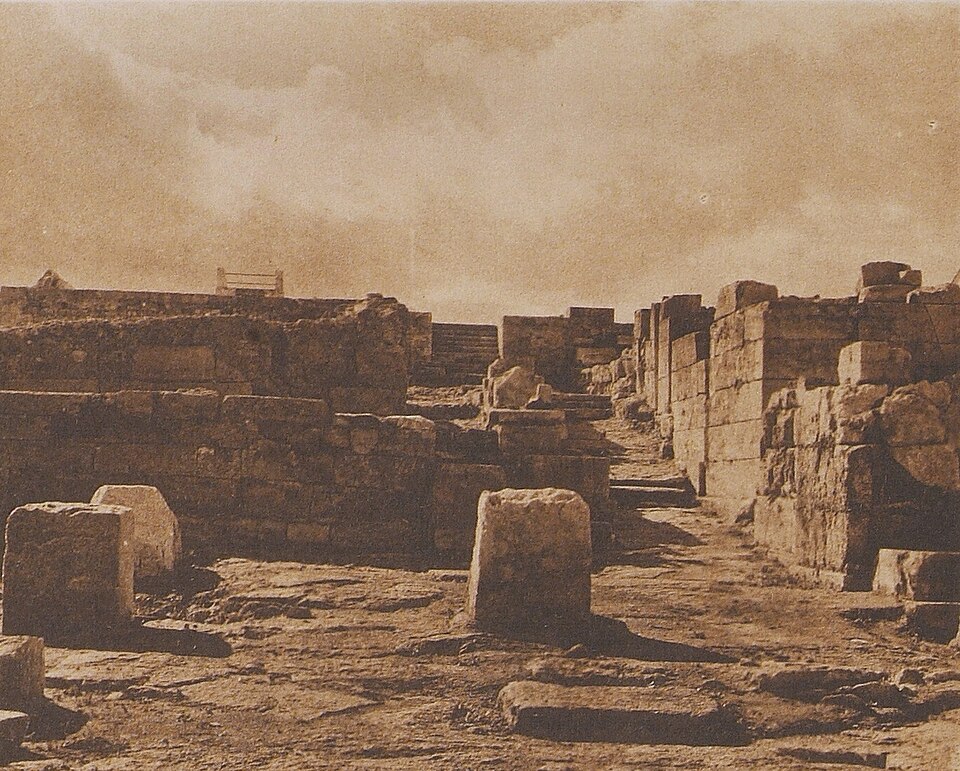
Settlement on Kephala hill began around 7000 BC, making Knossos one of the earliest known Neolithic settlements on Crete. Its expansion into an urban centre accelerated at the beginning of the second millennium BC. Knossos became a leading centre of the Minoan civilisation, widely regarded as Europe's earliest advanced civilisation. Occupation of the valley continued through the Greek, Roman and early Byzantine periods.
Further reading
- Knossos and the prophets of modernism · Cathy Gere (2009)About Knossos and its reconstruction, covering archaeology, art and the political aspects of Evans's work.Find a copy: AbeBooks · Amazon · WorldCat
- Architecture of Minoan Crete · John C. McEnroe (2010)A study of Minoan architecture and its relation to society.Find a copy: AbeBooks · Amazon · WorldCat
Knossos Columns is one of the 3D puzzles in World Artifacts: turn a cloud of broken pieces until it lines up. For iPhone, iPad, Apple Vision Pro and Android.

