World Artifacts › Atlas › Greece
Lion Gate of Mycenae
The gate is over three thousand years old and the lions are missing their heads, which were made separately and probably faced outward at whoever approached. The blocks around it are so large that later Greeks assumed giants had built the walls.
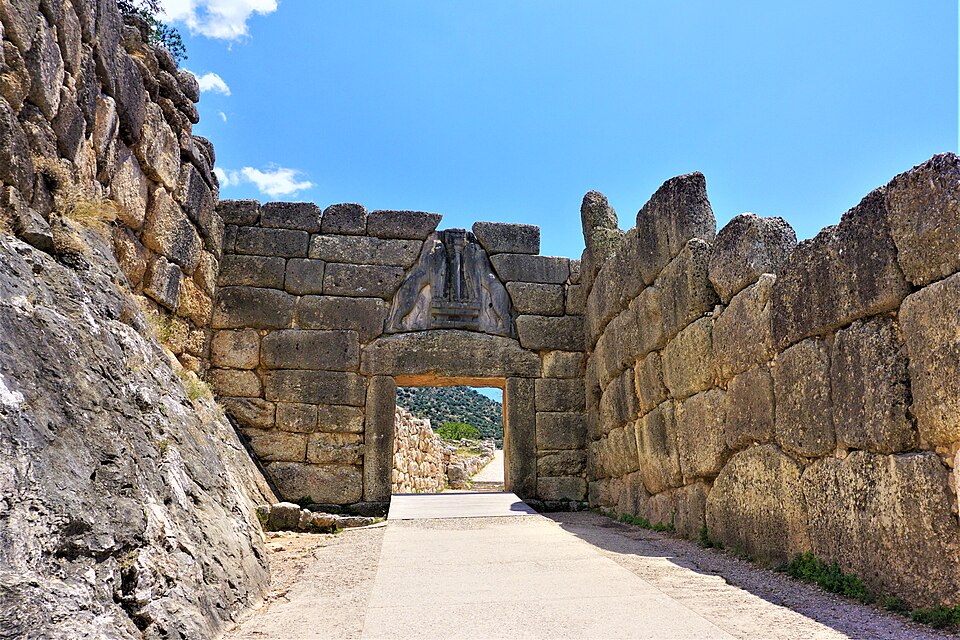
The Lion Gate (Greek: Πύλη των Λεόντων) is the popular modern name for the main entrance of the Bronze Age citadel of Mycenae in Southern Greece. It was erected during the thirteenth century BC, around 1250 BC, in the northwestern side of the acropolis. In modern times, it was named after the relief sculpture of two lions or lionesses in a heraldic pose that stands above the entrance.
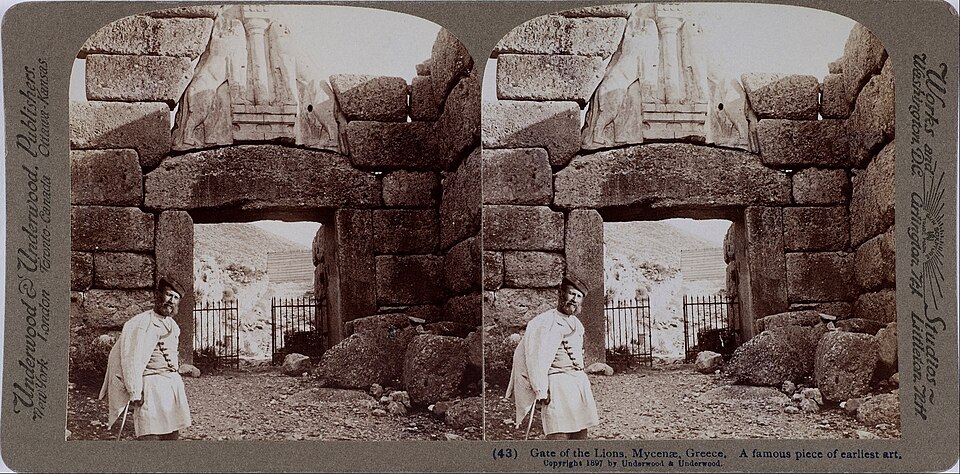
The gate is the sole surviving monumental piece of Mycenaean sculpture, as well as the largest surviving sculpture in the Bronze Age Aegean. It is the only monument of Bronze Age Greece to bear an iconographic motif that survived without being buried underground. It is the only relief image that was described in the literature of classical antiquity, such that it was well known prior to modern archaeology.
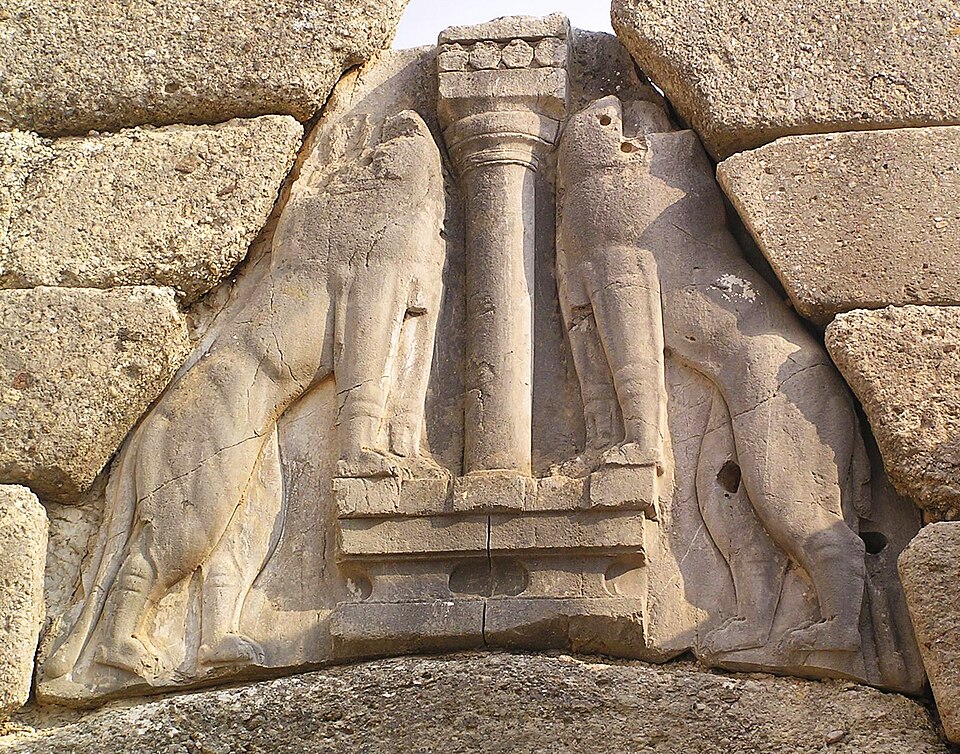
The Lion Gate is also a testimony of the presence of lions in Europe and Greece, before their disappearance in the late stages of Ancient history.
Further reading
- Mycenae: Agamemnon's Capital · Elizabeth French (2002)A book on Mycenae as Agamemnon's capital, covering the site and its archaeology.Find a copy: AbeBooks · Amazon · WorldCat
- Ancient Mycenae · George E. Mylonas (1957)A study of ancient Mycenae by George Mylonas, the excavator and archaeologist of the site.Find a copy: AbeBooks · Amazon · WorldCat
Lion Gate of Mycenae is one of the 3D puzzles in World Artifacts: turn a cloud of broken pieces until it lines up. For iPhone, iPad, Apple Vision Pro and Android.

