World Artifacts › Atlas › Greece
Parthenon
There is hardly a straight line in the building. The columns swell in the middle and lean slightly inwards, and the platform is domed, all to correct what the eye would otherwise get wrong.
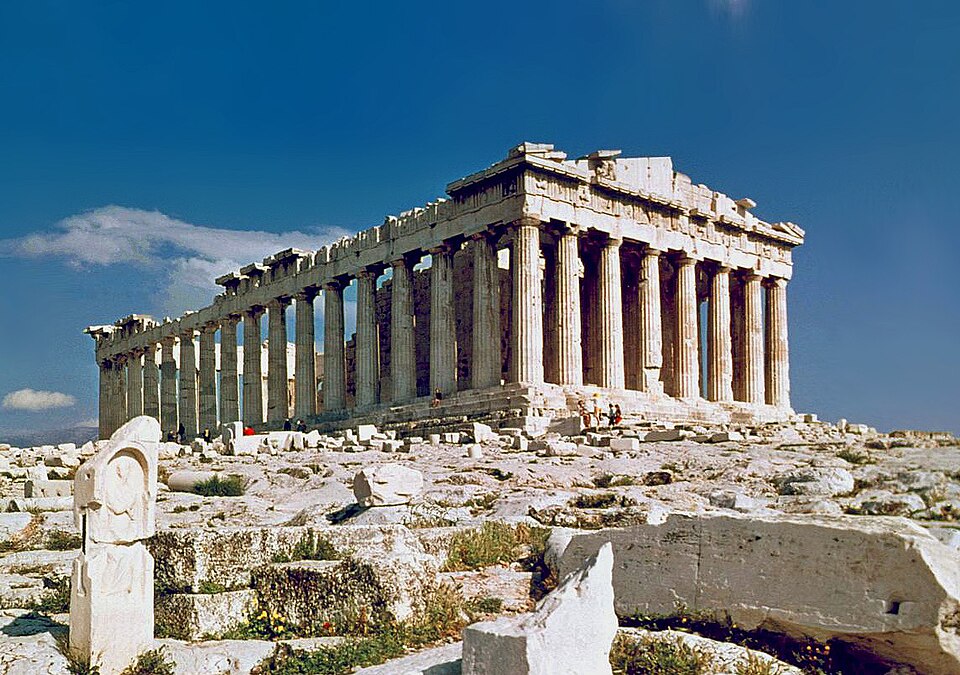
The Parthenon (; Ancient Greek: Παρθενών, romanised: Parthenōn [par.tʰe.nɔ̌ːn]; Greek: Παρθενώνας, romanised: Parthenónas [parθeˈnonas]) is a former temple on the Athenian Acropolis, Greece, that was dedicated to the goddess Athena. Its decorative sculptures are considered some of the high points of classical Greek art, and the Parthenon is considered an enduring symbol of ancient Greece, Western civilisation, and democracy.
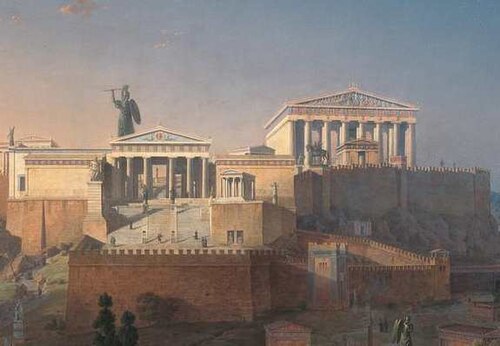
The Parthenon was built in the 5th century BC in thanksgiving for the Greek victory over the Persian invaders during the Greco-Persian Wars. Like most Greek temples, the Parthenon also served as the city treasury. Construction started in 447 BC when the Delian League was at the peak of its power. It was completed in 438 BC; work on the artwork and decorations continued until 432 BC. For a time, it served as the treasury of the Delian League, which later became the Athenian Empire.
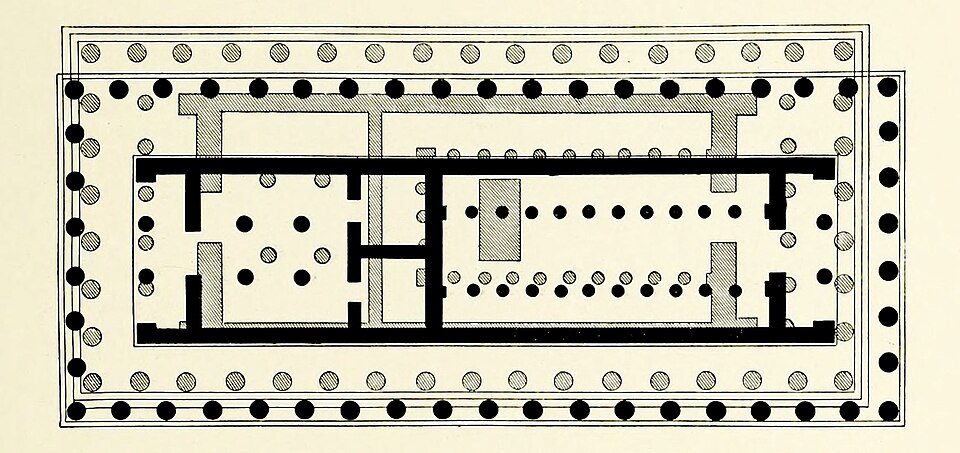
Further reading
- The Parthenon enigma · Joan Breton Connelly (2014)A study of the Parthenon as a building, covering its architecture and symbolism in ancient Athens.Find a copy: AbeBooks · Amazon · WorldCat
- An investigation of the principles of Athenian architecture, or, The results of a survey conducted chiefly with reference to the optical refinements exhibited in the construction of the ancient buildings at Athens · Francis Cranmer Penrose (1888)A survey of Athenian architecture focused on the optical refinements in the construction of ancient Athenian buildings.Find a copy: AbeBooks · Amazon · WorldCat
Parthenon is one of the 3D puzzles in World Artifacts: turn a cloud of broken pieces until it lines up. For iPhone, iPad, Apple Vision Pro and Android.

