World Artifacts › Atlas › Greece
Pegasus
Pegasus sprang from the blood of Medusa's neck. He ends up in the service of Zeus, carrying thunderbolts, after throwing the hero who tried to ride him to heaven.
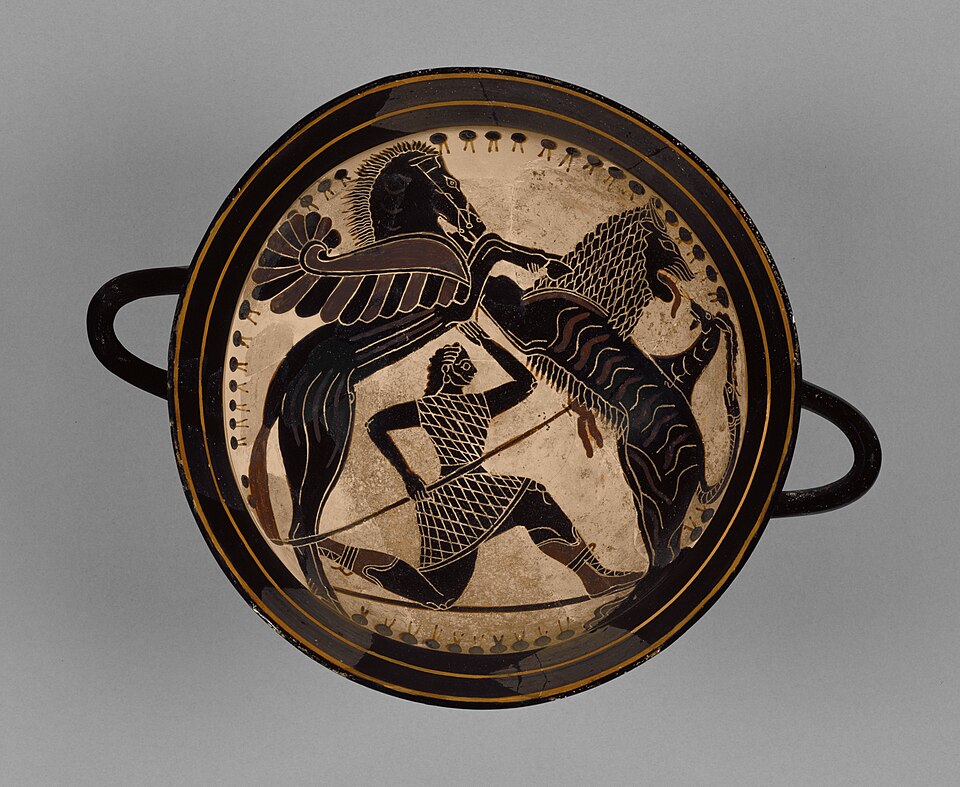
Pegasus (Ancient Greek: Πήγασος, romanized: Pḗgasos; Latin: Pegasus, Pegasos) is a winged horse in Greek mythology, usually depicted as a white stallion. He was sired by Poseidon, in his role as horse-god, and foaled by Medusa, one of three Gorgon sisters. Pegasus was the brother of Chrysaor, both born from Medusa's blood when their mother was decapitated by Perseus. Greco-Roman poets wrote about his ascent to heaven after his birth and his obeisance to Zeus, who instructed him to bring lightning and thunder from Olympus.
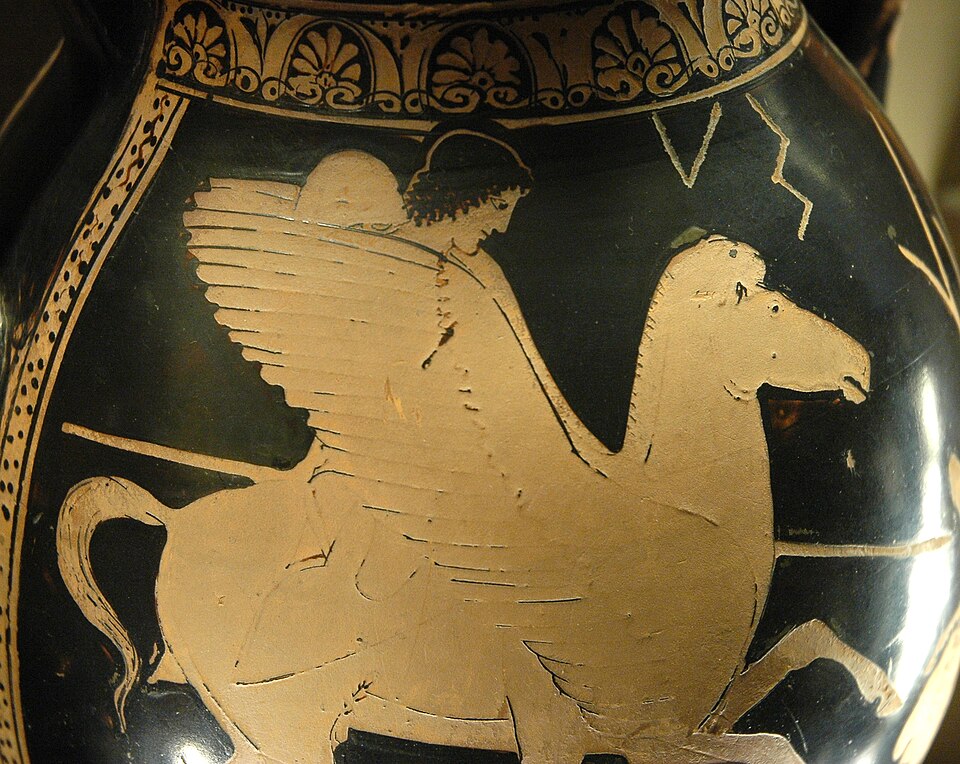
Pegasus is the creator of Hippocrene, the fountain on Mount Helicon. He was captured by the Greek hero Bellerophon, near the fountain Peirene, with the help of Athena and Poseidon. Pegasus allowed Bellerophon to ride him in order to defeat the monster Chimera, which led to many more exploits. Bellerophon later fell from Pegasus's back while trying to reach Mount Olympus. Both Pegasus and Bellerophon were said to have died at the hands of Zeus for trying to reach Olympus. Other tales have Zeus bring Pegasus to Olympus to carry his thunderbolts.
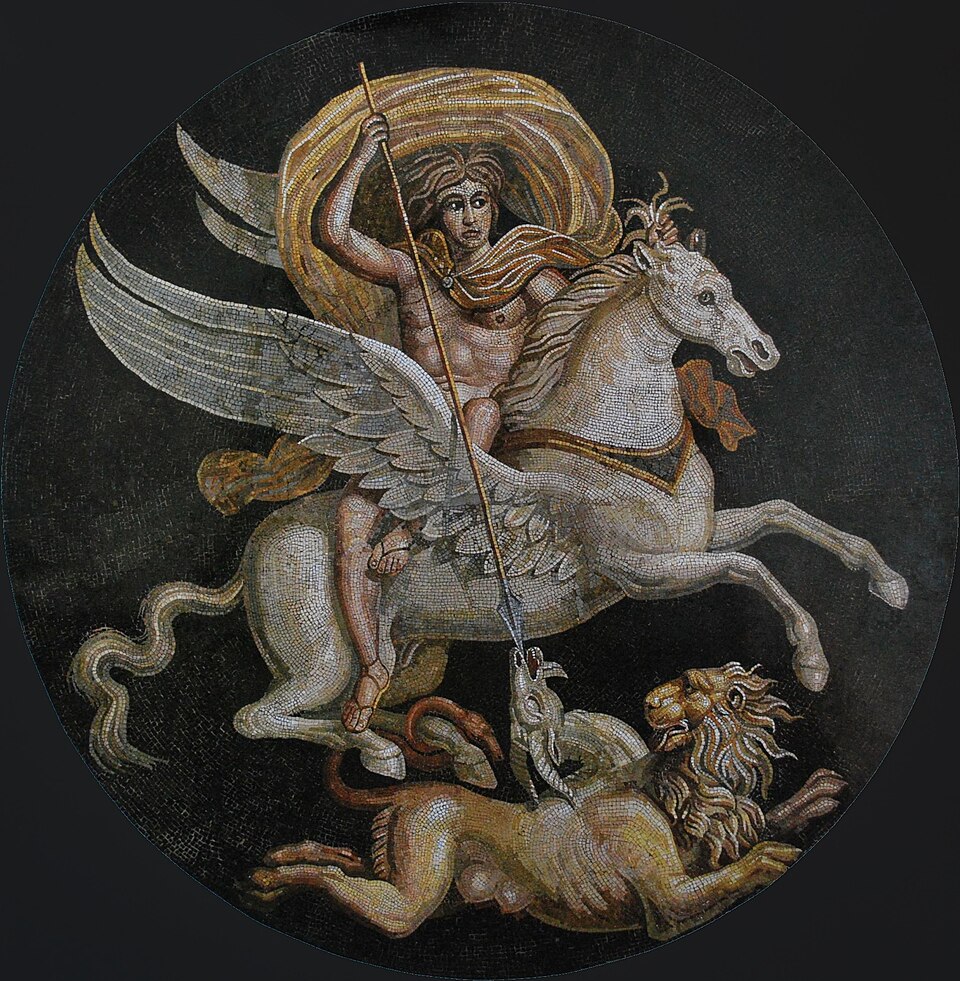
Also known as a constellation, Pegasus is a subject of much iconography, especially through ancient Greek pottery as well as paintings and sculptures of the Renaissance.
Further reading
- Early Greek myth · Timothy Gantz (1993)A detailed survey of early Greek myth drawing on the sources.Find a copy: AbeBooks · Amazon · WorldCat
- The Penguin dictionary of classical mythology · Pierre Grimal (1991)A dictionary of classical mythology covering Greek and Roman figures.Find a copy: AbeBooks · Amazon · WorldCat
Pegasus is one of the 3D puzzles in World Artifacts: turn a cloud of broken pieces until it lines up. For iPhone, iPad, Apple Vision Pro and Android.

