World Artifacts › Atlas › Greece
Trojan Horse
The Iliad does not contain the wooden horse; it turns up in the Odyssey and later poems. Some historians suspect a siege engine covered in wet hides, which is the sort of thing a poet might turn into a horse.
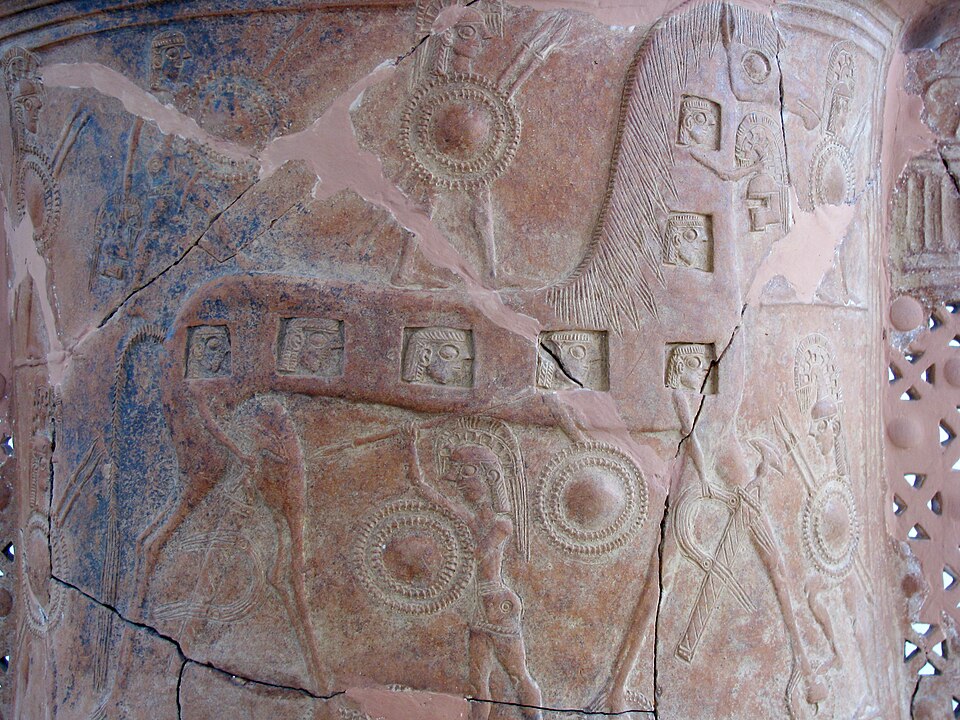
In Greek mythology, the Trojan Horse (Greek: δούρειος ἵππος, romanized: doureios hippos, lit. 'wooden horse') was a wooden horse said to have been used by the Greeks during the Trojan War to sneak into the city of Troy and win the war. The Trojan Horse is not mentioned in Homer's Iliad, with the poem ending before the war is concluded, and it is only briefly mentioned in the Odyssey. It is described at length in the Aeneid, in which Virgil recounts how, after a fruitless ten-year siege, the Greeks constructed a huge wooden horse at the behest of Odysseus, and hid a select force of men inside, including Odysseus himself.
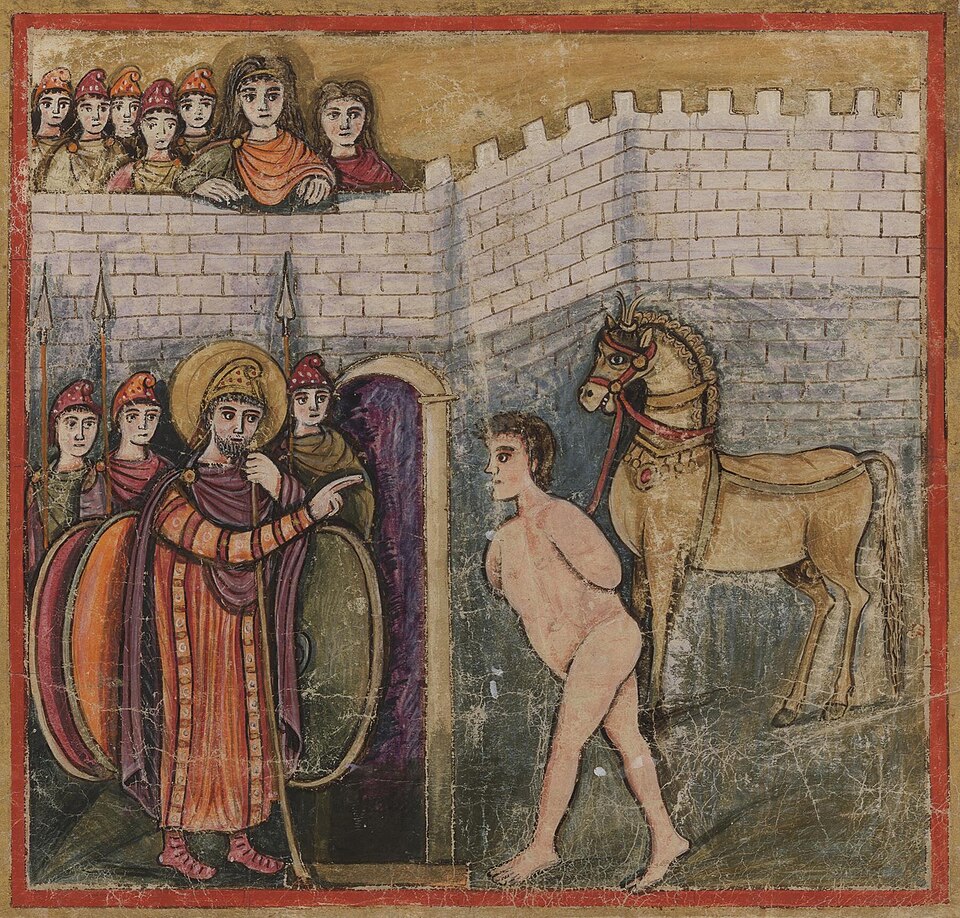
The Greeks pretended to sail away, and the Trojans pulled the horse into their city as a victory trophy. That night, the Greek force crept out of the horse and opened the gates for the rest of the Greek army, which had sailed back under the cover of darkness. The Greeks entered and destroyed the city, ending the war. Metaphorically, a "Trojan horse" has come to mean any trick or stratagem that causes a target to invite a foe into a securely protected bastion or place. A malicious computer program that tricks users into willingly running it is also called a "Trojan horse" or simply a "Trojan".
Further reading
- The Trojan War · Barry S. Strauss (2006)A history of the Trojan War.Find a copy: AbeBooks · Amazon · WorldCat
- The Trojan War A Very Short Introduction · Eric H. Cline (2013)A short introduction to the Trojan War, with excavations at Troy and Bronze Age Greek civilization.Find a copy: AbeBooks · Amazon · WorldCat
Trojan Horse is one of the 3D puzzles in World Artifacts: turn a cloud of broken pieces until it lines up. For iPhone, iPad, Apple Vision Pro and Android.

