World Artifacts › Atlas › Guatemala
Alfombra
The sawdust carpet.
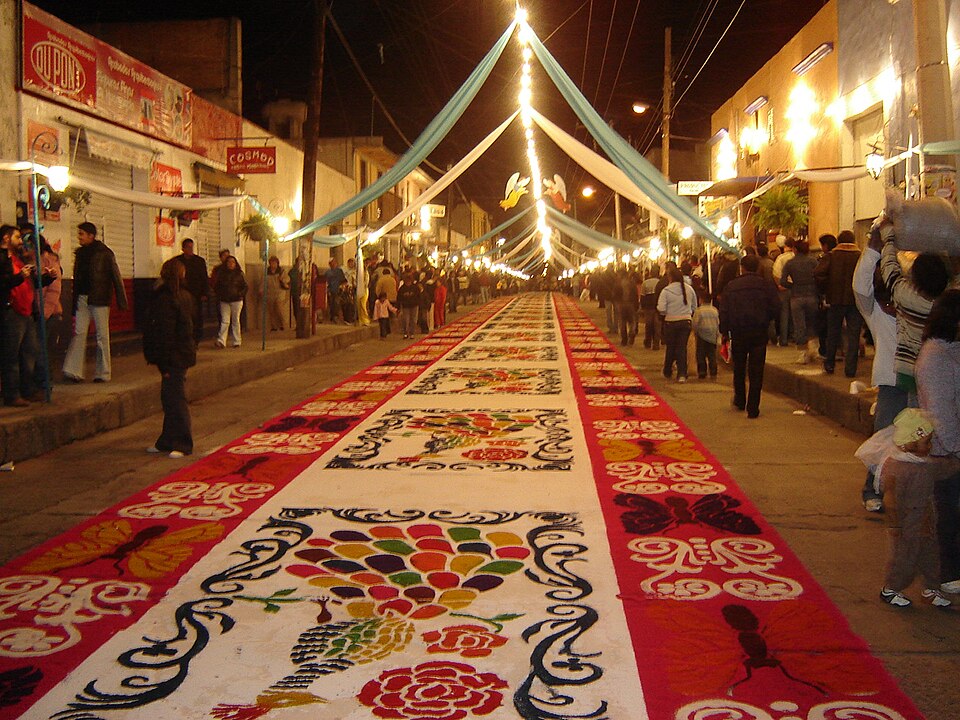
Sawdust carpets (Spanish: tapetes de aserrín Portuguese: tapetes de serragem) are one or more layers of colored sawdust, and sometimes other additional materials, laid on the ground as decoration. Sawdust carpets are traditionally created to greet a religious procession that walks over them. The tradition of decorating streets in this fashion began in Europe and was brought to the Americas by the Spanish. The tradition is still found in Mexico, Central America, parts of South America and parts of the United States, but it is strongest in Mexico and Central America.
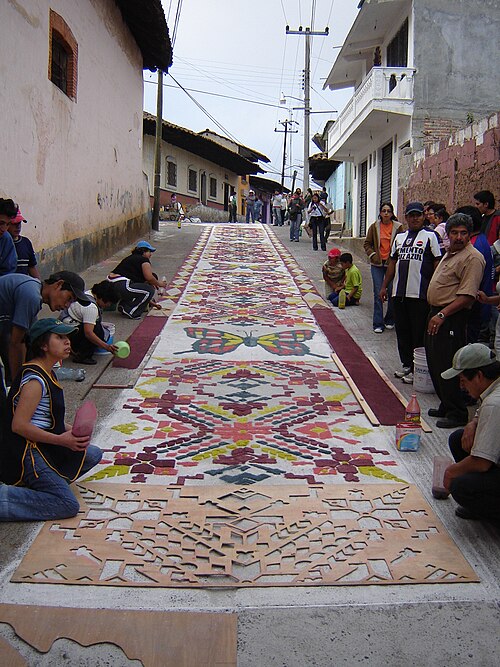
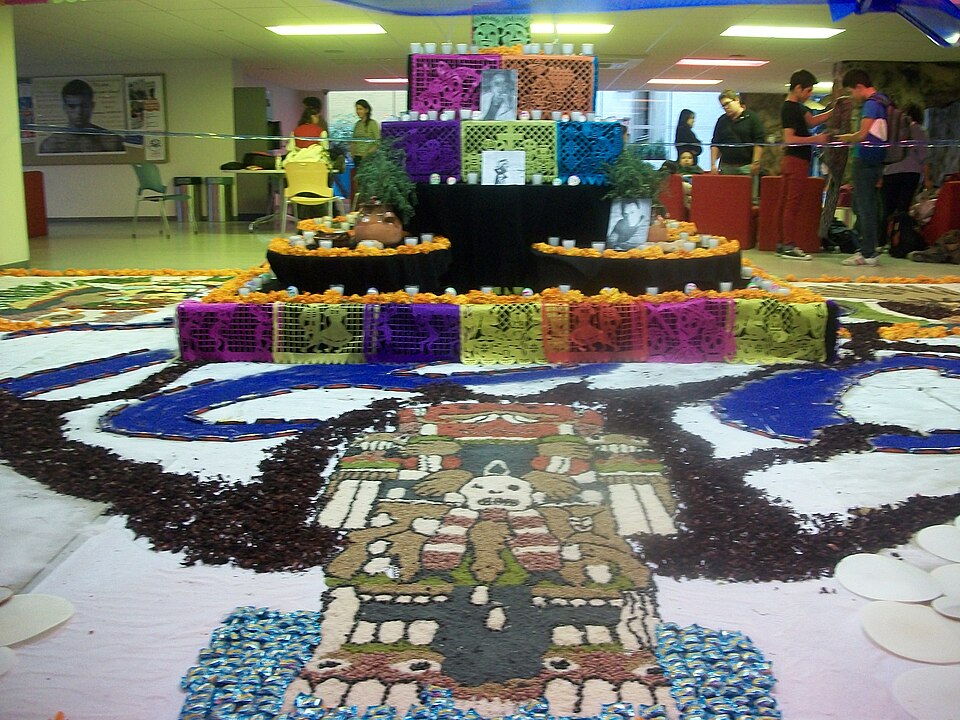
The most traditional use of these carpets is for processions related to Holy Week in Mexico and Central America (especially in Sutiaba, León, Nicaragua, Antigua Guatemala and Sonsonate, El Salvador) and Corpus Christi in the United States. In Mexico, their use has been extended to processions dedicated to patron saints, especially in Huamantla, Tlaxcala and Huajuapan de León, Oaxaca as well as to Day of the Dead, especially in central Mexico.
Sawdust carpets are also made in Egypt, and referred to by the same term (though in Arabic). They are likely not a related tradition.
Alfombra is one of the 3D puzzles in World Artifacts: turn a cloud of broken pieces until it lines up. For iPhone, iPad, Apple Vision Pro and Android.

