World Artifacts › Atlas › Guatemala
Huipil
The embroidered blouse.
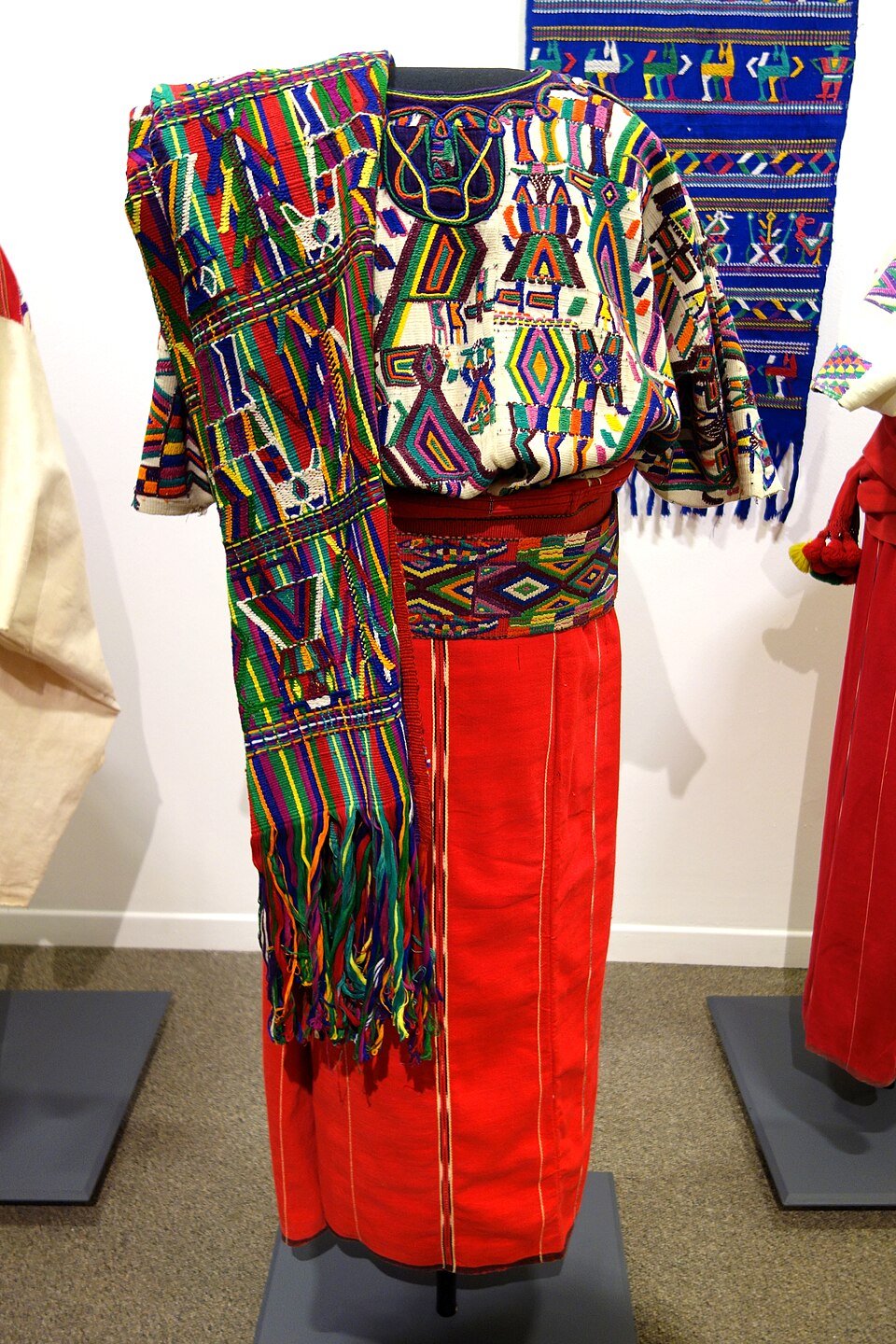
Huipil [ˈwipil] (Nahuatl: huīpīlli [wiːˈpiːlːi]) is the most common traditional garment worn by indigenous women from central Mexico to Central America.
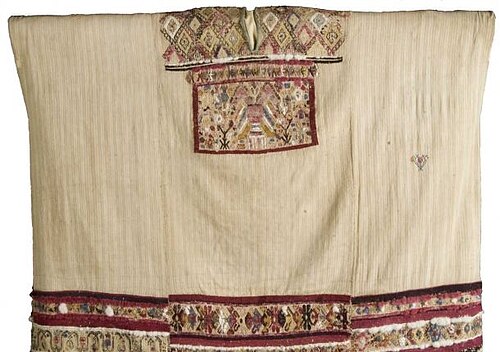
It is a loose-fitting tunic, generally made from two or three rectangular pieces of fabric, which are then joined with stitching, ribbons, or fabric strips, with an opening for the head and, if the sides are sewn, openings for the arms. Traditional huipils, especially ceremonial ones, are usually made with fabric woven on a backstrap loom and are decorated with designs woven into the fabric, embroidery, ribbons, lace, and more. However, some huipils are also made from commercial fabric.
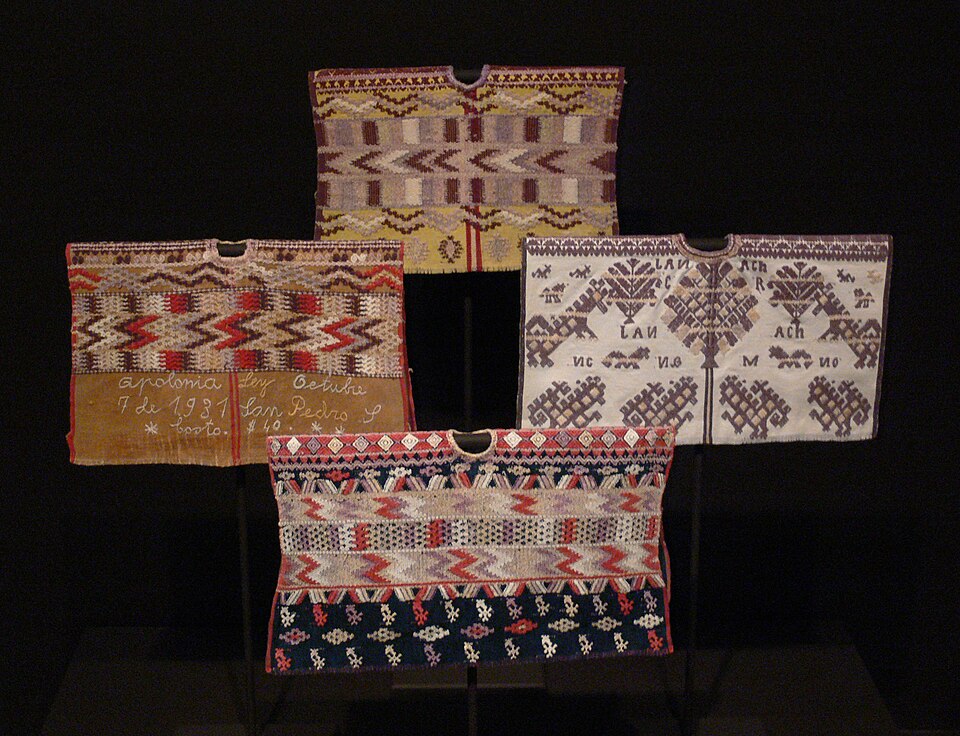
A huipil can vary in length from a short blouse to a garment long enough to reach the floor. The style of traditional huipils generally indicates the ethnicity and community of the wearer as each has its own methods of creating the fabric and decorations. Ceremonial huipils are suitable for weddings, burials, women of high rank and even to dress the statues of saints.
Further reading
- Maya textiles of Guatemala · Margot Blum Schevill (1993)A study of Guatemalan Maya textiles, drawn from ethnological collections.Find a copy: AbeBooks · Amazon · WorldCat
- Weaving Identities · Carol Hendrickson (1995)Looks at Guatemalan Indian textiles and clothing as social expression.Find a copy: AbeBooks · Amazon · WorldCat
Huipil is one of the 3D puzzles in World Artifacts: turn a cloud of broken pieces until it lines up. For iPhone, iPad, Apple Vision Pro and Android.

