World Artifacts › Atlas › Honduras
Copán Stela
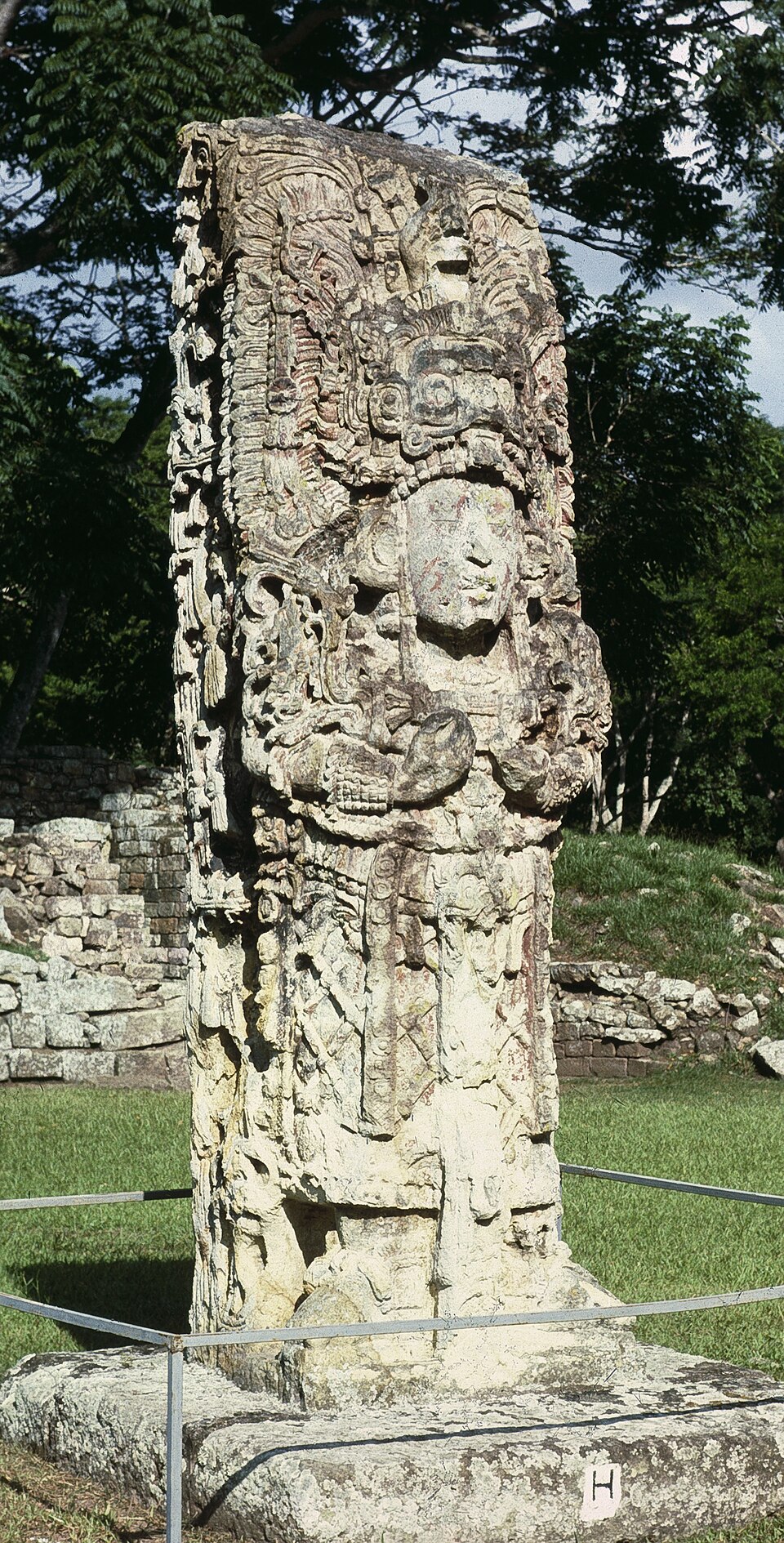
The carved stela.
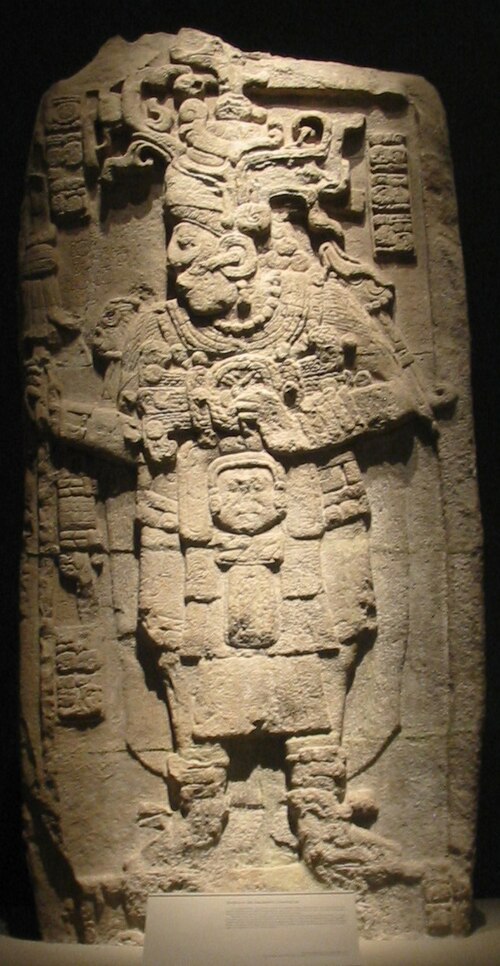
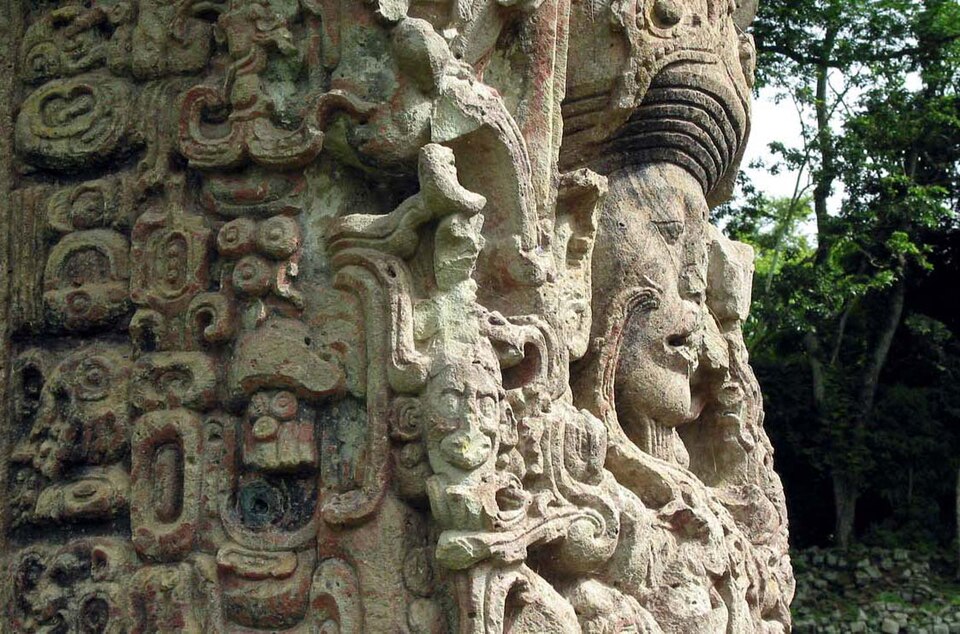
Maya stelae (singular stela) are monuments that were fashioned by the Maya civilization of ancient Mesoamerica. They consist of tall, sculpted stone shafts and are often associated with low circular stones referred to as altars, although their actual function is uncertain. Many stelae were sculpted in low relief, although plain monuments are found throughout the Maya region. The sculpting of these monuments spread throughout the Maya area during the Classic Period (c. 250 - c. 900 AD), and these pairings of sculpted stelae and circular altars are considered a hallmark of Classic Maya civilization. The earliest dated stela to have been found in situ in the Maya lowlands was recovered from the great city of Tikal in Guatemala. During the Classic Period almost every Maya kingdom in the southern lowlands raised stelae in its ceremonial centre.
Stelae became closely associated with the concept of divine kingship and declined at the same time as this institution. The production of stelae by the Maya had its origin around 400 BC and continued through to the end of the Classic Period, around 900, although some monuments were reused in the Postclassic (c. 900-1521). The major city of Calakmul in Mexico raised the greatest number of stelae known from any Maya city, at least 166, although they are very poorly preserved.
Further reading
- Copán · Andrews, E. Wyllys (2005)A book on Copán covering its Maya architecture, sculpture and inscriptions.Find a copy: AbeBooks · Amazon · WorldCat
- Scribes, Warriors and Kings · William Leonard Fash (1993)Covers the Maya of Copán, with history, antiquities and social life.Find a copy: AbeBooks · Amazon · WorldCat
Copán Stela is one of the 3D puzzles in World Artifacts: turn a cloud of broken pieces until it lines up. For iPhone, iPad, Apple Vision Pro and Android.

