World Artifacts › Atlas › Croatia
Dubrovnik Galleon (Karaka)
Dubrovnik's merchant carracks sailed as far as England, and the English word argosy comes from Ragusa, the city's old name. The republic ran a fleet of some two hundred ships and an early form of maritime insurance.
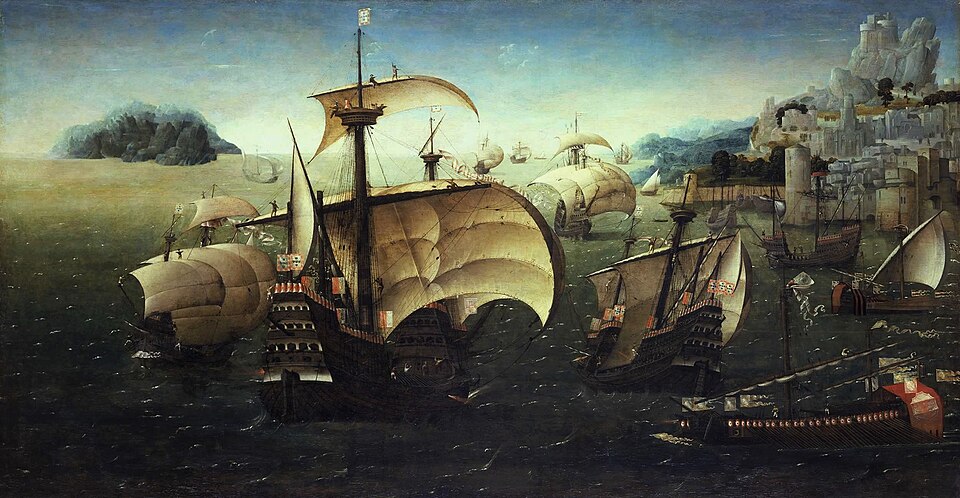
A carrack (Portuguese: nau; Spanish: nao; Catalan: carraca) is a three- or four-masted ocean-going sailing ship that was developed in the 14th to 15th centuries in Europe, most notably in Portugal and Spain. Evolving from the single-masted cog, the carrack was first used for European trade from the Mediterranean to the Baltic. Shortly thereafter, these ships found use in the increasingly lucrative trade routes between Europe and Africa and eventually in the emerging trans-Atlantic trade with the Americas. In their most advanced forms, they were used by the Portuguese and Spaniards for trade between Europe, Africa and Asia starting in the late 15th century, before being gradually superseded in the late 16th and early 17th centuries by the galleon.
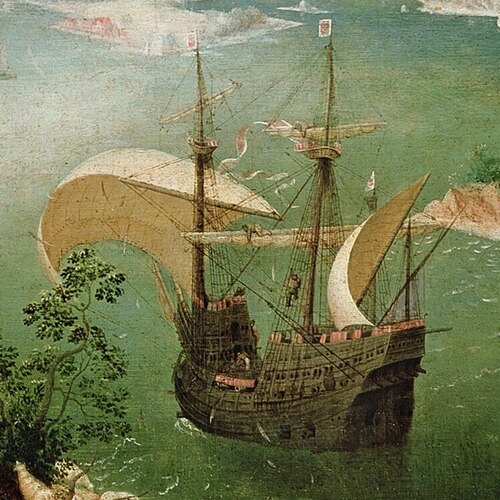
In its most developed form, the carrack was a carvel-built ocean-going ship: large enough to be stable in heavy seas, and capacious enough to carry a large cargo and the provisions needed for very long voyages. The later carracks were square-rigged on the foremast and mainmast and lateen-rigged on the mizzenmast. They had a high rounded stern with aftcastle, forecastle and bowsprit at the stem. As the predecessor of the galleon, the carrack was one of the most influential ship designs in history; while ships became more specialized in the following centuries, the basic design remained unchanged throughout this period.
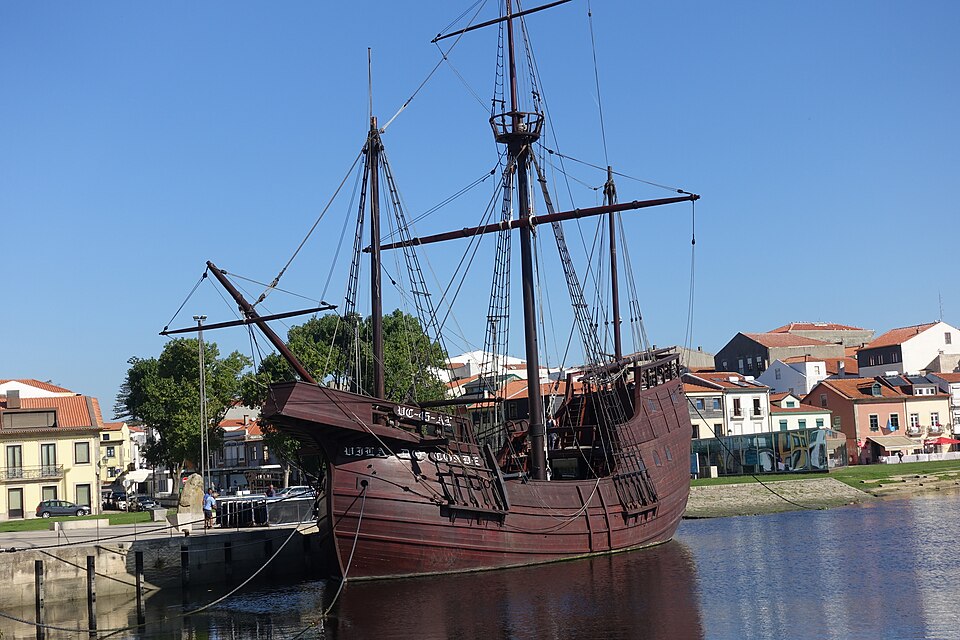
Further reading
Dubrovnik Galleon (Karaka) is one of the 3D puzzles in World Artifacts: turn a cloud of broken pieces until it lines up. For iPhone, iPad, Apple Vision Pro and Android.

