World Artifacts › Atlas › Croatia
Pula Arena
The arena at Pula is the only Roman amphitheatre with all four side towers and its complete outer wall still standing. Venice tried to dismantle it in 1583 and move it stone by stone to Venice, and a Venetian senator talked them out of it.
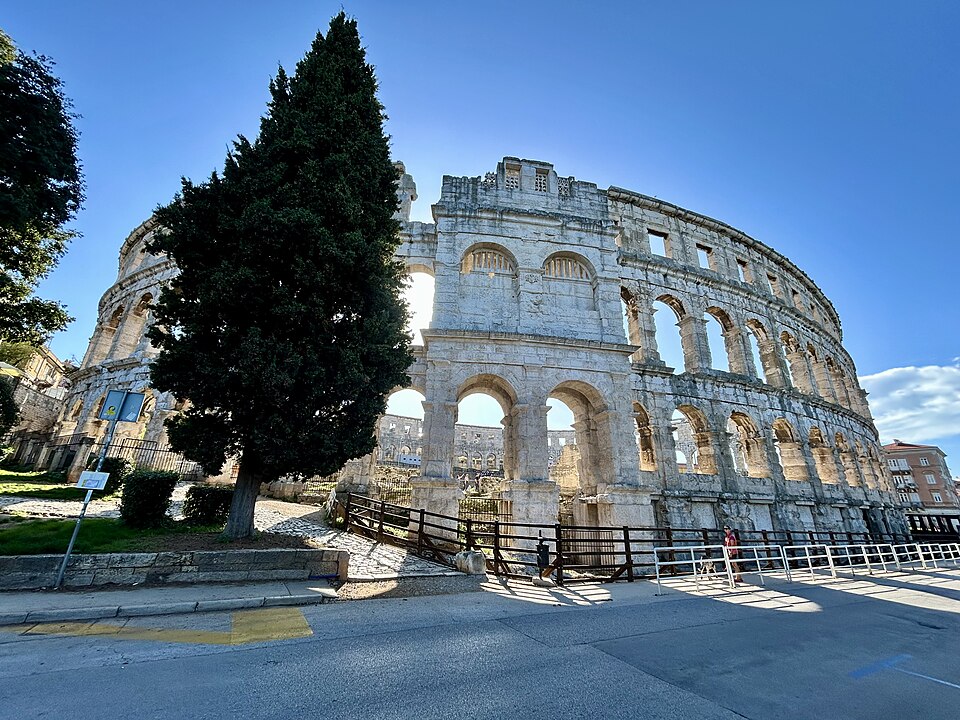
The Amphitheatre in Pula (Croatian: Amfiteatar u Puli; Italian: Anfiteatro di Pola), better known as the Pula Arena (Croatian: Pulska Arena; Italian: Arena di Pola), is a Roman amphitheatre located in Pula, Istria, Croatia. Constructed between 27 BC and AD 14, during the reign of Augustus and later expanded under Vespasian, the arena is one of the best-preserved ancient Roman amphitheatres in the world and the only remaining example to retain its entire circular wall structure. Originally built outside the city walls, the arena once accommodated up to 23,000 spectators and served as the main venue for gladiatorial contests, animal hunts, and other forms of public entertainment typical of the Roman Empire.
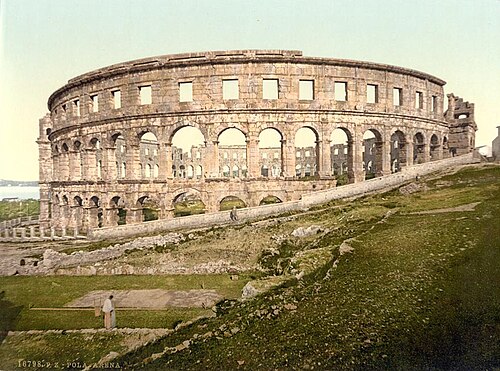
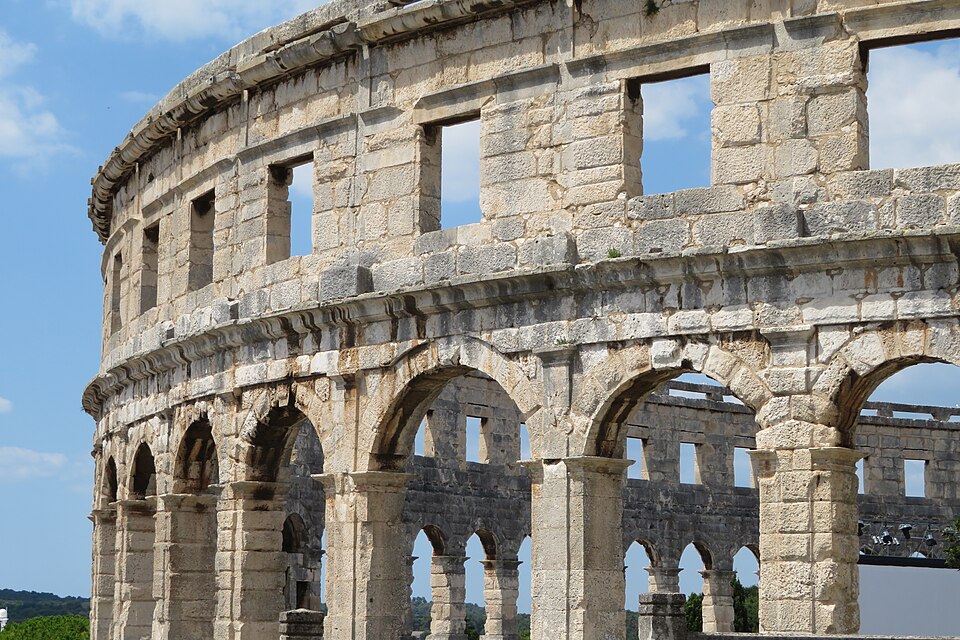
The structure is built from local limestone and measures approximately 132 by 105 metres, with a height of 32 metres at its highest point. It features a complex system of subterranean passages, gates, and towers that were once used to manage performers, animals, and stage machinery. The arena’s architectural design reflects a blend of Roman engineering precision and adaptation to the Adriatic coastal landscape, offering panoramic views over Pula’s harbour.
Further reading
Pula Arena is one of the 3D puzzles in World Artifacts: turn a cloud of broken pieces until it lines up. For iPhone, iPad, Apple Vision Pro and Android.

