World Artifacts › Atlas › Hungary
Chain Bridge
The suspension bridge with lion statues.
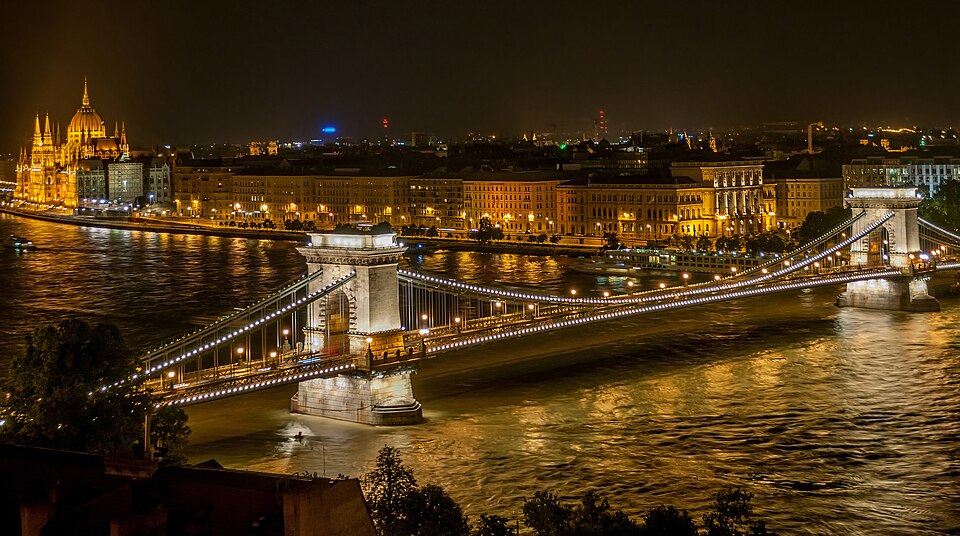
The Széchenyi Chain Bridge (Hungarian: Széchenyi lánchíd [ˈseːt͡ʃeːɲi ˈlaːnt͡shiːd] ) is a chain bridge that spans the River Danube between Buda and Pest, the western and eastern sides of Budapest, the capital of Hungary. Designed by English engineer William Tierney Clark and built by Scottish engineer Adam Clark, it was the first permanent bridge across the Danube in Hungary. It was opened in 1849. It is anchored on the Pest side of the river to Széchenyi Square (formerly Roosevelt Square), adjacent to the Gresham Palace and the Hungarian Academy of Sciences, and on the Buda side to Adam Clark Square, near the Zero Kilometre Stone and the lower end of the Castle Hill Funicular, leading to Buda Castle.
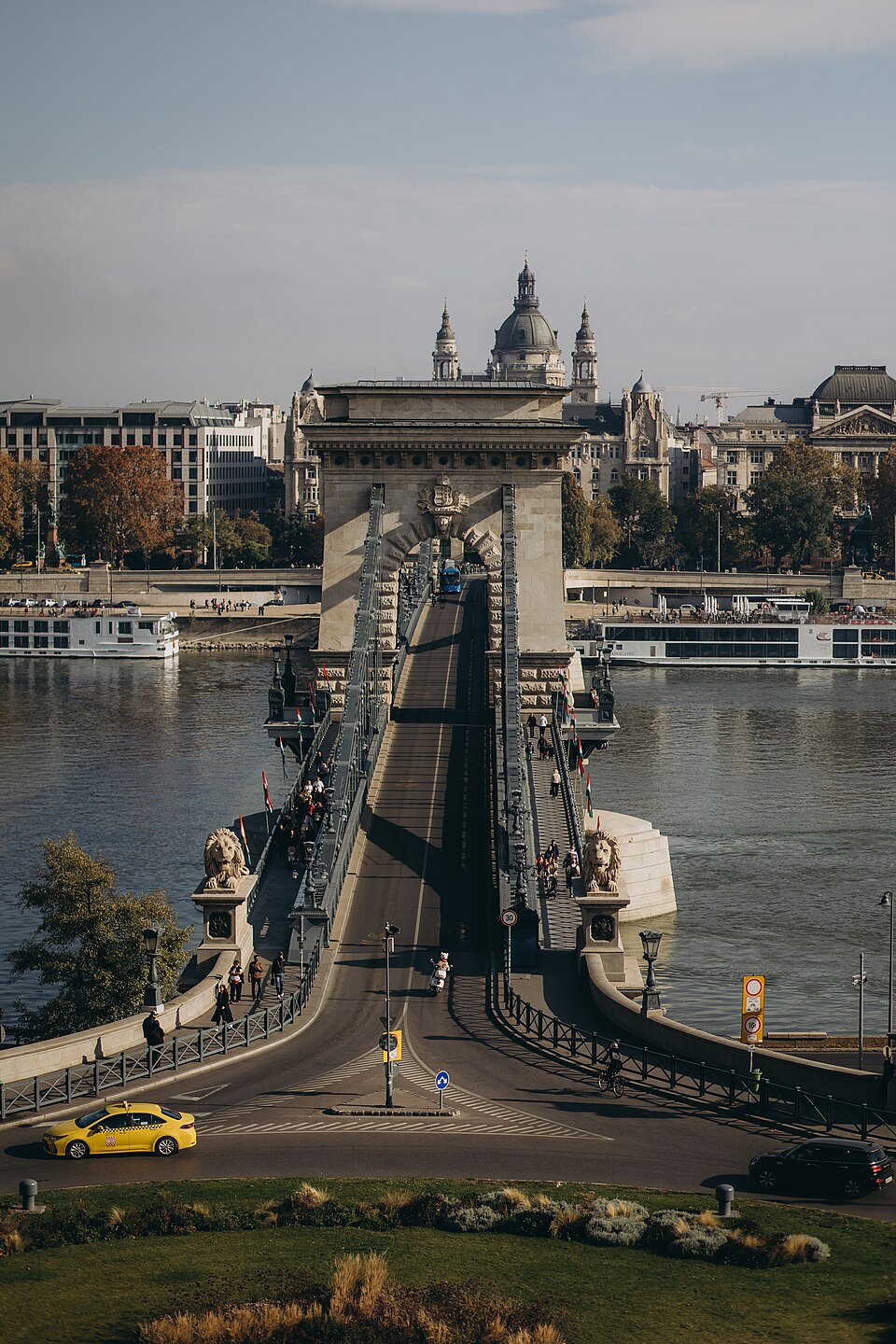
The bridge bears the name of István Széchenyi, a major supporter of its construction, but is most commonly known as the "Chain Bridge". At the time of its construction, it was regarded as a marvel of modern engineering. Its decorations are made of cast iron.
Further reading
Chain Bridge is one of the 3D puzzles in World Artifacts: turn a cloud of broken pieces until it lines up. For iPhone, iPad, Apple Vision Pro and Android.

