World Artifacts › Atlas › Indonesia
Babirusa
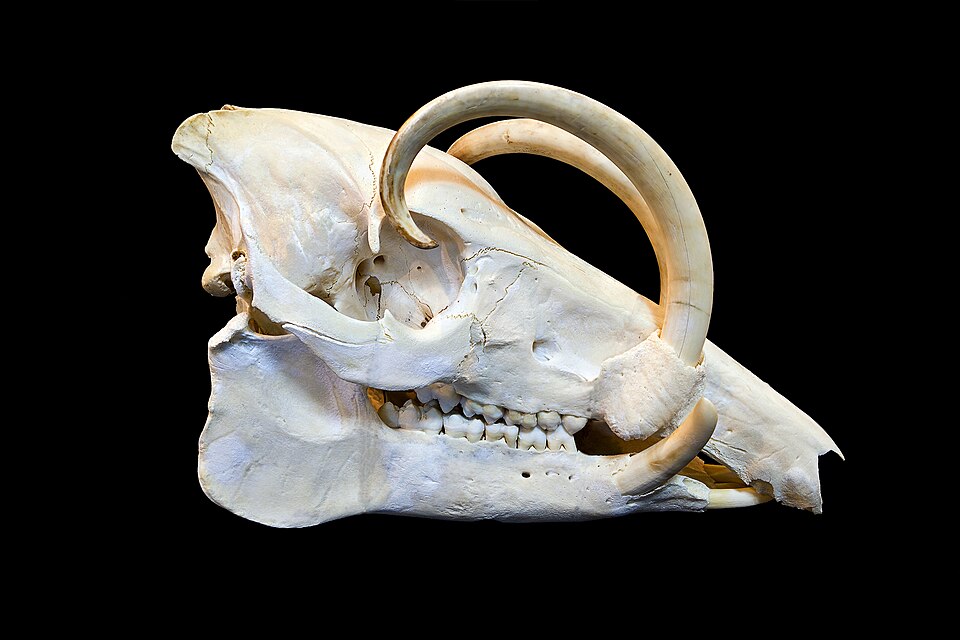
The babirusa's upper tusks grow upward through the skin of its snout and curve back towards its skull. In old males they can eventually reach it, which has given the animal a reputation it does not deserve for growing into its own head.
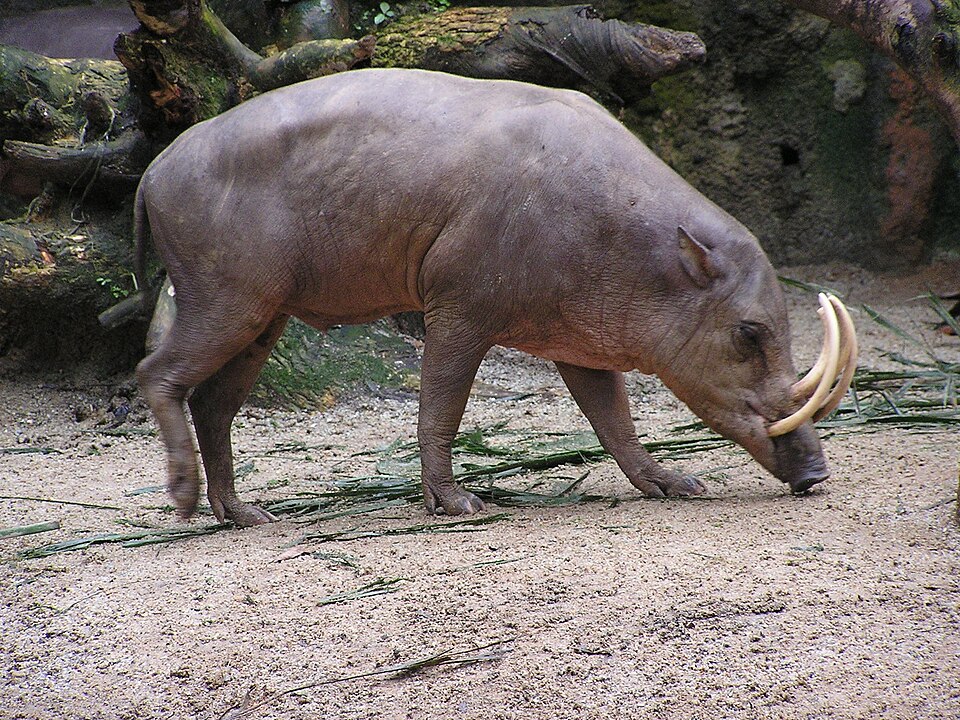
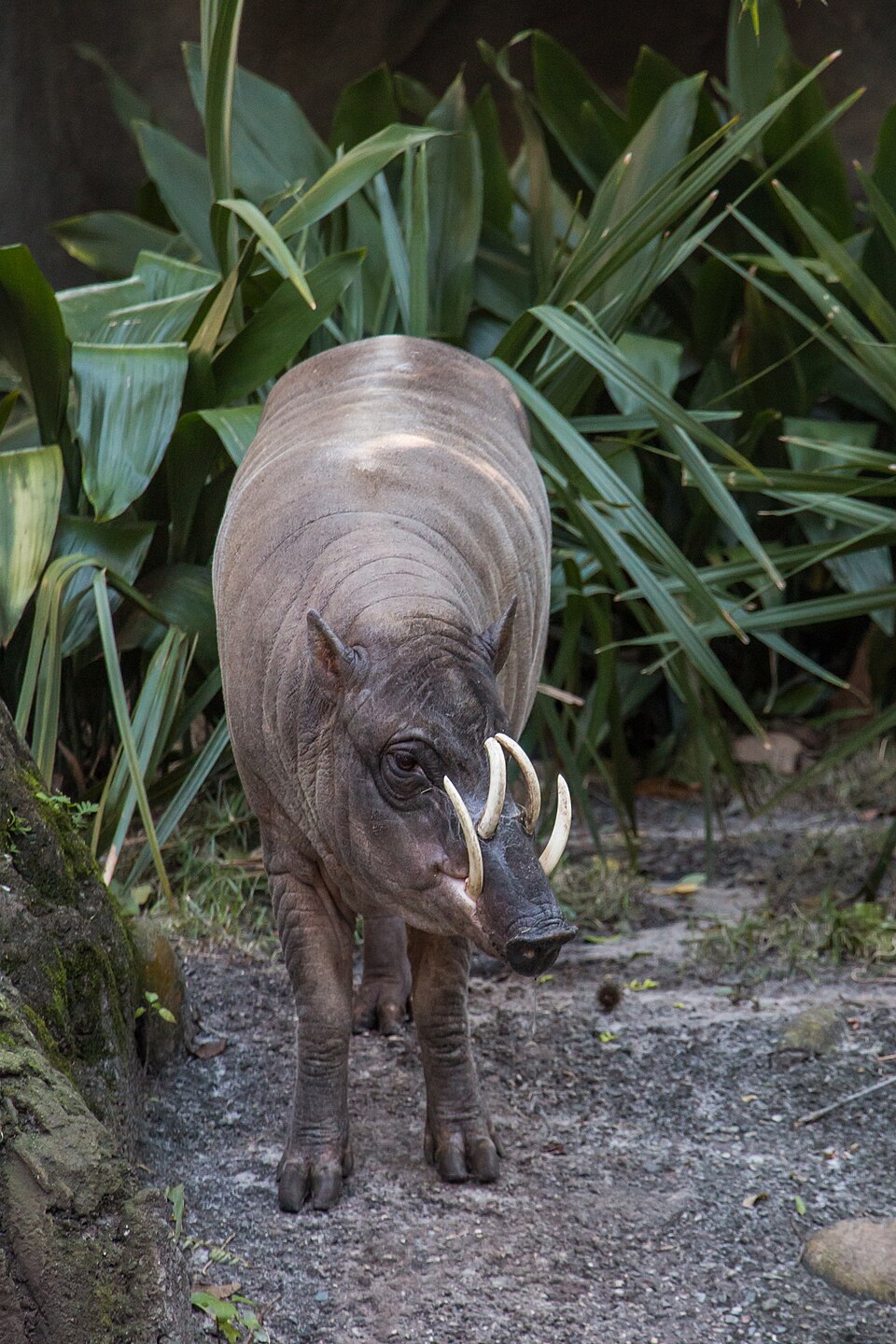
Babirusas, also called deer-pigs (Malay: babi rusa), are a genus, Babyrousa, in the swine family found in the Indonesian islands of Sulawesi, Togian, Sula and Buru. Previously all members of this genus were considered part of a single species, B. babyrussa, but in 2002 they were split into several species. The Buru babirusa is now restricted to animals from Buru and Sula, whereas the best-known species, the North Sulawesi babirusa, is named B. celebensis. The males have prominent upwards incurving canine tusks, which pierce the flesh in the snout.
All species of babirusa are listed as threatened by the International Union for Conservation of Nature (IUCN).
Further reading
Babirusa is one of the 3D puzzles in World Artifacts: turn a cloud of broken pieces until it lines up. For iPhone, iPad, Apple Vision Pro and Android.

