World Artifacts › Atlas › Indonesia
Minangkabau House
The roof peaks are buffalo horns, from a story about a bull fight that settled a war without one. Minangkabau society is the largest matrilineal culture in the world: property and family name pass through the mother, in a strongly Muslim region.
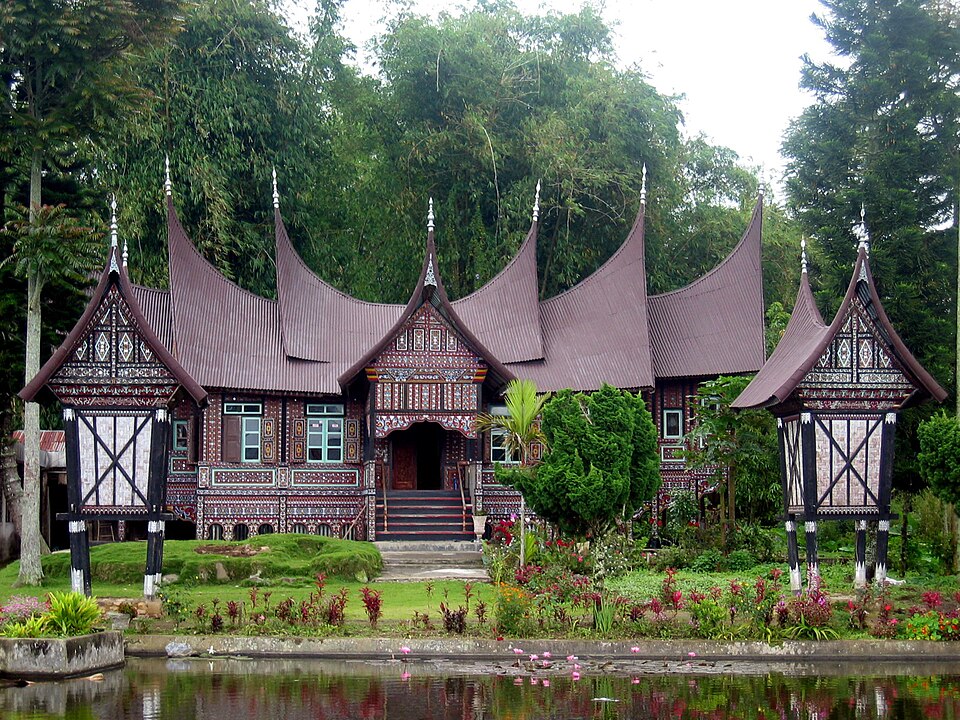
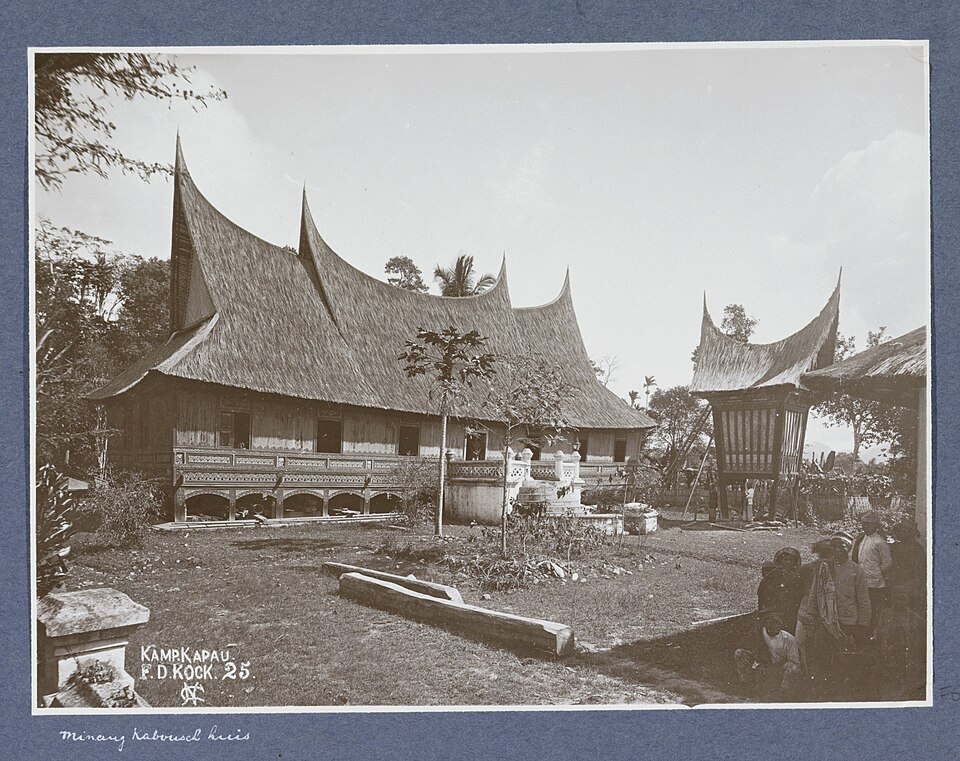
Rumah Gadang (Minangkabau: "big house") or Rumah Bagonjong (Minangkabau: "spired roof house") are the traditional homes (Indonesian: "rumah adat") of the Minangkabau in West Sumatra, Indonesia. The architecture, construction, internal and external decoration, and the functions of the house reflect the culture and values of the Minangkabau. A Rumah Gadang serves as a residence, a hall for family meetings, and for ceremonial activities. In the matrilineal Minangkabau society, the Rumah Gadang is owned by the women of the family who live there; ownership is passed from mother to daughter.
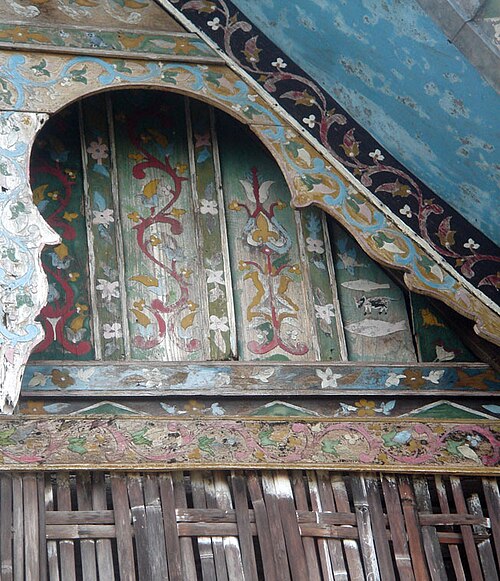
The houses have a dramatic curved roof structure with multi-tiered, upswept gables. Shuttered windows are built into walls incised with profusely painted floral carvings. The term Rumah Gadang usually refers to the larger communal homes; however, smaller single residences share many of its architectural elements.
Further reading
- The traditional architecture of Indonesia · Barry Dawson (1994)Surveys the vernacular architecture of Indonesia, the setting of the Minangkabau house.Find a copy: AbeBooks · Amazon · WorldCat
- Women at the Center · Peggy Reeves Sanday (2002)A study of the Minangkabau and their matriarchy, social life and customs.Find a copy: AbeBooks · Amazon · WorldCat
Minangkabau House is one of the 3D puzzles in World Artifacts: turn a cloud of broken pieces until it lines up. For iPhone, iPad, Apple Vision Pro and Android.

