World Artifacts › Atlas › Indonesia
Ogoh-ogoh
The demon effigies are paraded, shaken and burnt the night before Nyepi, the day of silence, when the whole of Bali stops: no traffic, no fires, no work, and the airport closes for twenty-four hours.
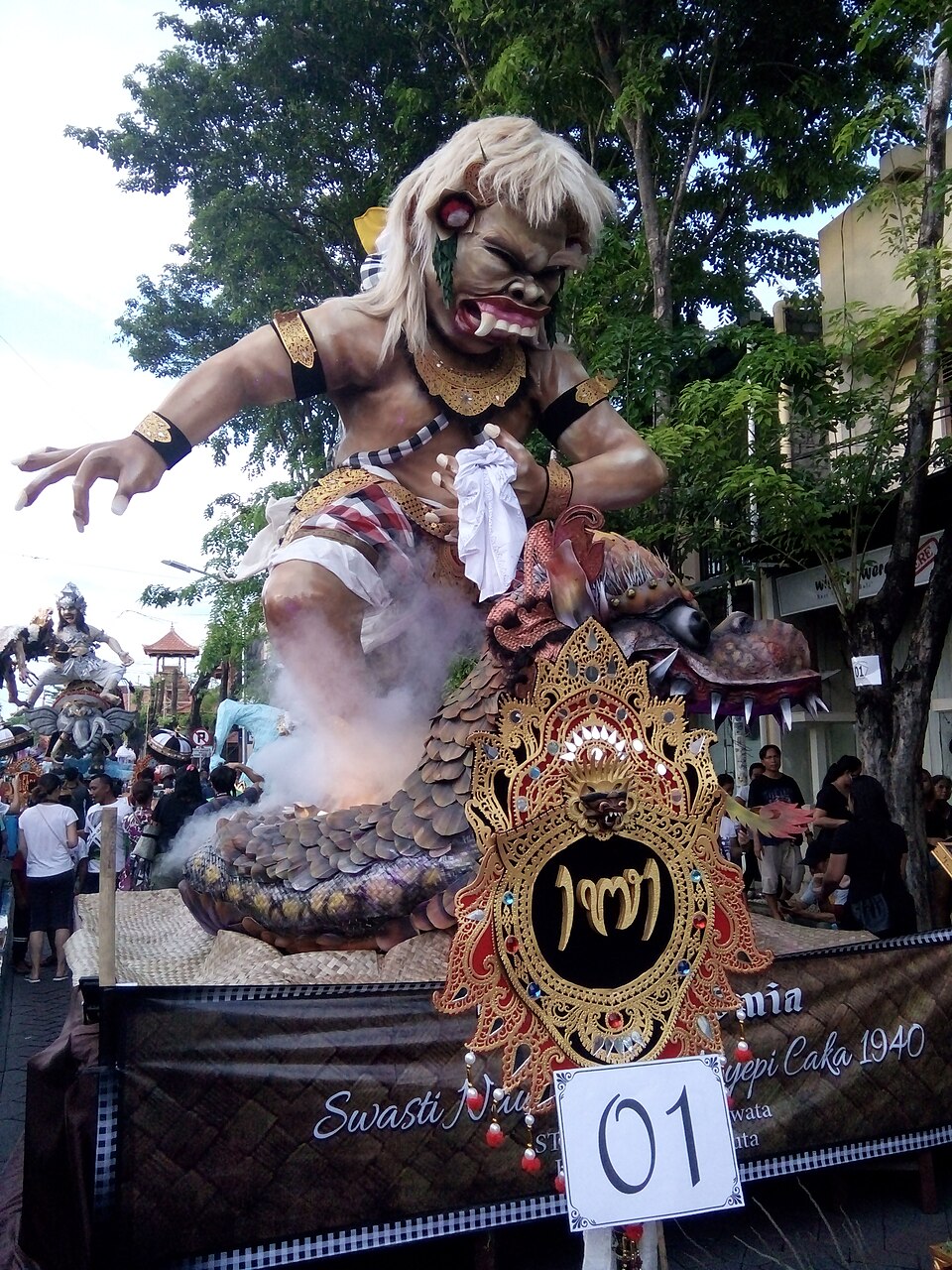
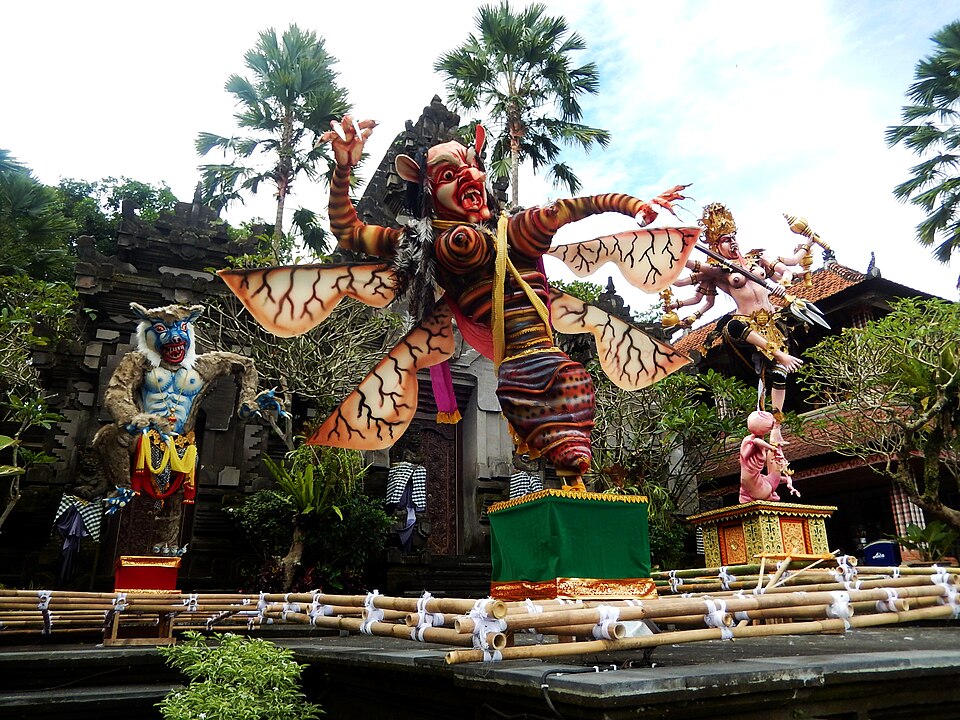
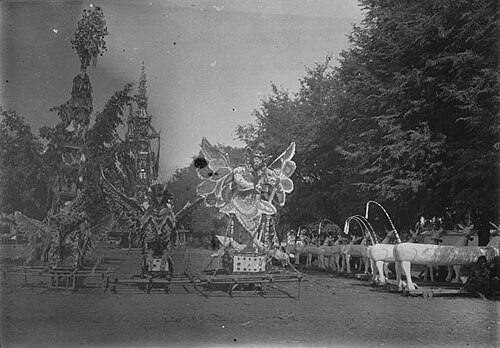
Ogoh-ogoh (Balinese: ᬳᭀᬕᭀᬄᬳᭀᬕᭀᬄ) is a sculpture art form in Balinese culture that is typically paraded during Pangrupukan, a Hindu Balinese tradition held to welcome Nyepi (the Saka New Year). This tradition is part of the Tawur Kesanga procession, a Hindu Balinese ritual aimed at neutralizing negative forces in the surrounding environment and "appeasing" beings from the lower realms before the turn of the Saka Year. During the Pangrupukan parade, ogoh-ogoh symbolizes the evils of human nature or negativity in the universe. Therefore, after the parade ends, ogoh-ogoh is eventually burned as a representation of eliminating those negative traits. The burning usually takes place in the village cemetery field.
Further reading
Ogoh-ogoh is one of the 3D puzzles in World Artifacts: turn a cloud of broken pieces until it lines up. For iPhone, iPad, Apple Vision Pro and Android.

