World Artifacts › Atlas › Ireland
Irish Flag
The green stands for the older Gaelic and Catholic tradition, the orange for the followers of William of Orange, and the white between them for peace between the two. It was given to Irish nationalists by French sympathisers in 1848.
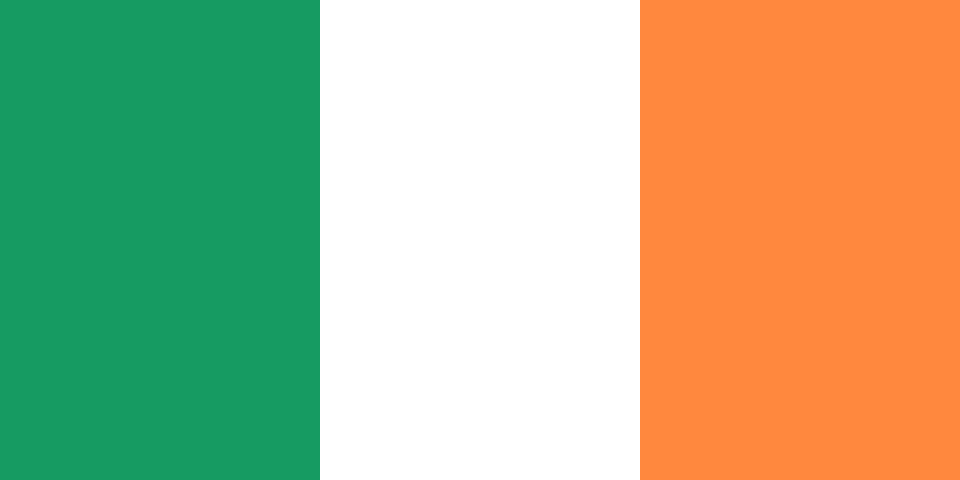
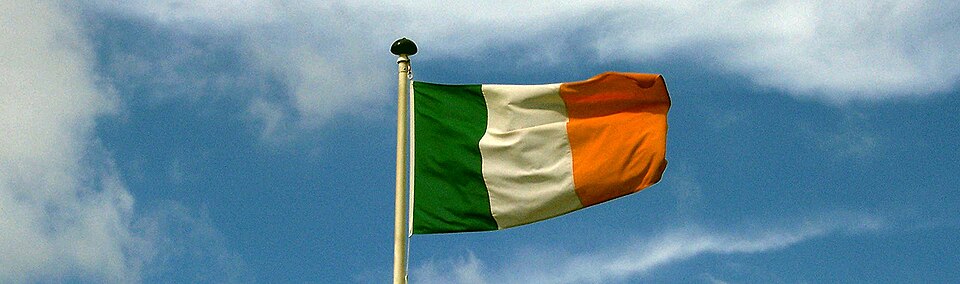
The national flag of Ireland (Irish: bratach na hÉireann), frequently referred to in Ireland as "the tricolour" (an trídhathach) and elsewhere as the Irish tricolour, is a vertical tricolour of green (at the hoist), white and orange. The proportions of the flag are 1:2 (that is to say, flown horizontally, the flag is half as high as it is wide).
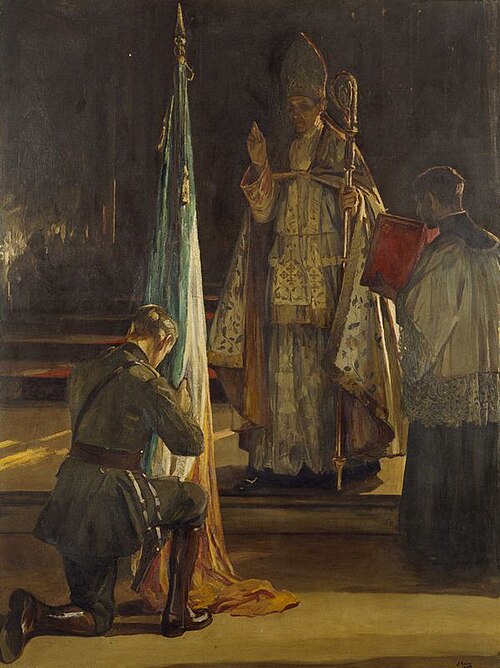
It was intended to symbolise the inclusion and hoped-for union between Roman Catholics (symbolised by the green colour) and Protestants (symbolised by the orange colour). The symbol first appeared in green-orange format when a green and orange cockade (rosette) was worn to symbolise a proposed Irish Catholic and Protestant unity at a political event in Cork City, March 1830. White was added to create the first Irish tricolour by Emelia Eleanor Hamilton of Annadale, Dublin in a tricolour cockade (rosette) of green, orange and white. She sent the symbol as a gift to be presented to a meeting taking place in September 1830 to send salutations to the French on the July Revolution. With the cockade she sent a letter with the words 'Let orange and green, no longer be seen, b'stained by the blood of our island', creating the message of peaceful union familiar in the Irish Tricolour today.
Irish Flag is one of the 3D puzzles in World Artifacts: turn a cloud of broken pieces until it lines up. For iPhone, iPad, Apple Vision Pro and Android.

