World Artifacts › Atlas › Israel
Caesarea Aqueduct
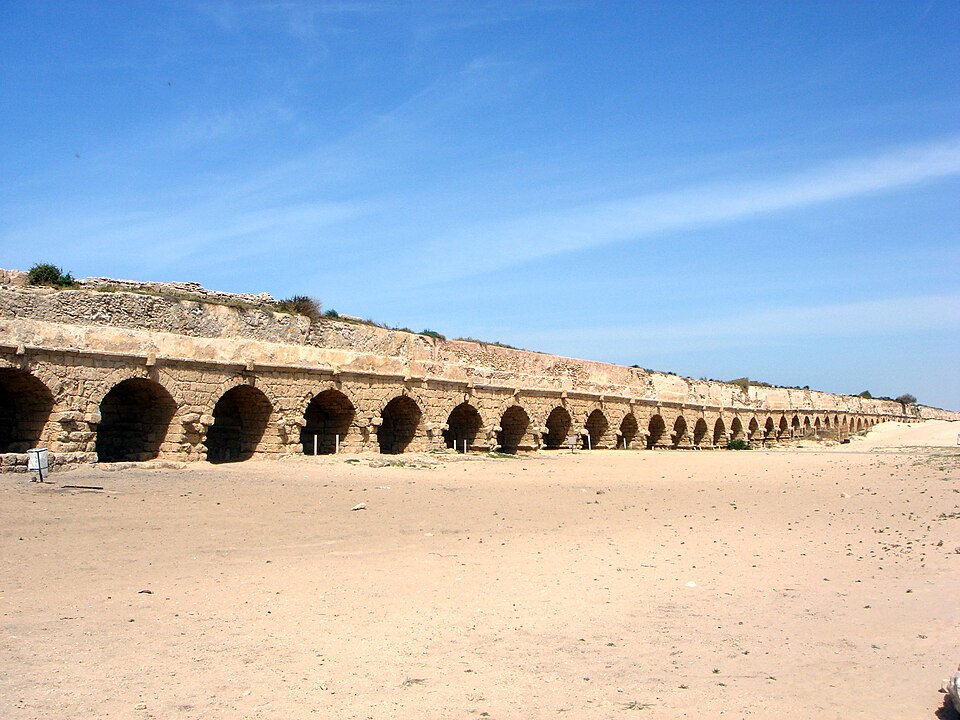
The arches on the beach.
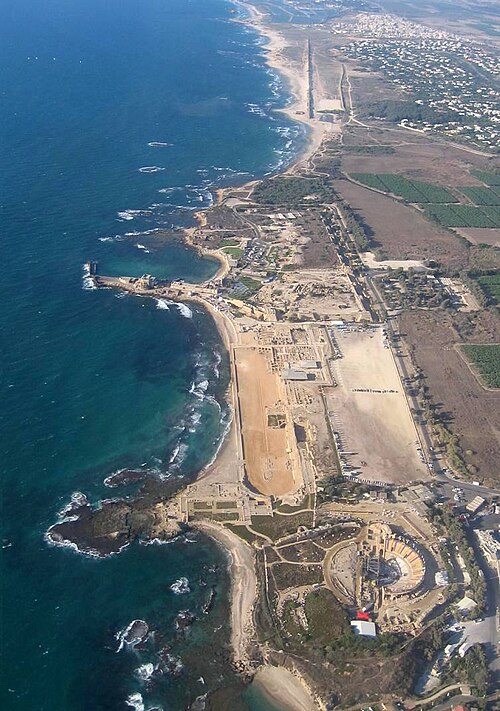
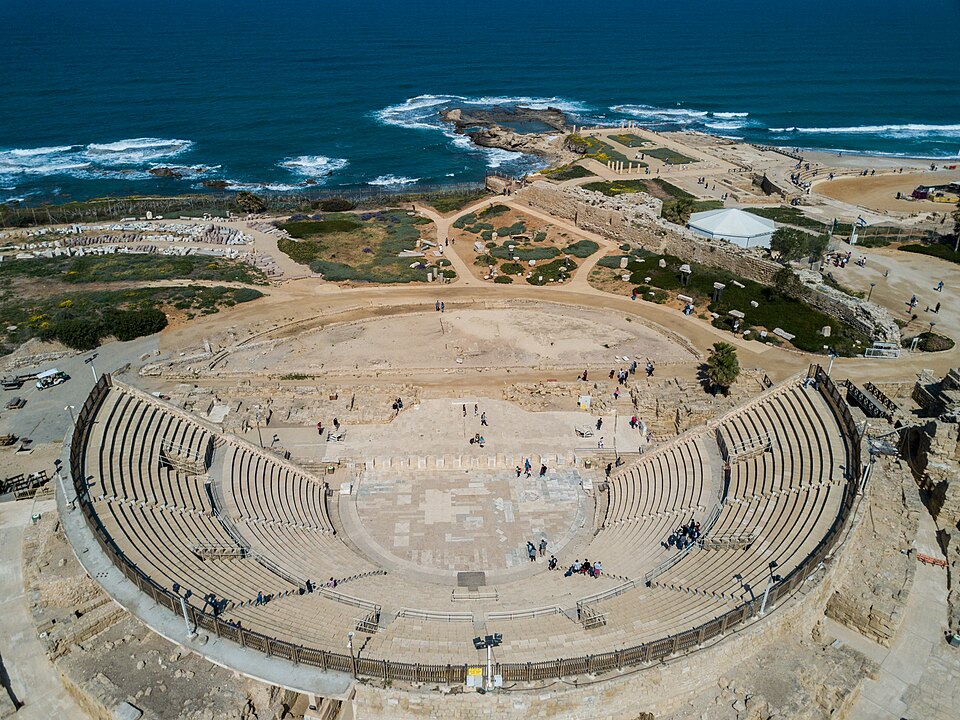
Caesarea (), also Caesarea Maritima, Caesarea Palaestinae or Caesarea Stratonis, was an ancient and medieval port city on the coast of the eastern Mediterranean, and later a small fishing village. It was the capital of Roman Judaea, Syria Palaestina and Palaestina Prima, successively, for a period of c. 650 years and a major intellectual hub of the Mediterranean. Today, the site is part of the Caesarea National Park, on the western edge of the Sharon plain in Israel.
The site was first settled in the 4th century BCE as a Phoenician colony and trading village known as Straton's Tower after the ruler of Sidon. It was enlarged in the 1st century BCE under Hasmonean rule, becoming a Jewish village; and in 63 BCE, when the Roman Republic annexed the region, it was declared an autonomous city. It was then significantly enlarged in the Roman period by the Judaean client King Herod the Great, who established a harbour and dedicated the town and its port to Caesar Augustus as Caesarea.
Further reading
- King Herod's dream · Kenneth G. Holum (1988)Covers excavations and history of Caesarea, Herod's city.Find a copy: AbeBooks · Amazon · WorldCat
- Caesarea Maritima · Avner Raban (1996)Papers on Caesarea Maritima, including excavations, harbors and underwater archaeology.Find a copy: AbeBooks · Amazon · WorldCat
Caesarea Aqueduct is one of the 3D puzzles in World Artifacts: turn a cloud of broken pieces until it lines up. For iPhone, iPad, Apple Vision Pro and Android.

