World Artifacts › Atlas › Israel
Dead Sea Scroll Jar
The clay jar with a scroll.
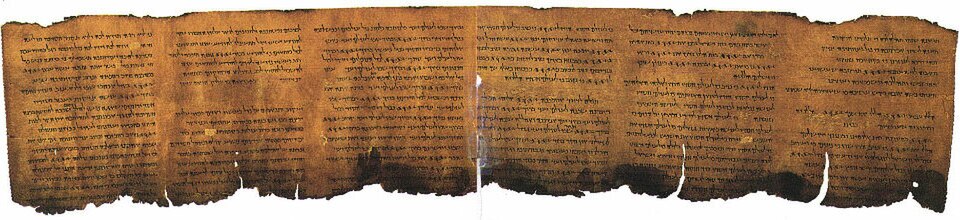
The Dead Sea Scrolls (DSS), which mostly consist of the Qumran Caves Scrolls, are a set of ancient Jewish biblical manuscripts from the Second Temple period. They were discovered over a period of ten years, between 1946 and 1956, at the Qumran Caves near Ein Feshkha in the West Bank, on the northern shore of the Dead Sea and some nearby places. Dating from the 3rd century BCE to the 1st century CE, the Dead Sea Scrolls include the oldest surviving manuscripts of entire books later included in the various Jewish and Christian biblical canons, including deuterocanonical manuscripts from late Second Temple Judaism, as well as extrabiblical books. As such, they cast new light on the emergence of Rabbinic Judaism and of Christianity, and their relationship with Jewish religious traditions. In the wider sense, the Dead Sea Scrolls also include similar findings from elsewhere in the Judaean Desert, and are sometimes called Judaean Desert scrolls. Some of the scrolls found outside Qumran are from later centuries. Almost all of the 15,000 scrolls and scroll fragments are held in the Shrine of the Book at the Israel Museum in Jerusalem.
Further reading
- Archaeology and the Dead Sea scrolls · Roland de Vaux (1973)Covers the archaeology of Qumran and the Dead Sea scrolls.Find a copy: AbeBooks · Amazon · WorldCat
- The meaning of the Dead Sea scrolls · James C. VanderKam (2002)Discusses the story of the discovery of the Dead Sea scrolls and their meaning, including the Qumran community.Find a copy: AbeBooks · Amazon · WorldCat
Dead Sea Scroll Jar is one of the 3D puzzles in World Artifacts: turn a cloud of broken pieces until it lines up. For iPhone, iPad, Apple Vision Pro and Android.

