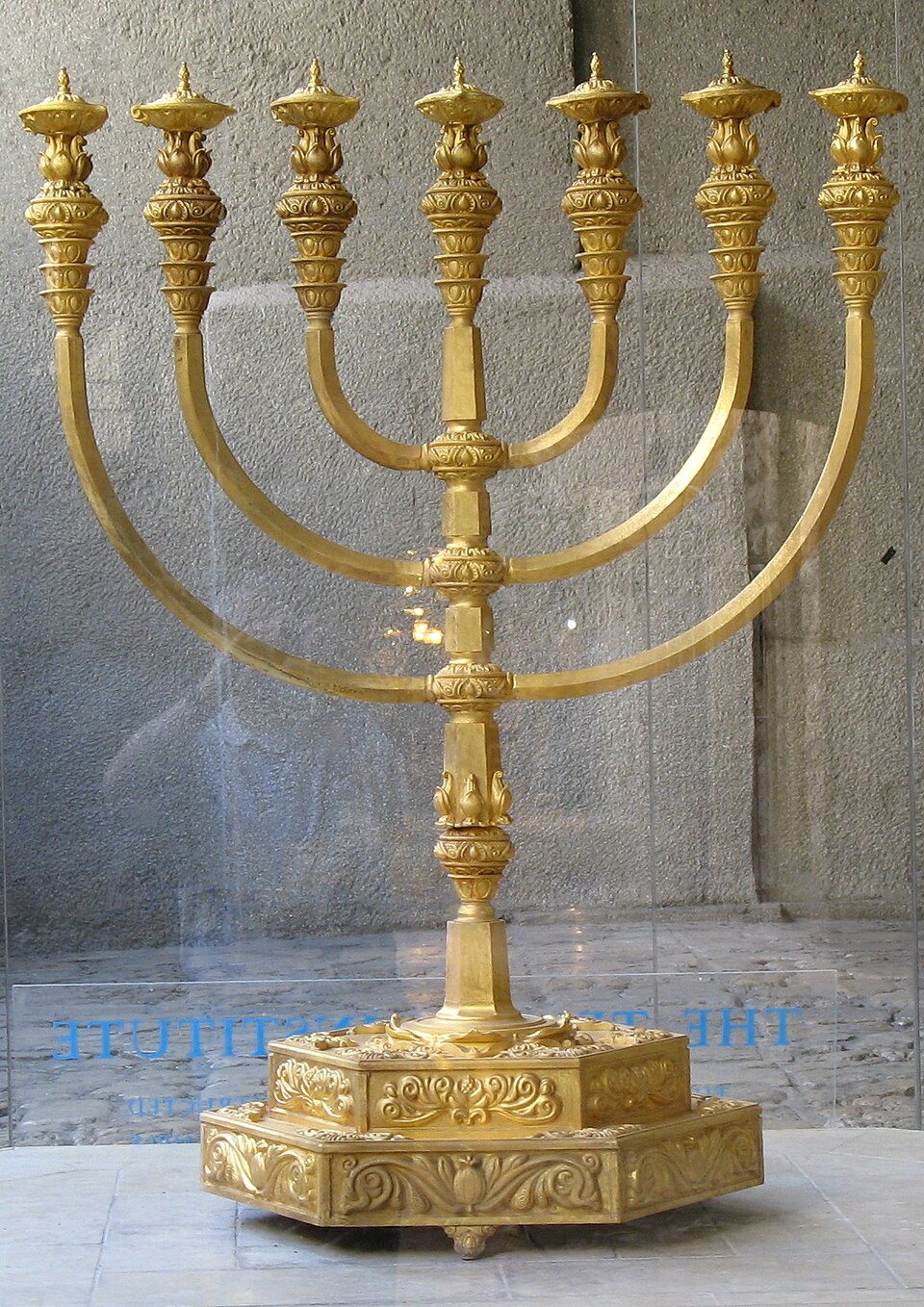
A reconstruction of the menorah of the Temple in Jerusalem, manufactured by the Temple Institute.ariely · Public domain · Source
The Temple menorah (; Biblical Hebrew: מְנוֹרָה, romanized: mənorā, Tiberian Hebrew: [/ˌmənoːˈʀɔː/]) is a seven-branched candelabrum that is described in the Hebrew Bible and later ancient sources as having been used in the Tabernacle and the Temple in Jerusalem.
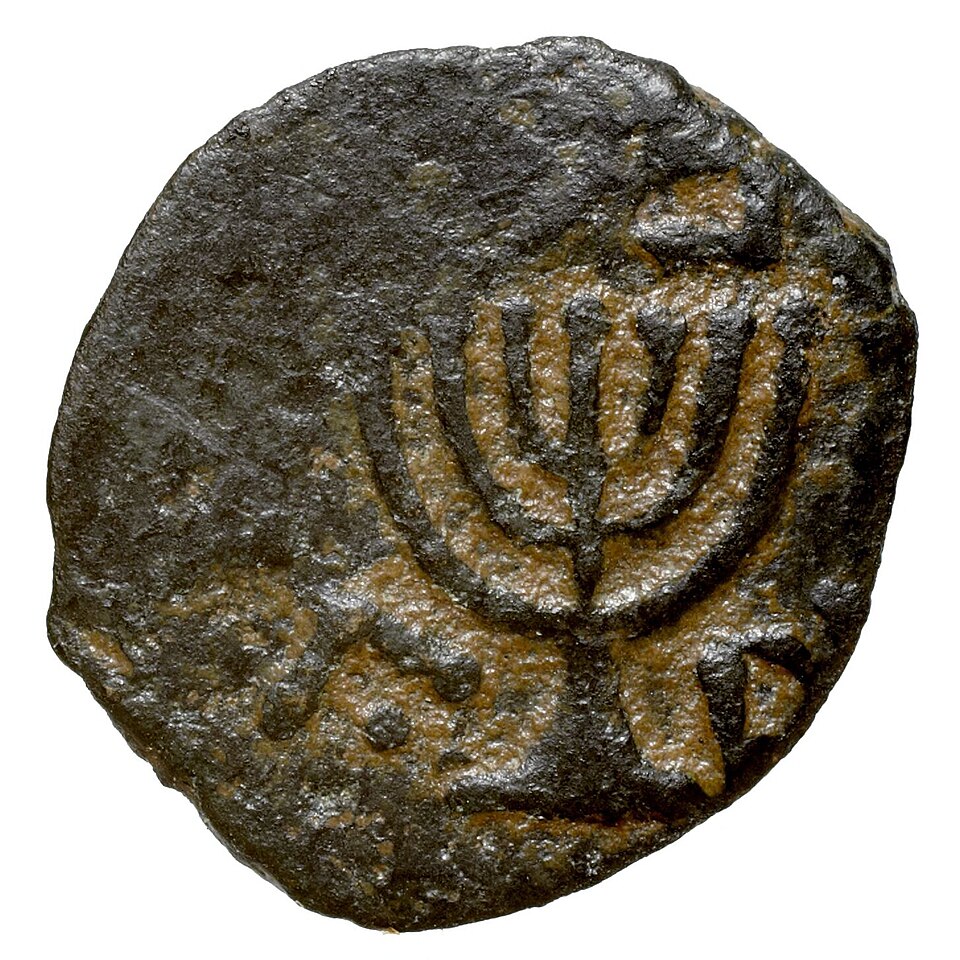
Early representation of the menorah, on a coin coined by Antigonus II Mattathias, the last Hasmonean king of Judea (r. 40-37 BCE)Antigone II (Mattathiah ; roi hasmonéen). Autorité émettrice de monnaie Hasmonéens (dynastie). Autorité émettrice de monnaie Jérusalem (Judée ; atelier monétaire). Atelier monétaire · Public domain · Source
Since ancient times, it has served as a symbol representing the Jews and Judaism in both the Land of Israel and the Jewish diaspora. It became the State of Israel's official emblem when it was founded in 1948.
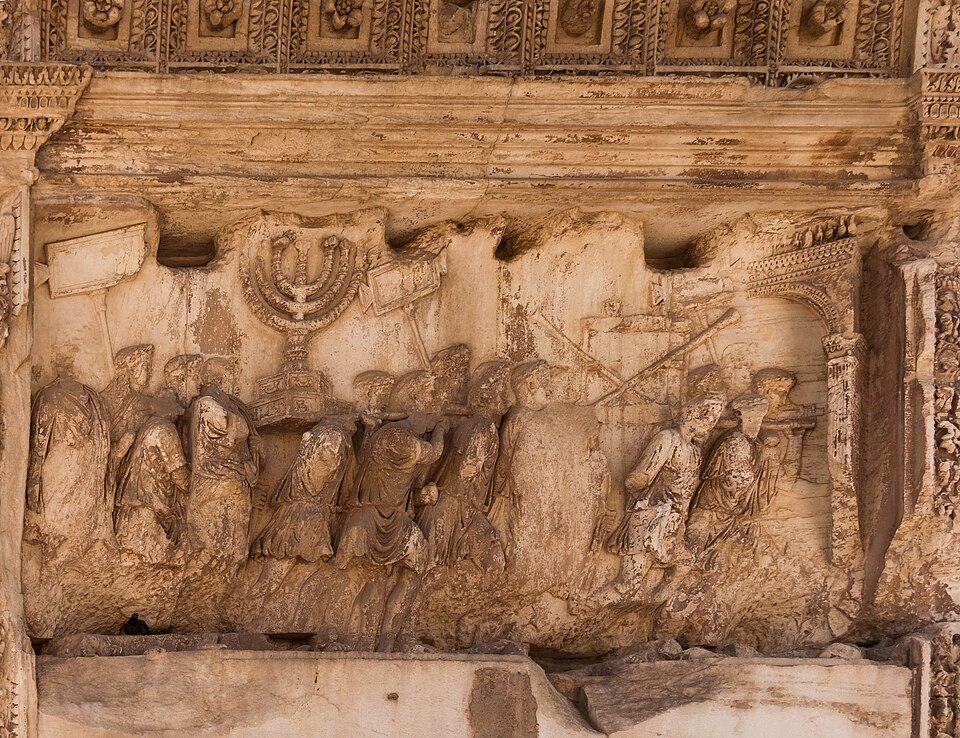
Depiction of the menorah on the Arch of Titus in RomeJebulon · CC0 · Source
Further reading
The menorah · Steven Fine (2016)A history of the menorah and its depiction in art.Find a copy: AbeBooks · Amazon · WorldCat
The Menorah, the Ancient Seven-armed Candelabrum · Rachel Hachlili (2001)A study of the ancient seven-armed candelabrum.Find a copy: AbeBooks · Amazon · WorldCat
Menorah is one of the 3D puzzles in World Artifacts: turn a cloud of broken pieces until it lines up. For iPhone, iPad, Apple Vision Pro and Android.