World Artifacts › Atlas › India
Asiatic Lion
Every wild Asiatic lion on earth lives in and around one forest in Gujarat, descended from perhaps twenty animals that survived a century ago. Putting them all in one place is a conservation success and a serious risk at the same time.
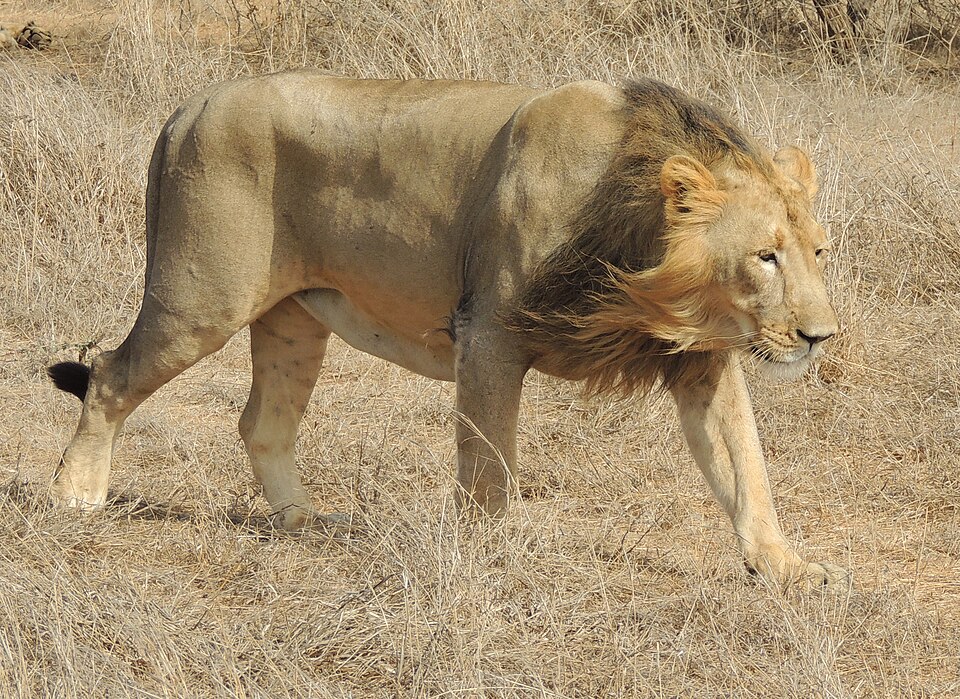
The Asiatic lion is a lion that belongs to the subspecies Panthera leo leo. The surviving population of these lions is restricted to the Indian state of Gujarat. It is classified as endangered in the IUCN Red List, is included on CITES Appendix I, and is legally protected in India.

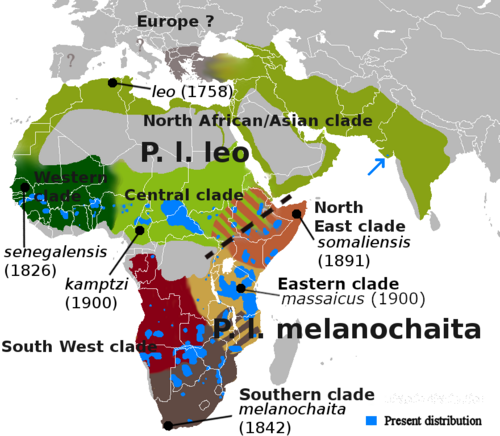
Phylogeographic analysis reveal that the Asiatic lion is genetically closely related to the North and West African lions. The adult males measure up to 120 cm (47 in) in shoulder height and weigh about 160 kg (350 lb), making them slightly smaller than large African lions but similar to Central African populations. The Asiatic lion has a ruddy-tawny to sandy grey fur, a distinctive longitudinal skin fold along its belly, and a larger tail tuft. The males are distinguishable from the females by the presence of manes, though they are shorter and sparser than the African counterparts. It also differs from the African lion in skull structure, having a stronger sagittal crest, shorter post-orbital area, and often divided infraorbital foramina.
Further reading
Asiatic Lion is one of the 3D puzzles in World Artifacts: turn a cloud of broken pieces until it lines up. For iPhone, iPad, Apple Vision Pro and Android.

