World Artifacts › Atlas › India
Hampi Stone Chariot
The stone chariot is a shrine, and its wheels were once able to turn. It stands in the ruins of a capital that European travellers in the 1500s described as being the size of Rome, and it is printed on the fifty-rupee note.
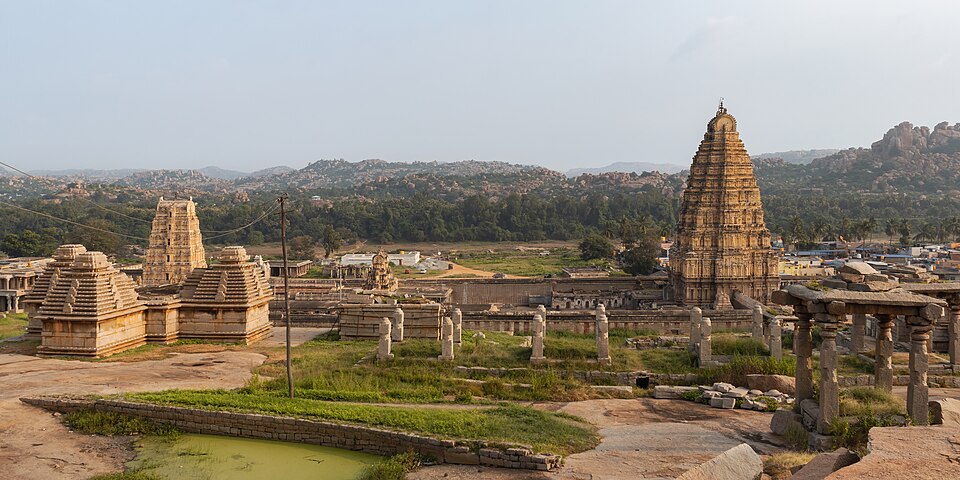
Hampi or Hampe (Kannada: [hɐmpe]), also referred to as the Group of Monuments at Hampi, is a UNESCO World Heritage Site located in the town of Hampi in Vijayanagara district, east-central Karnataka, India. Hampi predates the Vijayanagara Empire; it is mentioned in the Ramayana and the Puranas of Hinduism as Pampa Devi Tirtha Kshetra. Hampi continues as a religious centre, with the Virupaksha Temple, an active Adi Shankara-linked monastery and various monuments belonging to the old city.
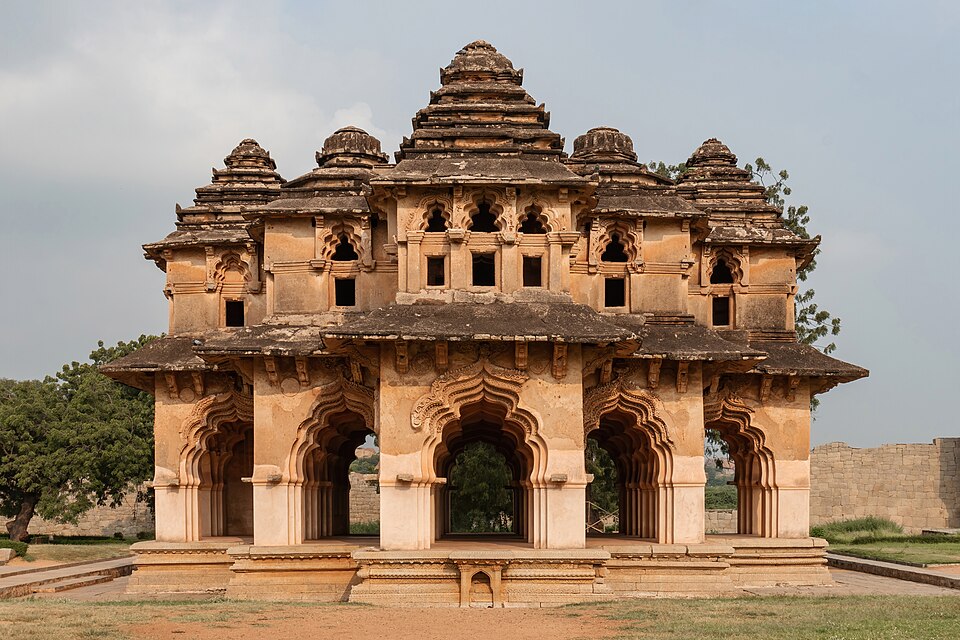
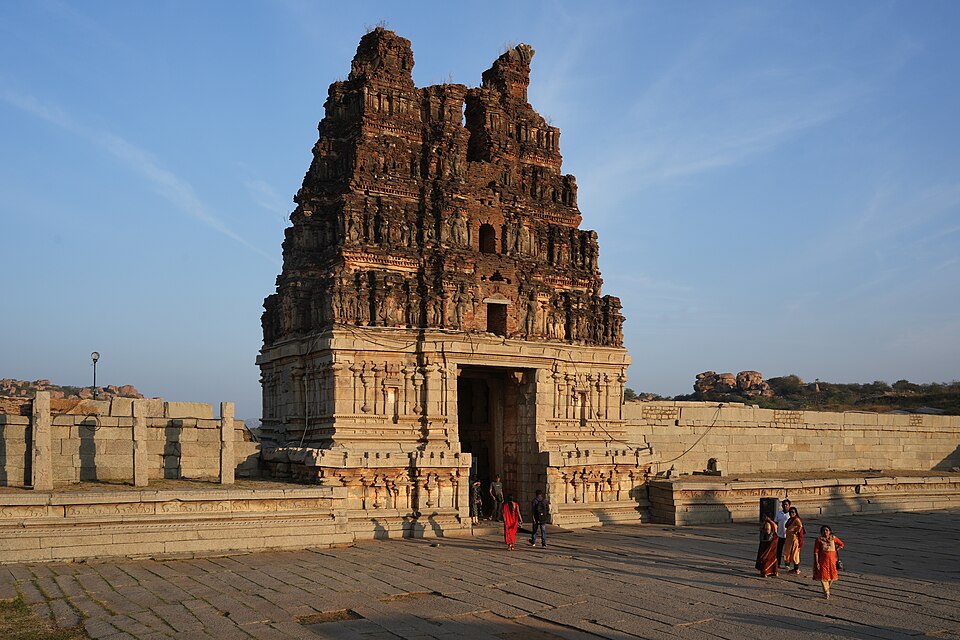
Hampi was the capital of the Vijayanagara (Karnata) Empire from 1336 to 1565 (as Vijayanagara), when it was abandoned. It was a fortified city. Chronicles left by Persian and European travellers, particularly the Portuguese, say that Hampi was a prosperous, wealthy and grand city near the Tungabhadra River, with numerous temples, farms and trading markets. Hampi-Vijayanagara is estimated to be the world's second-largest city by 1500, after Beijing, and probably India's richest at that time, attracting traders from Persia and Portugal. The Vijayanagara Empire was defeated by a coalition of Muslim sultanates; its capital was conquered, pillaged and destroyed by Muslim armies in 1565, after which Hampi remained in ruins.
Further reading
- World Heritage Series Hampi · D. Devakunjari and Revised by B. Narasimhaiah (2007)A World Heritage series volume on Hampi.Find a copy: AbeBooks · Amazon · WorldCat
- New light on Hampi · John M. Fritz (2001)A pictorial work on Hampi's antiquities, architecture and art.Find a copy: AbeBooks · Amazon · WorldCat
Hampi Stone Chariot is one of the 3D puzzles in World Artifacts: turn a cloud of broken pieces until it lines up. For iPhone, iPad, Apple Vision Pro and Android.

